
Tribal Access to Safe Drinking Water Remains a Problem
Not having access to safe drinking water and plumbing risks all kinds of health problems—everything from gastrointestinal illnesses to skin and respiratory tract diseases.
Most of the United States has had access to clean water for decades. But American Indians and Alaska Natives are more likely than other Americans to not have access to safe water.
Today’s WatchBlog post looks at our new report on this issue, as well as federal efforts and challenges to improving tribal access.
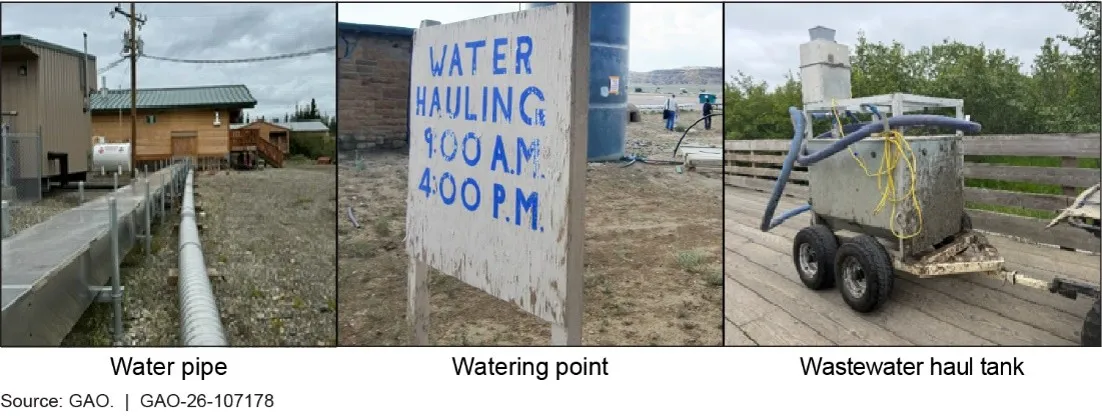
Examples of Water Infrastructure in Underserved Tribal Communities
Image
Why do some tribal communities still lack access to safe water?
Safe water is crucial to public health. Yet, some American Indians and Alaska Natives live in communities without running water or flushable toilets.
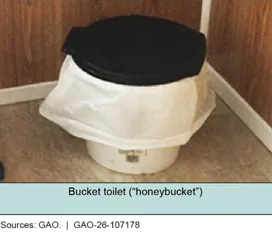
Without access to such basic facilities, these communities have come up with a number of alternatives. Some residents haul drinking water from a community water station. Others use a “honey bucket” as a makeshift toilet. And some residents rely on shared community facilities to shower or wash laundry. For some tribal communities that do have access to piped water, it does not always meet safe drinking water standards.
Image
How is this even possible in 2026? The reality is that for many Tribes resources are scarce. Many face a multitude of challenges to building, operating, and maintaining water infrastructure.
Remote locations. Many communities are in rural or remote areas. This can make it difficult to extend piping to connect homes to water infrastructure. For example, Alaska Native villages are often in remote areas only accessible via water or air. So, delivery of project materials can be quite costly and difficult. Their winters are also long, making for a short construction season.
Limited financial resources. Maintaining water infrastructure costs money and Tribes frequently don’t have access to the same financing options or tax bases that nontribal communities have. Instead, they often rely on federal assistance to build and repair water infrastructure.
Obtaining and managing this assistance requires staff with the time and ability to navigate complicated application processes. Many communities simply don’t have these staff resources.
And many communities cannot keep up with the costs of maintaining water systems.
It’s estimated that, as of last November, $6 billion is needed to ensure all tribal communities have access to safe water.
Even with federal help, Tribes face challenges accessing clean water
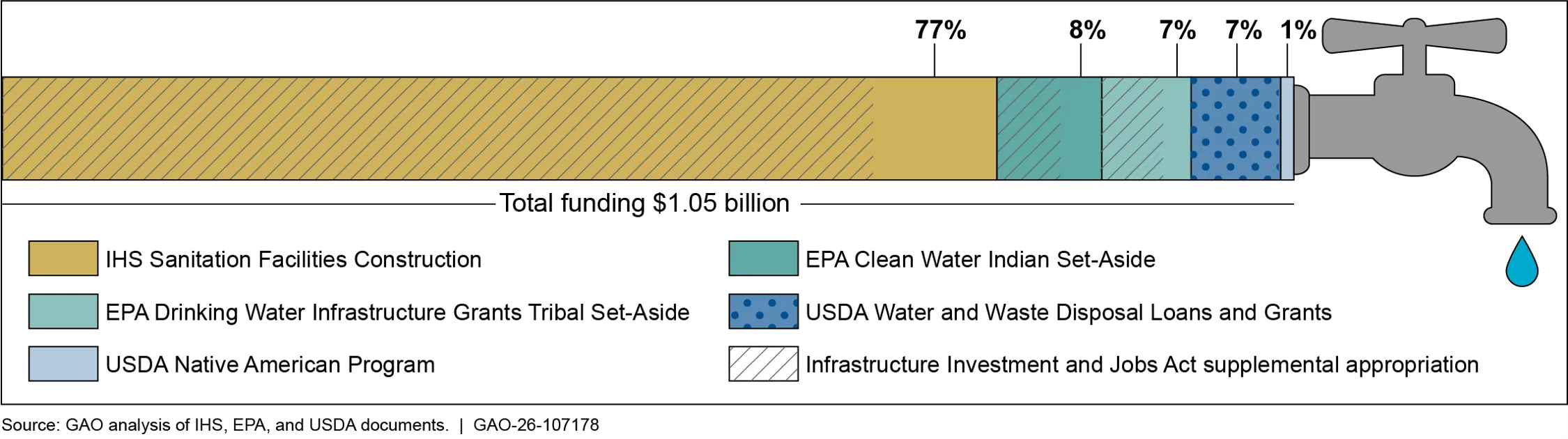
The Indian Health Service (IHS) has teamed up with the Environmental Protection Agency (EPA) and the U.S. Department of Agriculture (USDA) to provide financial support and technical assistance for water projects. As the lead agency, IHS helps Tribes plan, design, and construct these projects. EPA and USDA also fund them.
Federal Programs That Funded Tribal Water Projects, Fiscal Year 2025
Image
But even with this money and support from the government, there are considerable barriers that make it hard for tribal communities to access clean water.
Program eligibility. It’s not always clear which homes and buildings qualify for federal assistance. IHS says it can only provide aid to certain homes owned by Tribes or tribal members. This may exclude homes that are occupied but not owned by tribal members. It may also exclude community buildings.
When a community water project includes ineligible properties, Tribes and IHS staff must find other funding to cover costs or projects are delayed. Clarifying which homes qualify would help. But only Congress can do that.
Red tape. Tribes must navigate many different and complex processes and agency requirements to access federal funding. This often deters them from even applying. Greater collaboration between agencies would help.
Costs and system upkeep. Water infrastructure can deteriorate and prematurely fail when money and staff are unavailable to maintain them. The federal government does not pay for Tribes to maintain their systems or provide funding to staff these systems. As a result, Tribes have faced challenges hiring and retaining certified water operators to keep systems in working order.
These system failures have real consequences, creating risks to tribal residents’ health. For example, in 2025, two water systems were contaminated with E. coli because the Tribes did not have qualified staff to ensure chlorination equipment was working properly. These system failures can also increase costs to the federal government.
Our full report offers some possible solutions to the challenges tribal communities face. For example, we think Congress should create a pilot program that would help fund water system maintenance. Learn more about this and other possible strategies in our report.
- GAO’s fact-based, nonpartisan information helps Congress and federal agencies improve government. The WatchBlog lets us contextualize GAO’s work a little more for the public. Check out more of our posts at GAO.gov/blog.
- Got a comment, question? Email us at blog@gao.gov.
GAO Contacts
Image


Related Products
GAO's mission is to provide Congress with fact-based, nonpartisan information that can help improve federal government performance and ensure accountability for the benefit of the American people. GAO launched its WatchBlog in January, 2014, as part of its continuing effort to reach its audiences—Congress and the American people—where they are currently looking for information.
The blog format allows GAO to provide a little more context about its work than it can offer on its other social media platforms. Posts will tie GAO work to current events and the news; show how GAO’s work is affecting agencies or legislation; highlight reports, testimonies, and issue areas where GAO does work; and provide information about GAO itself, among other things.
Please send any feedback on GAO's WatchBlog to blog@gao.gov.