
The Next Outpost: NASA’s Plans for Replacing the Aging International Space Station
When your car gets old, you may face the decision of whether to spend money repairing it or replacing it. NASA is facing a similar dilemma with the aging International Space Station. Within the next year, NASA must choose whether to make repairs and updates that would extend the life of the Space Station or to replace it with a commercial outpost.
Today’s WatchBlog post looks at our new report on the status of the International Space Station and the impending choice NASA must make.
The International Space Station flies above South America
Image
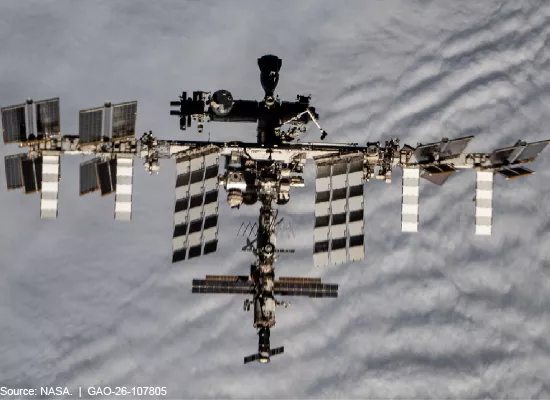
About the Space Station and its role in maintaining human presence above Earth
The International Space Station orbits Earth from nearly 250 miles above. It circles our planet every 90 minutes at a speed of 17,500 mph.
For more than 25 years, the Space Station has allowed humans to live off planet. About the size of a football field, it has living quarters to house an international crew of up to 7 astronauts or cosmonauts at a time. Over its lifetime, the Space Station has hosted nearly 300 astronauts from 26 different countries across the globe.
The outpost is also outfitted with several labs to allow for scientific experiments in space. Astronauts research everything from advanced medicine and physics to what happens to the human body in space.
The Space Station was funded and built through a collaboration of five participating space agencies from 15 different countries. However, the U.S. bears the majority of the costs to run it. NASA spends nearly $3 billion a year to operate and maintain the aging government-owned space station.
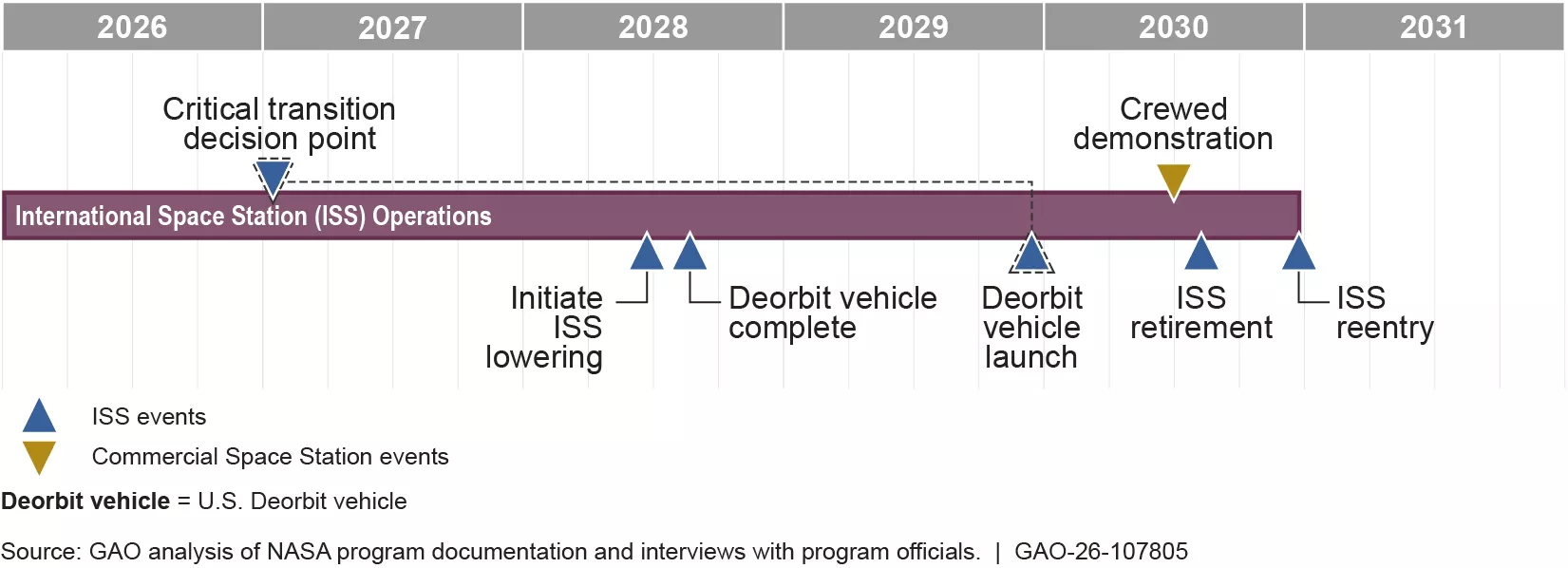
The original plan was for the Space Station to be used about 15 years. But now, more than a decade beyond that, the outpost is facing some structural issues that risk its mission and could result in higher costs for maintaining it. Because of this, NASA plans to retire and deorbit the current station by 2030, and the space agency has begun exploring replacement options.
Timeline for Transition and Deorbit of International Space Station (ISS), as of March
Image
NASA is looking to commercial space companies to replace the Space Station
With just a few years left on the current scientific outpost, the U.S. space agency is counting on private companies to launch their own orbiting stations to replace it.
In fact, NASA wants to transition from the government-owned station to commercially operated, private space stations. The agency has partnered with six aerospace companies to develop commercial successors. From these efforts, NASA will award contracts to selected companies to further develop prototypes and finalize designs.
The space agency doesn’t intend to take ownership of a new station. Instead, the selected U.S. companies would design, build, own, and operate their own stations. They would also maintain related ground system control centers and support infrastructure.
NASA’s role in overseeing the new stations would include certifying that they are safe for its space crews. And it forecasts that relying on commercial stations will drive down the costs for astronauts to conduct research in space and free up agency resources for other exploration projects.
NASA has some decisions to make
There’s a sense of urgency for getting plans in place—particularly since NASA wants to preserve America’s continued human presence in space. But we found several risks with NASA’s current plans. For example, the timeline for replacing the Space Station is rather ambitious. Under current plans, NASA has just over a year to determine if it should extend operations on the current space station beyond 2030. If it chooses to replace the Space Station, the agency will need a plan in place sooner rather than later. After all, if it’s not ready, the U.S. runs the risk of not being able to maintain human presence in space.
Agency officials said they are confident the current space station’s life could be extended through the late 2030s if needed. But it may become more challenging to maintain and repair the Space Station as it ages. After all, the Space Station is now operating well beyond the 15 years for which NASA and its international partners designed and tested it.
There are some budget and workforce constraints, too. Deorbiting the Space Station is expensive, as is the process of designing new ones to replace it. And maintenance of the current space station is a big concern. For example, NASA and its international partners are monitoring cracks in the transfer tunnel in the Russian segment of the Station that resulted in air leaks. As of February, NASA said those air leaks had been fixed with a sealant. But leaks continued and the fundamental structural issues that caused the cracks remain.
In short, NASA is still developing its transition plans and many uncertainties remain. But a decision is needed soon to ensure the success of NASA’s next steps. For more information on the agency’s plans and timelines, read our Q&A report.
- GAO’s fact-based, nonpartisan information helps Congress and federal agencies improve government. The WatchBlog lets us contextualize GAO’s work a little more for the public. Check out more of our posts at GAO.gov/blog.
- Got a comment, question? Email us at blog@gao.gov.
GAO Contacts
Image


Related Products

GAO's mission is to provide Congress with fact-based, nonpartisan information that can help improve federal government performance and ensure accountability for the benefit of the American people. GAO launched its WatchBlog in January, 2014, as part of its continuing effort to reach its audiences—Congress and the American people—where they are currently looking for information.
The blog format allows GAO to provide a little more context about its work than it can offer on its other social media platforms. Posts will tie GAO work to current events and the news; show how GAO’s work is affecting agencies or legislation; highlight reports, testimonies, and issue areas where GAO does work; and provide information about GAO itself, among other things.
Please send any feedback on GAO's WatchBlog to blog@gao.gov.