
K-12 Students Lost Millions of Days in Classrooms Due to School Facility Issues
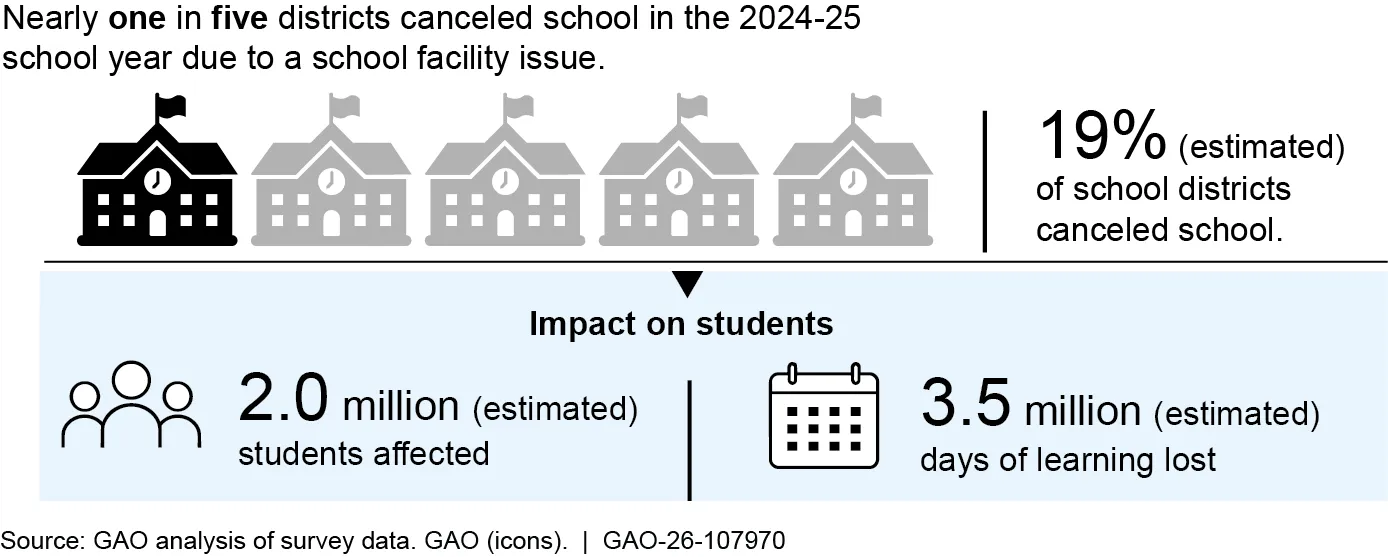
Flooded hallways. Classrooms with temperatures reaching 110 degrees. Black mold. Nearly one in five school districts cancelled classes because of issues like these during the 2024-25 school year.
When school facilities fall into disrepair, they can become a danger to students, teachers, and other staff. And when schools close, student learning is disrupted.
Today’s WatchBlog post looks at our new report about facilities issues in K-12 public schools.
An Urban High School with Broken Windows and Wall Units to Cool Classrooms
Image
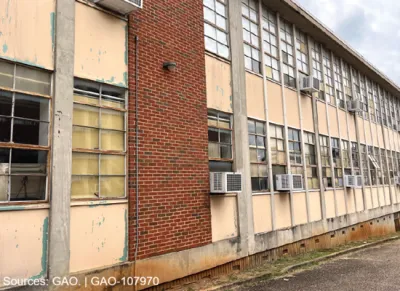
How widespread are school facility issues and what’s the impact?
Nearly half of school districts had chronic facility issues that disrupted learning in the 2024-25 school year. Common issues included:
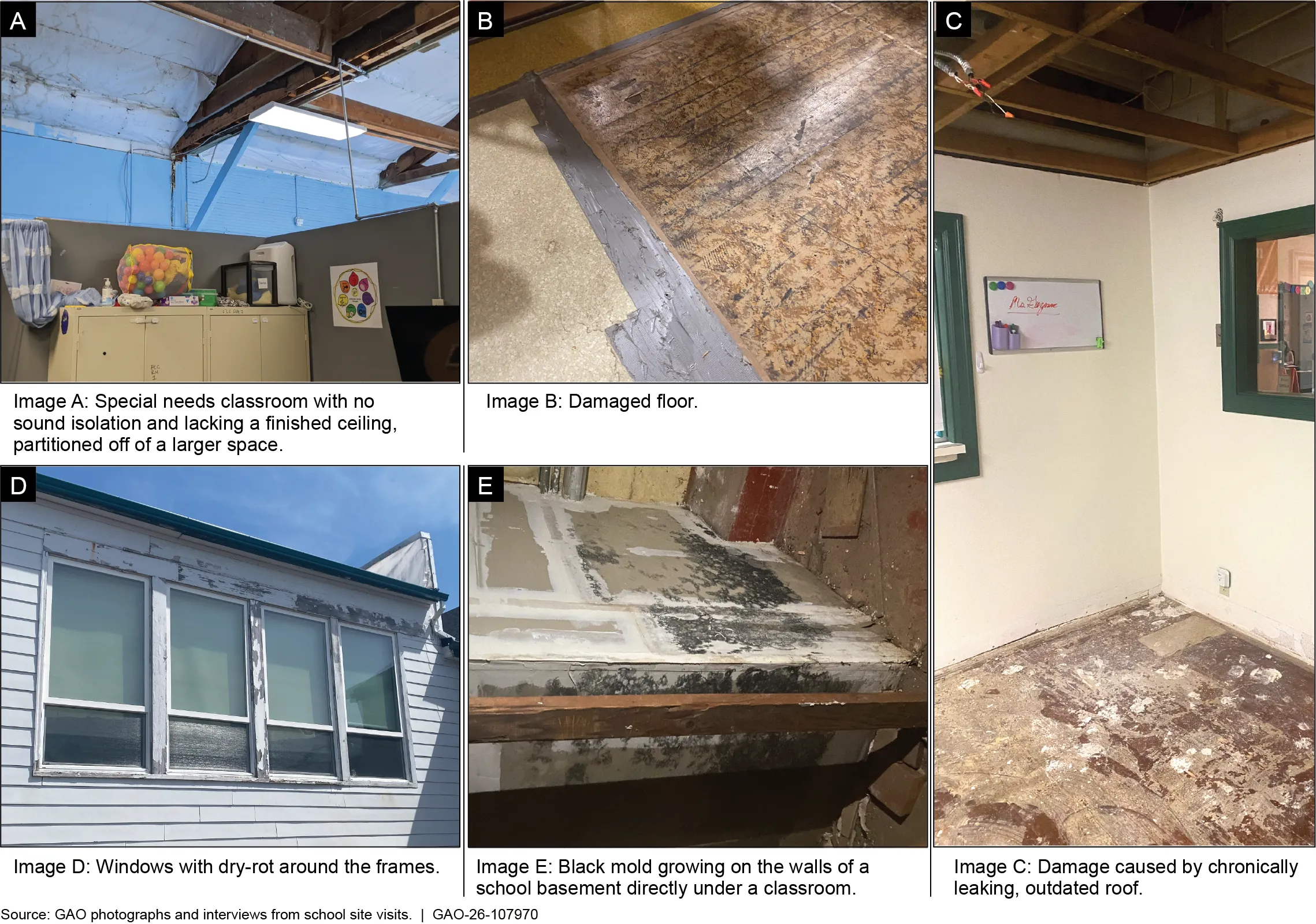
- Water intrusion. New school roofs can cost millions. As a result, many districts keep patching roofs that are past their useful lives instead of replacing them. This practice may lead to leaks that damage ceilings, floors, and electrical systems.
- Climate control. Outdated heating and cooling systems make it harder to regulate school temperatures. As a result, some classrooms have seen temperatures rise above 90 degrees or sink below 60 degrees.
- Ventilation. Outdated HVAC systems can also lead to stuffy and humid classrooms. And insufficient ventilation can contribute to mold and mildew.
- Plumbing and leaks. Old and fragile plumbing and septic systems can back up. As a result, districts have closed bathrooms or entire schools while repairs are made.
Canceling school is typically a last resort and the result of a facilities emergency—like a sewage backup that risks disease transmission. Even so, closures aren’t uncommon. Collectively, facilities-related school cancellations impacted an estimated 2 million students and resulted in 3.5 million days of learning lost over the course of a recent school year.
Estimated Percent of School Districts That Canceled School Due to a Facility Issue
Image
And even when schools aren’t closed, many students are still affected by disruptions like discomfort or distraction in the classroom, displacement from classrooms, and low morale.
We visited several schools experiencing these disruptions. In one school, children wore coats indoors during the winter due to low temperatures. In another, crawl spaces had been overtaken by stray cats who brought fleas into the building.
An Over 100-Year-Old Rural Elementary School with Significant Facility Issues
Image
Why not just repair schools? It’s a struggle
Fixing these facility issues is financially out of reach for many school districts. Facility needs often compete with other school-related budget priorities, such as educational programming and meeting the needs of students with learning or other disabilities.
When facilities budgets are cut, preventive maintenance often falls by the wayside. Recommended practices like flushing sewer lines to prevent backups and replacing aging roofs can be put off for another day. Putting off maintenance can lead to more complicated and costly repairs down the line. The result can be a long list of deferred maintenance projects that can cost hundreds of millions of dollars to complete.
Some states are pursuing strategies that can help school districts better address their facility needs. These strategies include:
- Providing additional financial supports like dedicated state funding for school facilities, state support for bond initiatives, and innovative funding approaches like public-private partnerships.
- Helping districts plan for future investments by monitoring facility conditions and assessing needs. These practices can also help districts prioritize critical projects and support long-range planning.
- Tracking district facility needs using data and communicating those needs to the state legislature and other stakeholders.
- Providing technical assistance to help guide and support districts’ planning efforts or assist in areas where in-district expertise may be lacking, like grants management.
- Encouraging cost reduction strategies like preventive maintenance, investing in energy efficiency measures, consolidating or closing schools, and adopting purchasing power strategies.
Find out more about how facilities issues at public schools are affecting student learning and the obstacles districts face when trying to address them by checking out our new report.
- GAO’s fact-based, nonpartisan information helps Congress and federal agencies improve government. The WatchBlog lets us contextualize GAO’s work a little more for the public. Check out more of our posts at GAO.gov/blog.
- Got a comment, question? Email us at blog@gao.gov.
GAO Contacts
Image



Related Products

GAO's mission is to provide Congress with fact-based, nonpartisan information that can help improve federal government performance and ensure accountability for the benefit of the American people. GAO launched its WatchBlog in January, 2014, as part of its continuing effort to reach its audiences—Congress and the American people—where they are currently looking for information.
The blog format allows GAO to provide a little more context about its work than it can offer on its other social media platforms. Posts will tie GAO work to current events and the news; show how GAO’s work is affecting agencies or legislation; highlight reports, testimonies, and issue areas where GAO does work; and provide information about GAO itself, among other things.
Please send any feedback on GAO's WatchBlog to blog@gao.gov.