
Low Snowfall Sets Ski Resort Communities Adrift—A Federal Program Could Help
For avid skiers, low or no snowfall can mean less time on the slopes. For small businesses in ski communities, warm winters and low snowfall can signal hard financial times.
When businesses are hit with weather-related disruptions, such as flooding, federal assistance may be available to them. But lack of snow isn’t always covered.
Today’s WatchBlog post looks at our report on when federal assistance may be available to help small businesses affected by low snow.
Image
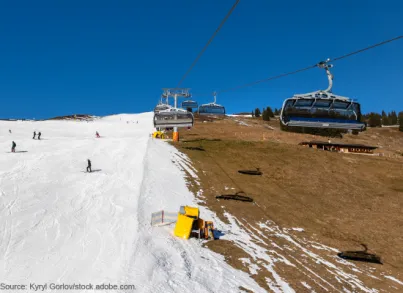
Less snow has put ski-related revenues on a downward slope
Last winter, U.S. ski areas experienced a 9% decrease in visits (about 9 million fewer people) from the prior 10-year average. Western slopes were hit particularly hard. They saw inconsistent snowfall and unusually warm temperatures that often resulted in rain instead of snow.
Many small businesses felt the impact economically. You might immediately think of ski resorts that felt this pinch. Yes, they were impacted. But, so too, were smaller shops—including ski rentals, restaurants and coffee shops, tour operators, and others that support winter tourism.
Unlike a flood, hurricane, or other weather-related events, low snowfall and warm winters cause more economic than physical harm. As a result, these conditions are not explicitly recognized as “disasters” under federal laws. Current laws define disasters as natural catastrophes that warrant assistance to ease severe loss, damage, or hardship.
When does low snow qualify for assistance? Some affected small businesses may qualify for the Small Business Administration’s (SBA) Economic Injury Disaster Loans if located in an area under a drought declaration. Under this program, SBA provides loans to affected small businesses that can help them pay their bills until normal operations resume.
But SBA officials told us many small businesses are not aware of this assistance. Knowing this could help some affected small businesses during difficult times.
Changes to federal assistance could help businesses, but come with potential tradeoffs
Expanding eligibility under SBA’s loan program could help businesses affected by low snowfall or warm winters. But such changes could come with tradeoffs. And Congress would need to consider important policy implications of changing the definition of “disaster.”
For example, Congress could add low snow and warm winters as eligible disaster types to laws. While this could help more small businesses, it could also increase the government’s financial exposure and cost taxpayers more.
The change may also raise broader questions about the federal government’s role in disaster response. Providing economic support for small businesses affected by relatively low snowfall or warm winters could set a precedent. Would small businesses then expect similar assistance for other weather variations, such as extended heat waves that limit outdoor recreation activities?
We looked at these policy implications and more in our new report. Be sure to read our full Q&A report for more information on SBA loans for businesses affected by low snowfall and warm winters.
- GAO’s fact-based, nonpartisan information helps Congress and federal agencies improve government. The WatchBlog lets us contextualize GAO’s work a little more for the public. Check out more of our posts at GAO.gov/blog.
- Got a comment, question? Email us at blog@gao.gov.
GAO Contacts
Image

Related Products
GAO's mission is to provide Congress with fact-based, nonpartisan information that can help improve federal government performance and ensure accountability for the benefit of the American people. GAO launched its WatchBlog in January, 2014, as part of its continuing effort to reach its audiences—Congress and the American people—where they are currently looking for information.
The blog format allows GAO to provide a little more context about its work than it can offer on its other social media platforms. Posts will tie GAO work to current events and the news; show how GAO’s work is affecting agencies or legislation; highlight reports, testimonies, and issue areas where GAO does work; and provide information about GAO itself, among other things.
Please send any feedback on GAO's WatchBlog to blog@gao.gov.