
GAO’s FY 2025 Report Card—What We Did to Improve Federal Programs and Save Billions of Dollars
The U.S. Government Accountability Office is responsible for auditing federal programs and spending to ensure that taxpayer dollars are protected, and that programs operate effectively and efficiently.
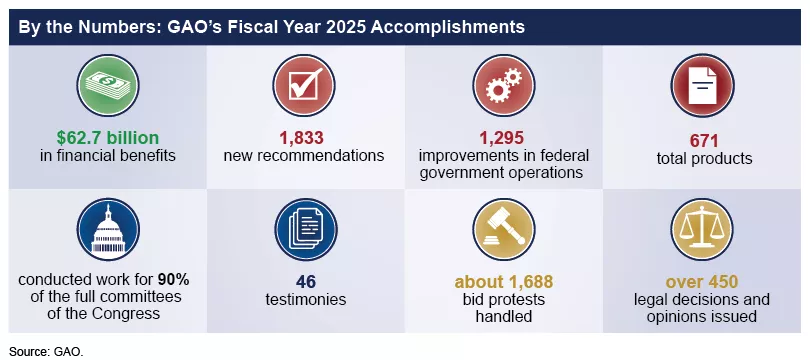
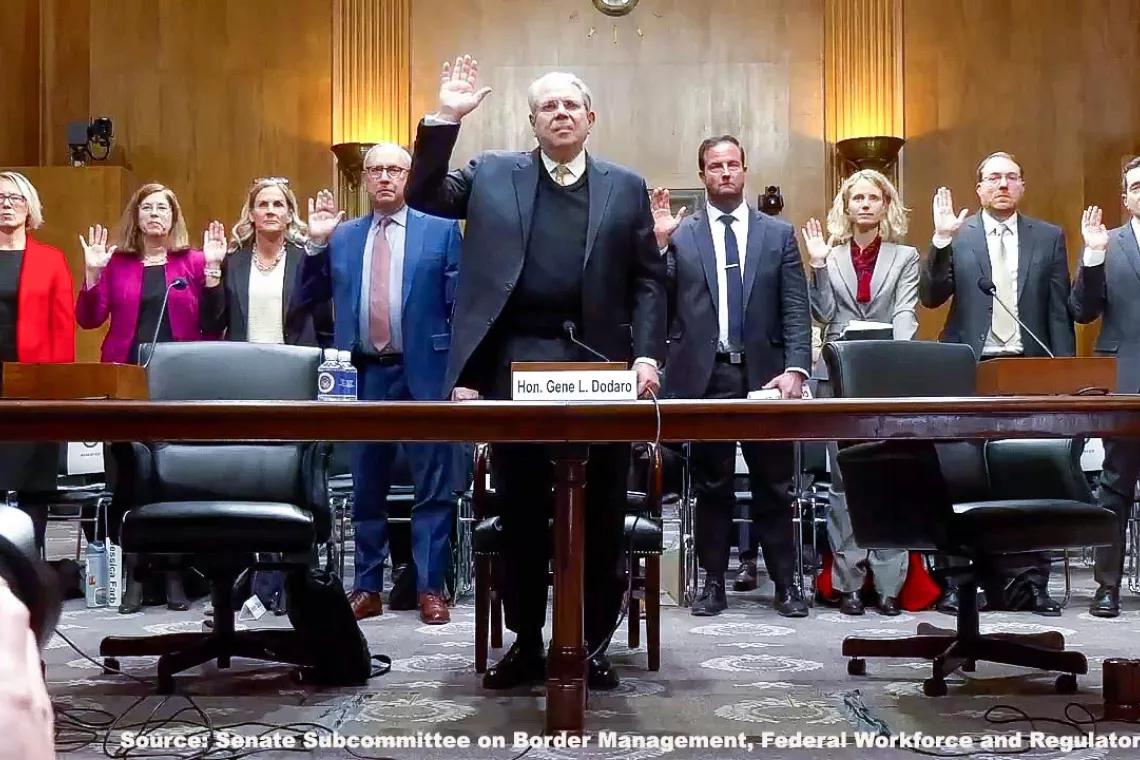
Each year, we summarize our efforts to improve federal performance and accountability in an annual report to Congress. Among our accomplishments in FY 2025, we issued 671 total products, made 1,833 new recommendations, and testified 46 times before 31 separate congressional committees and subcommittees on critical national issues. Additionally, our work and recommendations informed key legislative decisions to improve various programs.
Today’s WatchBlog post looks at our new Performance and Accountability Report, released today. In this report, we highlight $62.7 billion in financial benefits for the federal government.
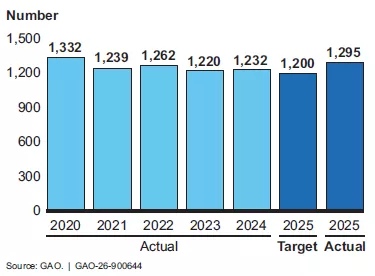
We’re also reporting 1,295 non-financial benefits. These are improvements to federal programs that were the result of our recommendations. Our recommendations to federal agencies this year have spurred operational improvements across federal programs—including those dedicated to public safety, national security, and health care.
Image
Our legislative and financial impacts in FY 2025
In FY 2025, we received 538 requests for work from 90% of the full committees of the Congress—delivering high-quality, nonpartisan, independent, and impactful work on a broad range of congressional interests and priorities.
Legislative Impacts: In FY 2025, our work informed legislative decisions. For example, Public Law 119-21, commonly known as the One Big Beautiful Bill Act:
- Sets new limits on how states use taxes on health care providers to fund their share of Medicaid costs. These changes would save an estimated $191 billion in the next decade, according to the Congressional Budget Office (CBO).
- Directs the Department of Health and Human Services to establish a system allowing states to submit Social Security numbers for Medicaid and Children’s Health Insurance Program enrollees. This will help ensure individuals are not enrolled in multiple state programs and save an estimated $17 billion over 10 years, according to CBO.
- Provides dedicated funding for additional activities to improve the U.S. stockpile of critical minerals through the National Defense Stockpile Transaction Fund. This will help DOD address shortfalls and mitigate some of the risks of relying on foreign or a single domestic source of supply.
Our work also informed provisions in the Servicemember Quality of Life Improvement and National Defense Authorization Act for FY 2025. These included changes related to military nutrition and food quality, shipbuilding costs, and cybersecurity requirements. Additionally, the Financial Management Risk Reduction Act incorporated our recommendations to enhance audit oversight, which will improve oversight of trillions of dollars.
Financial Benefits: Some of the largest financial benefits resulted from our work on fraud prevention, defense programs, and federal health care spending. For example, significant savings included:
- $16.6 billion associated with strengthened fraud controls in the Small Business Administration’s COVID-19 Economic Injury Disaster Loan program.
- $15.7 billion in Medicaid savings tied to changes in budget neutrality policies governing demonstration projects.
- $5 billion resulting from accelerated radioactive waste cleanup at the Department of Energy’s Savannah River Site in South Carolina.
- $4 billion from Department of Defense actions addressing cost and schedule risks in a classified acquisition program.
Additional Financial Benefits. We published our 15th annual report on fragmentation, overlap, and duplication, which has contributed to approximately $57.8 billion in financial benefits, as of March 2025. Cumulatively, our work in this area has resulted in about $725 billion in financial benefits since 2011.
Total Financial Benefits of $725 Billion Identified in GAO’s 2011-2025 Duplication and Cost Savings Annual Report—$57.8 Billion in 2025 Alone
Image

Further, we estimate that additional financial benefits could be realized if our open matters for congressional consideration and recommendations to federal agencies are implemented. As of the end of FY 2025, we estimated that taking actions on these suggestions by GAO could yield between at least $132 billion and $251 billion in future savings.
How we improved government operations
We recorded 1,295 non-financial benefits, driving operational improvements across federal programs. These include actions to modernize the air traffic control system, enhance pedestrian safety tests for new cars, strengthen child trafficking prevention efforts, and ensure veterans’ have appropriate access to prescribed controlled substances.
Image
National Security, Technology, and Cyber Resilience. Our work addressed military readiness, defense acquisition, cybersecurity, science and technology issues, and critical infrastructure. For example,
Defense acquisitions. We testified before Congress on the Department of Defense’s progress in addressing more than 100 recommendations that we have made since 2020. These actions would improve military readiness and address persistent challenges across air, sea, ground, and space domains.
Cybersecurity. We have made more than 4,000 recommendations to federal agencies about cybersecurity issues since 2010. Of these, about 84% have been implemented, as of August 2025.
Science and technology. We continued to expand our science and technology portfolio—issuing our first trends paper. This provides foresight into developing technologies that could have significant impacts on Americans. And we issued products on current and emerging technologies and complex issues (such as generative AI, quantum computing, and extracting critical minerals from seawater).
We continued to focus on congressional priority areas—including issuing an updated High Risk List that identified 38 areas of government that are vulnerable to fraud, waste, abuse, or mismanagement.
To learn more about our FY 2025 accomplishments, read our Performance and Accountability Report. You can also get the latest updates on our work to improve federal programs and save taxpayers money by visiting our website GAO.gov and following us on social media.
- GAO’s fact-based, nonpartisan information helps Congress and federal agencies improve government. The WatchBlog lets us contextualize GAO’s work a little more for the public. Check out more of our posts at GAO.gov/blog.
- Got a comment, question? Email us at blog@gao.gov.
GAO Contacts
Image

Related Products
GAO's mission is to provide Congress with fact-based, nonpartisan information that can help improve federal government performance and ensure accountability for the benefit of the American people. GAO launched its WatchBlog in January, 2014, as part of its continuing effort to reach its audiences—Congress and the American people—where they are currently looking for information.
The blog format allows GAO to provide a little more context about its work than it can offer on its other social media platforms. Posts will tie GAO work to current events and the news; show how GAO’s work is affecting agencies or legislation; highlight reports, testimonies, and issue areas where GAO does work; and provide information about GAO itself, among other things.
Please send any feedback on GAO's WatchBlog to blog@gao.gov.