Image

Space

Image

Jump To:

Open Recommendations

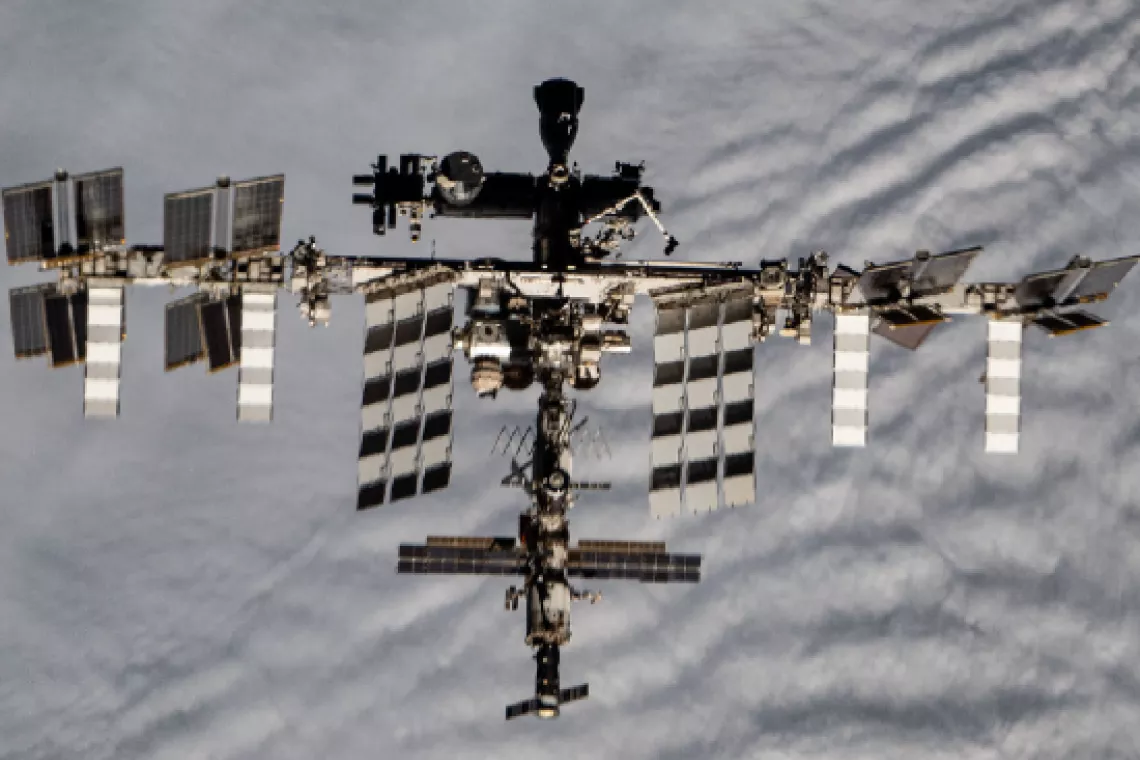
Low-Earth Orbit: NASA Faces Impending Decisions for Replacing International Space Station with Commercial Stations

GAO-26-107805
Jun 17, 2026
Show
2 Open Recommendations
Agency Affected Recommendation Status
National Aeronautics and Space Administration The NASA Administrator, in coordination with the Space Operations Mission Directorate, should use its risk management process to assess the likelihood and duration of a gap in continuous capability or human presence in LEO, including plans to mitigate the likelihood of a gap, if necessary. (Recommendation 1)
Open
When we confirm what actions the agency has taken in response to this recommendation, we will provide updated information.
National Aeronautics and Space Administration The NASA Administrator, in coordination with the Space Operations Mission Directorate, should document the assessment process that NASA will use to make an informed decision on NASA's readiness to retire and deorbit the ISS as planned in 2030. This includes documenting the factors that will be used to make the decision such as the key assumptions, risks, and uncertainties. (Recommendation 2)
Open
When we confirm what actions the agency has taken in response to this recommendation, we will provide updated information.

NASA Artemis Missions: Exploration Ground Systems Program Could Strengthen Schedule Decisions

GAO-25-106943
Oct 17, 2024
Show
1 Open Recommendations
Agency Affected Recommendation Status
National Aeronautics and Space Administration The NASA Administrator, in coordination with the Exploration Systems Development Mission Directorate, should ensure that Exploration Ground Systems program and Mobile Launcher 2 project officials perform at least one schedule risk analysis prior to beginning integrated operation activities to support the Artemis IV launch. (Recommendation 1)
Open
NASA partially concurred with this recommendation stating that instead of conducting a schedule risk analysis (SRA), the agency planned to monitor schedule risk using other tools. In September 2025, NASA officials said they do not currently have plans to do an SRA for the ML2 project, or for the EGS program or Artemis IV mission overall, which would include the ML2 project. They said NASA is in the process of evaluating Artemis missions and their associated content, and as a result, an SRA does not make sense at this time.

NASA Lunar Programs: Significant Work Remains, Underscoring Challenges to Achieving Moon Landing in 2024

GAO-21-330
May 26, 2021
Show
1 Open Recommendations
Agency Affected Recommendation Status
National Aeronautics and Space Administration The NASA Administrator, in coordination with the Associate Administrator for the Science Mission Directorate, should ensure the Volatiles Investigating Polar Exploration Rover (VIPER) project office includes relevant development costs from the Resource Prospector project and the cost of the Commercial Lunar Payload Services task order for the delivery of VIPER to the lunar surface into its cost baseline. (Recommendation 1)
Open
NASA did not agree with this recommendation stating it did not include development costs for the Resource Prospector project in the baseline because VIPER's mission was significantly different, its design is much more capable, and a different mission directorate funded the project. In addition, NASA stated that it chose not to include the Commercial Lunar Payload Services task order costs in the VIPER project's cost baseline because the Commercial Lunar Payload Services initiative differs from other launch services procured for NASA missions. In July 2024, NASA notified Congress of its plans to cancel the VIPER project due to cost growth and that the agency planned to close out the project in April 2025. We will monitor the agency's plans to close out the project. To the extent that our recommendation remains implementable, we continue to believe that the relevant costs incurred for the VIPER project's development under the Resource Prospector project are important because they provide visibility into the total cost of developing the rover and some of its instruments. Further, the cost of Commercial Lunar Payload Services task order to deliver VIPER to the Moon is a key cost of the project's life cycle, even if the project is not responsible for managing the task order.

Commercial Space Transportation: FAA Should Examine a Range of Options to Support U.S. Launch Infrastructure

GAO-21-154
Dec 22, 2020
Show
1 Open Recommendations
Agency Affected Recommendation Status
Commercial Space Transportation We recommend that the Associate Administrator for AST provide Congress the results of an examination of a range of options—including funding and financing tools, as well as alternatives to making funding available—to support space transportation infrastructure. This examination should include a discussion of trade-offs and whether and how, if at all, each approach would contribute to national policy goals. (Recommendation 1)
Open
In April and May 2026, AST provided us with updates on the status of its efforts regarding this recommendation. AST said that it has continued to work with the National Spaceport Interagency Working Group (NSIWG) to develop recommendations for support of U.S. launch Infrastructure, though it also said that the bulk of the NSIWG work has been superseded by Executive Order 14369, Ensuring American Space Superiority, and Executive Order 14335, Enabling Competition in the Commercial Space Industry. AST said it that intends on incorporating relevant work identified in the draft NSIWG recommendations under appropriate EO guidance. In addition, as directed under EO 14335, AST said it is working with NASA and DOD to align review processes for spaceport development across agencies, eliminating those that are duplicative, and preserving required federal space-exploration and national security space launch capacity. We will continue to monitor AST's work regarding this recommendation and its actions to identify options to support space transportation infrastructure.

GAO Contacts

Multimedia

Podcasts

Our 2025 Assessment of NASA's Major Projects
As NASA Plans Its Return to the Moon, Greater Visibility Into Spending Could Help Address Cost Concern
After Delayed Artemis 1 Launch, What’s Next for NASA’s Lunar Program