
The B-52: Why is the Air Force Spending Billions to Modernize a 70-year-old Plane?
The Air Force began flying the B-52 in the 1950s. Back then, these long-range, heavy bombers had a projected lifespan of 20 years. More than 70 years later, the Air Force says it still needs the B-52 and is spending billions to upgrade it.
Today’s WatchBlog post looks at our new report on why the B-52 remains important and what’s being done to modernize it.
Why is the B-52 still so important to the Air Force?
There were nearly 750 B-52s produced for the Air Force. Today, about 75 are still flying. So important is the B-52 to the Air Force that when it lost one in 2016, it resurrected another from a boneyard (an airplane cemetery).
But why? The Air Force has newer bombers. For example, it has the B-1, B-2, and is currently developing the B-21. They all have long-range strike capabilities.
Why does the military still need the B-52? According to the Air Force, the B-52 complements its other bombers and remains critical to the nuclear triad—the United States’s ability to deploy nuclear capabilities by land, air, and sea. The B-52 remains one of the few planes capable of delivering nuclear weapons. It can fly 8,800 miles without refueling (that’s about a third of the globe at its widest point). And it can carry a lot of weight—as much as 70,000 pounds.
Recently, the Air Force deployed the B-52 in Iran during air attacks. The goal of modernization efforts is to keep the B-52 capable of flying missions into the 2050s.
B-52 Transporting an X-15 Rocket Research Aircraft in 1959. This rocket is now housed in the Smithsonian.
Image

What is the Air Force doing to modernize the B-52?
A lot has changed since the B-52's first flight in 1952. And while some may say the bomber’s longevity proves it is a model of aviation engineering excellence—‘They don’t build ‘em like they used to’—it still needs updates to compete in the global arena.
The Air Force plans to spend $21 billion modernizing the remaining 70-plus active B-52s. This plan is one of the most extensive modernization programs in Air Force history. It includes updates to the bomber’s engines and radar, as well as communications, software, and weapon systems. In total, there are 13 modernization efforts underway.
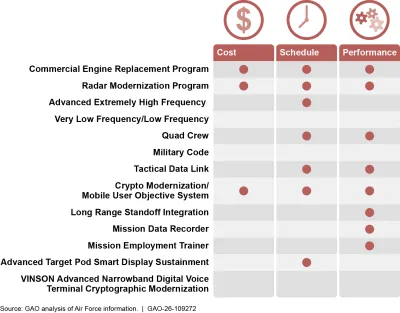
Two of these efforts—the engine and radar upgrades—comprise the bulk of the costs (more than 88%). They are estimated to cost more than $18 billion and are also the most time- and labor-intensive efforts underway.
We found that ten of the 13 modernization efforts were experiencing cost growth, schedule delays, or performance challenges. The engine and radar were experiencing all three of these issues.
B-52 Modernization Challenges by Effort
Image
What’s causing delays and cost increases, and what can be done about it?
Upgrades to the B-52's engines and radar (again, the two largest efforts) have each experienced cost increases of more than 30%. Both are also delayed more than 3 years from original estimates.
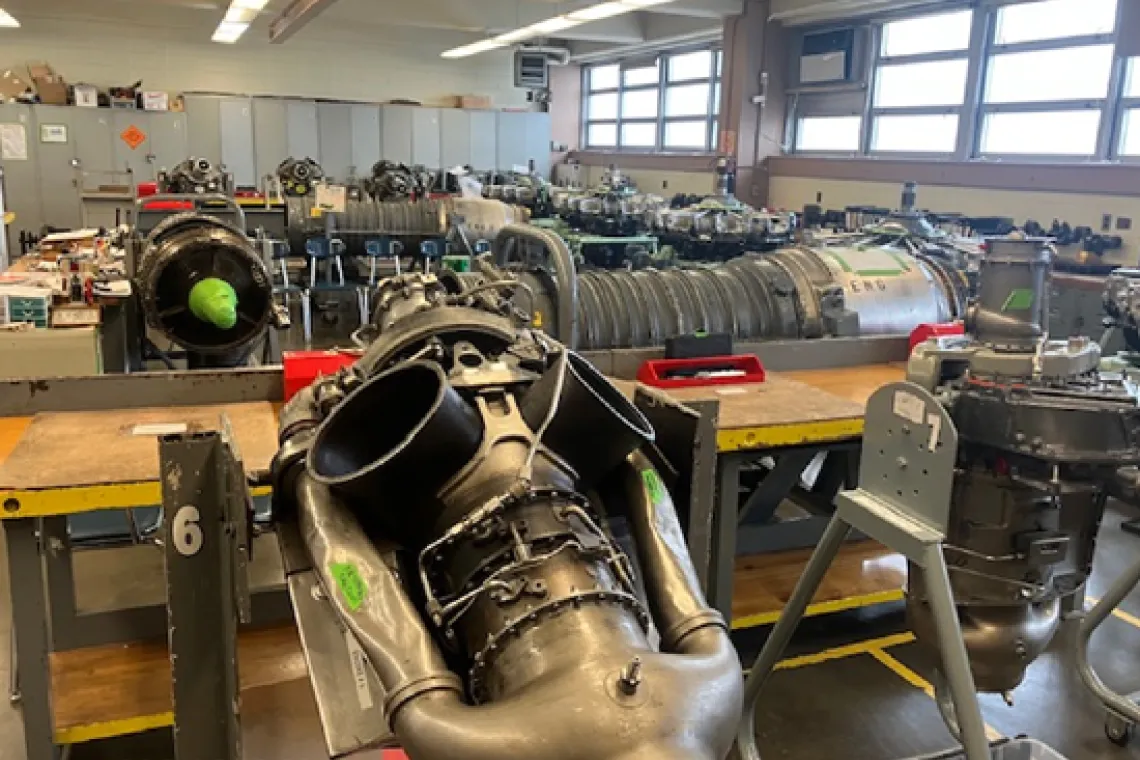
Let’s look at just the engine replacement effort. It faces ongoing development challenges. For example, during a wind tunnel test in 2023, the Air Force discovered an air flow issue that could cause the engine to stall in-flight. That discovery delayed the project about a year and added to costs.
Capacity issues at maintenance depots also add to development challenges. Hangers are crowded and maintenance crews need to complete normal maintenance on the B-52 while supporting this large modernization effort. Normal repairs to this plane—the current engine in particular—are time- and labor-intensive. And maintenance teams sometimes struggle to make timely repairs because of a longstanding shortage of spare parts. This has left B-52s parked in depot hangers longer—reducing their mission readiness.
Maintaining and modernizing a 70-year-old plane is no small task. But there are ways the Air Force could improve its efforts to avoid additional cost and schedule growth. We think it should reassess development and production risks and how to avoid them. The Air Force could also leverage available digital engineering tools to speed up development and reduce cost and schedule risks. And the Air Force should look at how depot capacity and maintenance issues could further delay modernization.
Learn more about plans to modernize the B-52 by reading our new report.
- GAO’s fact-based, nonpartisan information helps Congress and federal agencies improve government. The WatchBlog lets us contextualize GAO’s work a little more for the public. Check out more of our posts at GAO.gov/blog.
- Got a comment, question? Email us at blog@gao.gov.
GAO Contacts
Image

Image



Related Products

GAO's mission is to provide Congress with fact-based, nonpartisan information that can help improve federal government performance and ensure accountability for the benefit of the American people. GAO launched its WatchBlog in January, 2014, as part of its continuing effort to reach its audiences—Congress and the American people—where they are currently looking for information.
The blog format allows GAO to provide a little more context about its work than it can offer on its other social media platforms. Posts will tie GAO work to current events and the news; show how GAO’s work is affecting agencies or legislation; highlight reports, testimonies, and issue areas where GAO does work; and provide information about GAO itself, among other things.
Please send any feedback on GAO's WatchBlog to blog@gao.gov.