
Where Does the Army Go to Repair a Tank?
When your car breaks down, there are typically a couple shops in town you can take it to. When an Army tank or a big truck needs repairs, two depots primarily perform this work—the Anniston Army Depot in Alabama and Red River Army Depot in Texas.
These two depots are responsible for maintaining and repairing hundreds of large Army vehicles each year. But in recent years, these depots have faced challenges doing this work.
Today’s WatchBlog post looks at our new report on why.
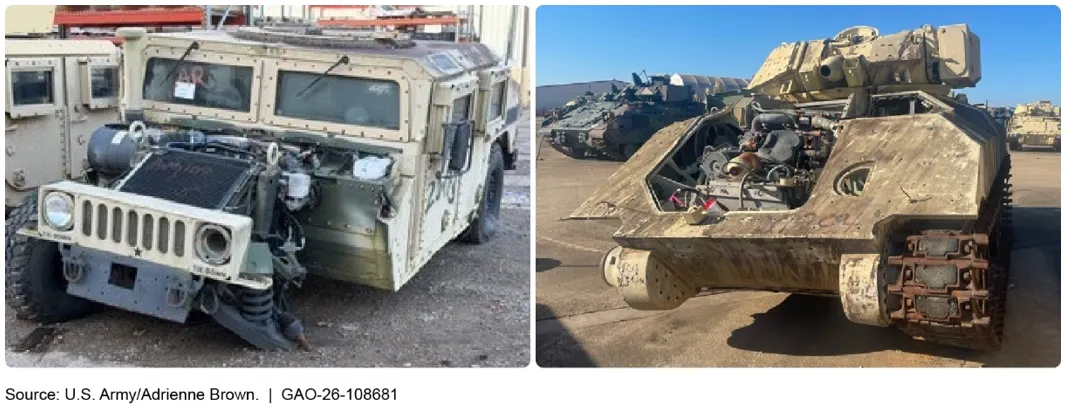
Condition of a Humvee (left) and Bradley Fighting Vehicle (right) Upon Arrival at Red River Depot, Texas
Image
The tough job of repairing and maintaining tanks
The Anniston and Red River Depots aren’t places for quick tank tune-ups. Most of the depots’ work involves major repairs, overhauls, and repairing parts to be reused on other vehicles.
Over the last several years, the Army spent more than $7.1 billion operating these depots. Of this money, more than $3 billion was spent on repairing parts. This included engine and transmission part repairs for vehicles like Humvees and Armored Recovery Vehicles, among others.
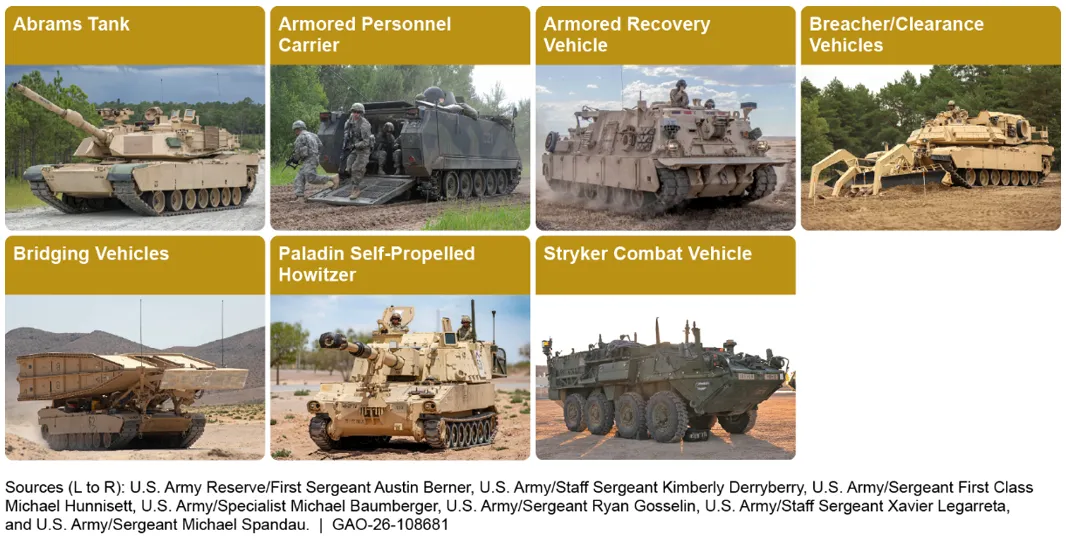
Anniston primarily works on tracked vehicles, like tanks and the others seen below. Most of the workload at this depot is dedicated to fixing Abrams tanks. About $1.8 billion was spent repairing these tanks between Fiscal Years 2021 and 2025.
Anniston also performs maintenance on Army locomotives, towed artillery, and small caliber weapons.
Ground Vehicles Primarily Maintained and Repaired at Anniston Army Depot
Image
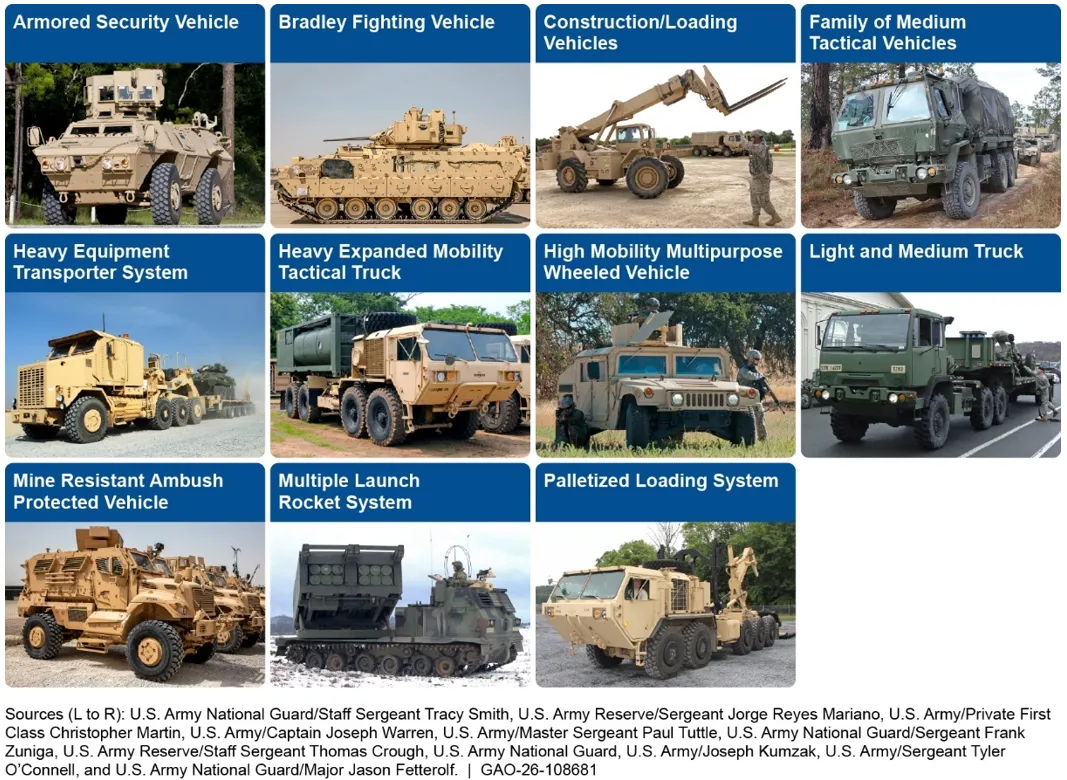
Red River primarily works on wheeled vehicles—such as those seen below. Of these vehicles, most time and money at Red River was used fixing High Mobility Multipurpose Wheeled Vehicles (Humvees). About $634 million was spent repairing these vehicles.
Additionally, Red River has a rubber manufacturing facility that maintains and repairs large road wheels and tank tracks.
Ground Vehicles Primarily Maintained and Repaired at Red River Army Depot
Image
Maintaining Army vehicles is getting tougher
During the last several years, these two Army depots have seen changes that have challenged their efforts to complete timely repairs.
Staff reductions. Anniston and Red River lost some 785 people (or about 18% of staff) when comparing Fiscal Years 2021 and 2025. Much of this loss was the result of the deferred resignation program (commonly known as the “fork in the road”) and hiring freezes initiated in Fiscal Year 2025.
The Army cut key positions, including more than 200 mechanics. And officials from both depots told us they struggle to retain and recruit (even without the hiring freeze) experienced staff—particularly those in skilled trades, like electricians.
The depots hired contractors to offset some of these losses. However, officials told us these hires often arrive without the skills required, which means supervisors must redirect resources to train and oversee their work.
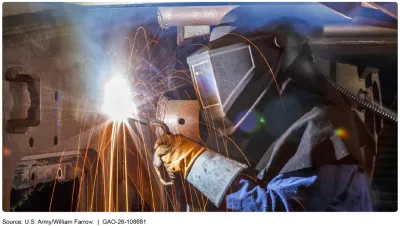
A Maintainer Welding at Anniston Army Depot in Alabama
Image
Vehicle conditions. And while struggling with staffing, the depots are receiving vehicles in worse than expected condition. For example, Anniston described receiving 79 Abrams tanks for repair. They had expected them to be drivable when they arrived at the depot but soon found out that only 10 could be started or driven.
Officials at Red River described similar situations where vehicles arrived in unexpectedly poor condition. For example, we observed Humvees and Bradleys missing wheels, tracks, suspensions. and gun barrels.
Officials at both depots said that vehicles arriving at the depot in such conditions affected their ability to plan for maintenance and repair work.
Availability of parts and old maintenance equipment. Officials described a lack of parts stemming from manufacturers going out of business and only a single available supplier, amongst others. Repairs are delayed because of supply chain issues.
And using old maintenance equipment has challenged repair efforts. Some officials told us that the newest equipment they had was 20 to 30 years old. Some of the oldest equipment dates back to the 1940s. When this maintenance equipment breaks down, it can create a bottleneck for repairs.
We outline more of these challenges and the work done at Anniston and Red River in our full report. Learn more by reading it here.
- GAO’s fact-based, nonpartisan information helps Congress and federal agencies improve government. The WatchBlog lets us contextualize GAO’s work a little more for the public. Check out more of our posts at GAO.gov/blog.
- Got a comment, question? Email us at blog@gao.gov.
GAO Contacts
Image




Related Products

GAO's mission is to provide Congress with fact-based, nonpartisan information that can help improve federal government performance and ensure accountability for the benefit of the American people. GAO launched its WatchBlog in January, 2014, as part of its continuing effort to reach its audiences—Congress and the American people—where they are currently looking for information.
The blog format allows GAO to provide a little more context about its work than it can offer on its other social media platforms. Posts will tie GAO work to current events and the news; show how GAO’s work is affecting agencies or legislation; highlight reports, testimonies, and issue areas where GAO does work; and provide information about GAO itself, among other things.
Please send any feedback on GAO's WatchBlog to blog@gao.gov.