
Issue Summary
In the United States, states and local election jurisdictions are largely responsible for administering federal elections. States regulate activities like voting methods and setting time periods for voting on or before Election Day. Among other things, local jurisdictions register eligible voters, design ballots, arrange for polling places, and count ballots.
Federal laws regulate various aspects of election administration, including voter registration and protecting the voting rights of individuals with disabilities and certain minority groups. Various federal agencies have roles and responsibilities for implementing these laws and assisting states and localities in managing election administration. Federal agencies also have roles in administering campaign finance laws.
There are benefits and challenges to how states and local election jurisdictions administer various processes. There are also opportunities to strengthen federal efforts.
For instance:
- Voter registration. Federal law requires that states provide certain voter registration opportunities, such as when an individual obtains a driver’s license. States can also provide additional opportunities, such as online registration. Establishing infrastructure for online registration requires time and money but can generate savings and enhance accuracy. For instance, it can reduce the need for local election officials to manually process paper registration forms. Both states and local jurisdictions also work to maintain accurate voter registration lists but have struggled to ensure that these lists capture all changes in registrants’ information—such as when people do not notify the U.S. Postal Service when they move.
- Vacancies in the House of Representatives. In recent years, threats against members of Congress have increased. This has raised questions about states' ability to fill vacancies in the U.S. House of Representatives. If the Speaker of the House announces that there are more than 100 vacancies, federal law generally requires states to hold special elections within 49 days. A survey of election officials from all 50 states reported that about half of the respondents were unaware of this federal law. However, a number of officials noted that they believed they could hold special elections consistent with the law.
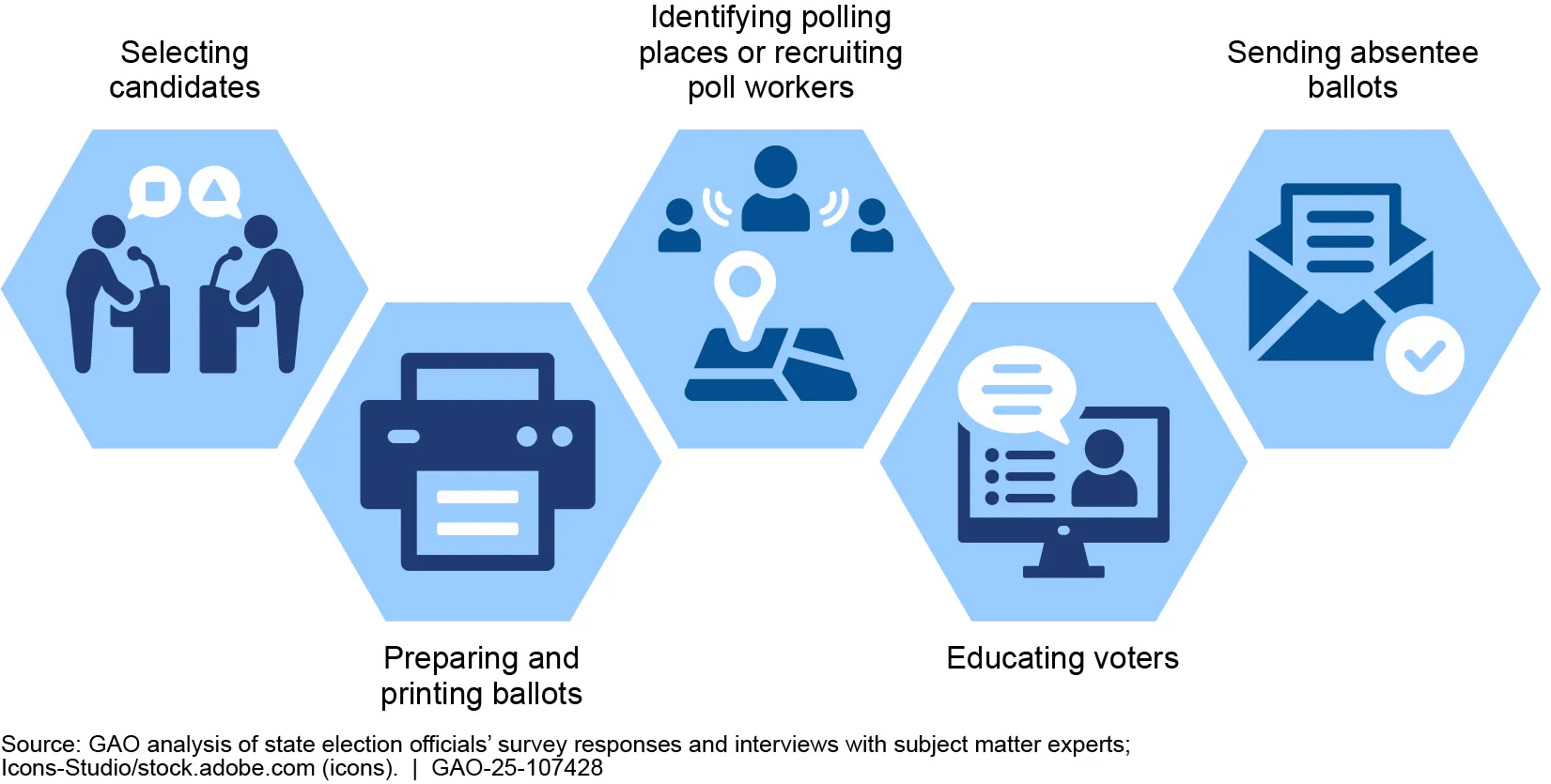
Examples of Challenges that States Might Face in Holding Special Elections in Extraordinary Circumstances
Image
Recent Reports
GAO Contacts
Image
Image
