
Long-Term and Assisted Care—Here’s What Medicare and Medicaid Do and Do Not Cover
Every year, millions of families face difficult decisions about how to care for aging parents or relatives. One of the hardest questions that comes up is how to pay for this care. Federal Medicare and Medicaid programs may offer support. But navigating these options can be difficult for many.
Today’s WatchBlog post looks at our new report on these programs and the supports they provide.
Image

Coverage may differ by the type of care you want, need
Older adults or people with disabilities may need long-term or assisted care services. There’s a range of options depending on the help needed. For example, some people need weekly or daily visits to help with medications, eating, and bathing. Others need around-the-clock care. This can occur in homes, institutions like nursing homes, or other private residential settings (such as assisted living facilities).
Examples of Services Provided in Different Settings
Image
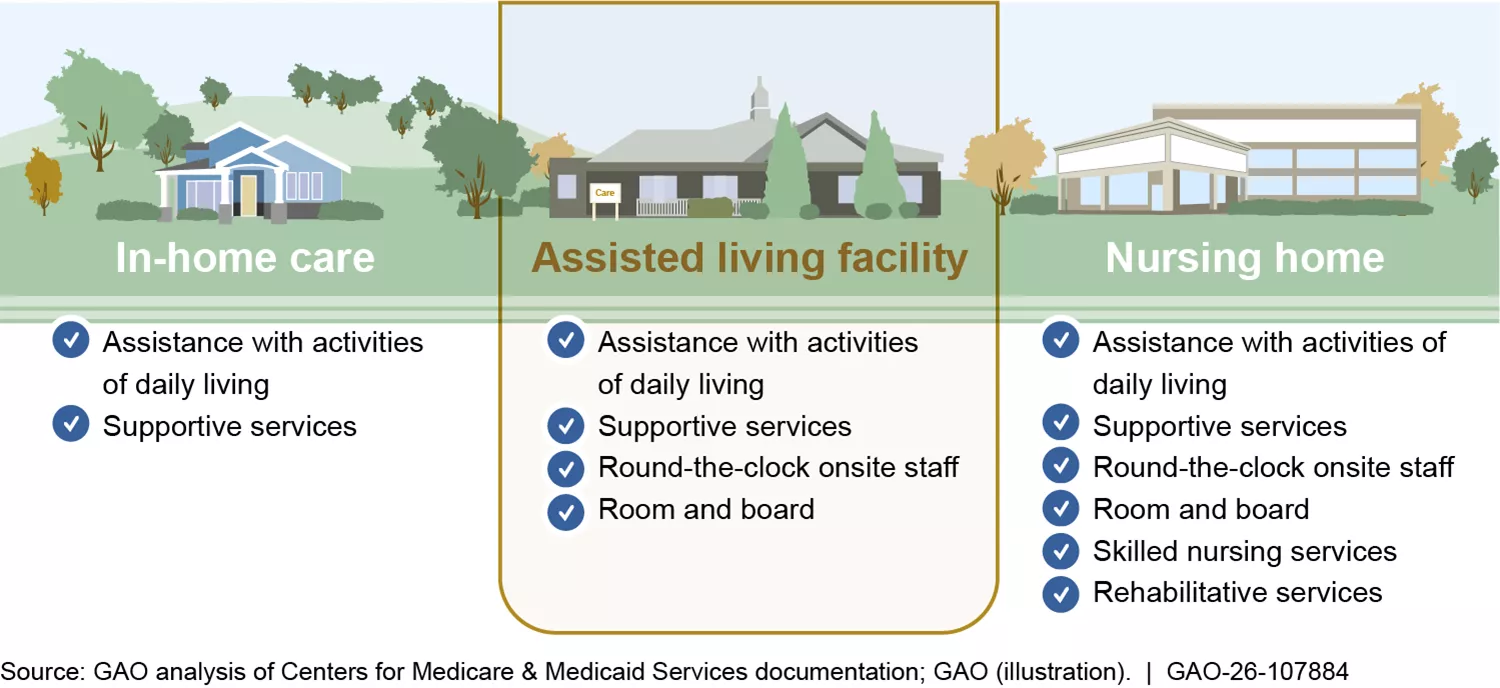
Most assisted living facility residents pay for their care out of pocket. But there are federal programs that cover certain services provided in assisted living facilities for those who are eligible. At a high level, here’s what’s generally covered by Medicaid and Medicare.
Medicaid is a joint federal-state program and provides health coverage to low-income and medically needy Americans. It is the primary payer for long-term care in the United States. State-run Medicaid programs have the option to cover long-term care provided in people’s homes. Programs can opt to cover services offered by assisted living facilities for those who qualify. This includes assistance with daily activities. However, Medicaid cannot cover room and board costs at assisted living facilities.
Medicare is the largest federal health program and serves older Americans and those with disabilities. Most people who live in assisted living facilities qualify for Medicare. But it does not typically cover assisted living services or room and board costs. Medicare may cover home health or hospice care. For example, with hospice care, people who are terminally ill may receive physical care, counseling, drugs, equipment, and supplies.
Coverage may differ depending on where you live
Because Medicaid is a joint state-federal program, coverage can differ by where you live. And that can have a big impact on what you pay out of pocket.
We looked at differences between states. In 43 states and Washington D.C., Medicaid covered assisted living services for older adults and people with disabilities. Seven states did not offer coverage.
Medicaid Coverage of Assisted Living Services by State, as of March 2025
Image
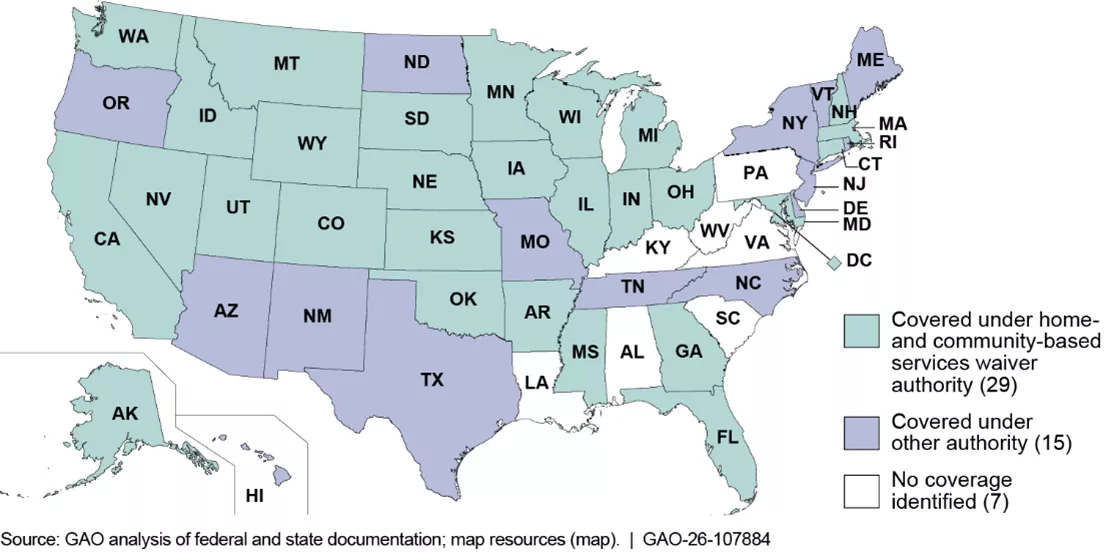
Of the states that did offer coverage, most of them (29 of 44) did so under Medicaid’s home- and community-based services waiver. This is an authority that gives states the flexibility to target enrollment to specific populations and limit the number of participants. That allows states to manage costs. But it can also make accessing services more challenging for those who need care. The remaining 15 states used other authorities to provide coverage.
States may also look for ways to help families cover room and board costs that are not covered by Medicaid. For example, Oregon used state funds to help some people with the cost of room and board. Illinois requires assisted living facilities that receive Medicaid funding to align their room and board rates with the Social Security Administrations’ Supplemental Security Income (SSI) program benefit rates.
Learn more about these and other differences between states’ Medicaid coverage of assisted care by reading our full report.
- GAO’s fact-based, nonpartisan information helps Congress and federal agencies improve government. The WatchBlog lets us contextualize GAO’s work a little more for the public. Check out more of our posts at GAO.gov/blog.
- Got a comment, question? Email us at blog@gao.gov.
GAO Contacts
Image




Related Products

GAO's mission is to provide Congress with fact-based, nonpartisan information that can help improve federal government performance and ensure accountability for the benefit of the American people. GAO launched its WatchBlog in January, 2014, as part of its continuing effort to reach its audiences—Congress and the American people—where they are currently looking for information.
The blog format allows GAO to provide a little more context about its work than it can offer on its other social media platforms. Posts will tie GAO work to current events and the news; show how GAO’s work is affecting agencies or legislation; highlight reports, testimonies, and issue areas where GAO does work; and provide information about GAO itself, among other things.
Please send any feedback on GAO's WatchBlog to blog@gao.gov.