
GAO Reports That Help Protect Vulnerable Elders
News stories about older adults whose trusted family members or other caretakers deny them food and water, leave them to live under deplorable conditions, or physically and psychologically abuse them are all too common. Neglect and abuse can often go hand in hand with financial exploitation, which can rob older adults of the life savings and property they count on to support them in old age.
Our new elder abuse key issue page provides a detailed overview of our findings and recommendations on elder abuse, financial exploitation, and federal fiduciary and guardianship programs.
Our reports on elder abuse:
- report on the nature and extent of the problem;
- recognize that state and local Adult Protective Services (APS) Programs are on the front lines in addressing elder abuse and face major challenges combating it;
- identify federal efforts in combating elder financial exploitation and conclude that the federal government has a vital role to play; and
Image
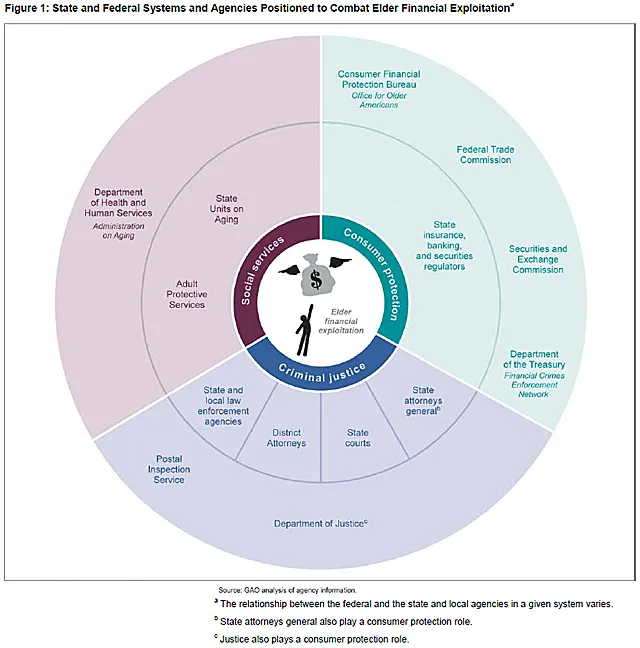
Excerpted from GAO-13-110
- review federal fiduciary programs and report on state guardianship programs, both of which are dedicated to protecting incapacitated adults.
The incidence of elder abuse is expected to increase as the size of the older population grows, further straining the social service and criminal justice systems charged with protecting that population. Our reports provide recommendations that can inform federal agencies' and other stakeholders’ efforts to better prevent, identify, and stop the abuse and financial exploitation of our nation’s vulnerable elders.
- Comments on GAO’s WatchBlog? Contact blog@gao.gov.
GAO Contacts
Image




Related Products
GAO's mission is to provide Congress with fact-based, nonpartisan information that can help improve federal government performance and ensure accountability for the benefit of the American people. GAO launched its WatchBlog in January, 2014, as part of its continuing effort to reach its audiences—Congress and the American people—where they are currently looking for information.
The blog format allows GAO to provide a little more context about its work than it can offer on its other social media platforms. Posts will tie GAO work to current events and the news; show how GAO’s work is affecting agencies or legislation; highlight reports, testimonies, and issue areas where GAO does work; and provide information about GAO itself, among other things.
Please send any feedback on GAO's WatchBlog to blog@gao.gov.