
El Apagón—The Blackout. Puerto Rico’s Continuing Struggle for Stable Electricity
In 2017, Puerto Rico experienced the longest blackout in U.S. history—11 months—after two hurricanes knocked out its power grid. Almost a decade later, millions of Puerto Ricans continue to experience rolling blackouts and other uncertainties as the island struggles to stabilize the grid. This ongoing issue has drawn national attention and was most recently highlighted during Puerto Rico-native Bad Bunny’s 2026 Super Bowl Halftime show.
Today’s WatchBlog post looks at our new report on federal efforts to support grid recovery and modernization, as well as factors that have hindered progress.
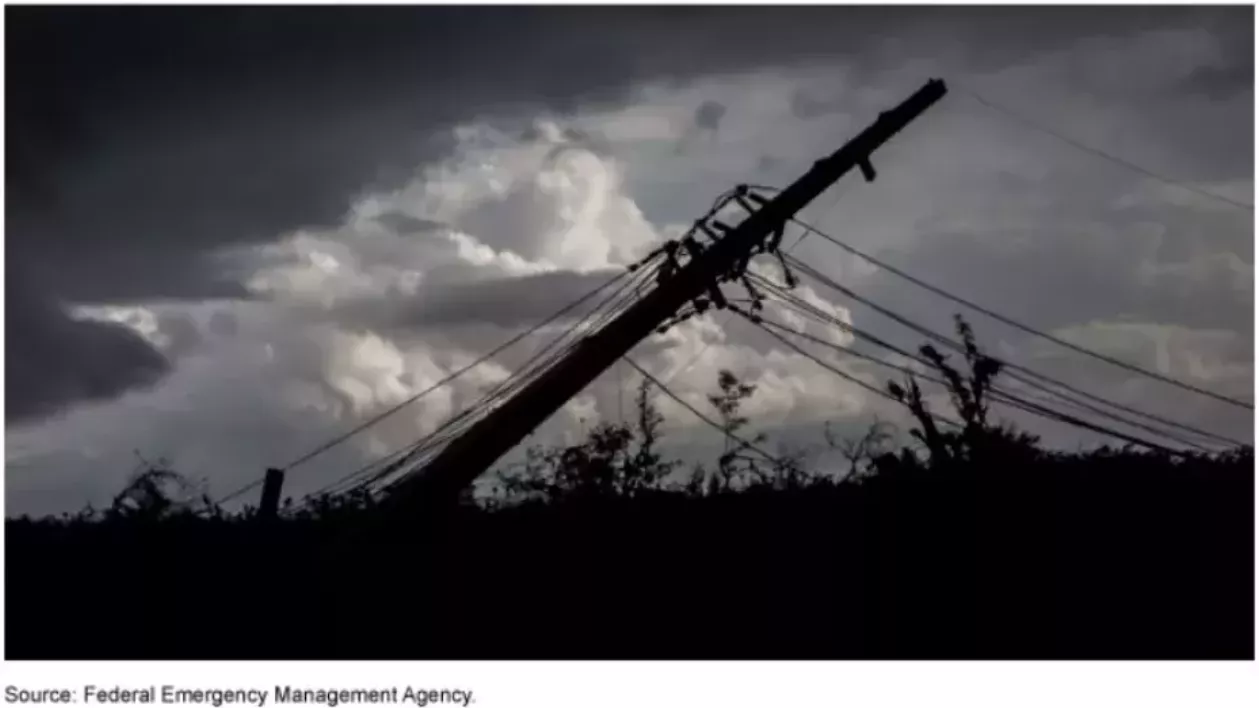
Hurricane Maria Damaged Power Lines in Puerto Rico in November 2017
Image
Billions of dollars available, but limited progress made
Puerto Rico has experienced additional natural disasters since 2017, including earthquakes and another hurricane in 2022. These events have added to disruptions in electricity grid recovery efforts. Meanwhile, power outages have gotten worse in recent years, including a total blackout in 2025 that lasted for 2 days.
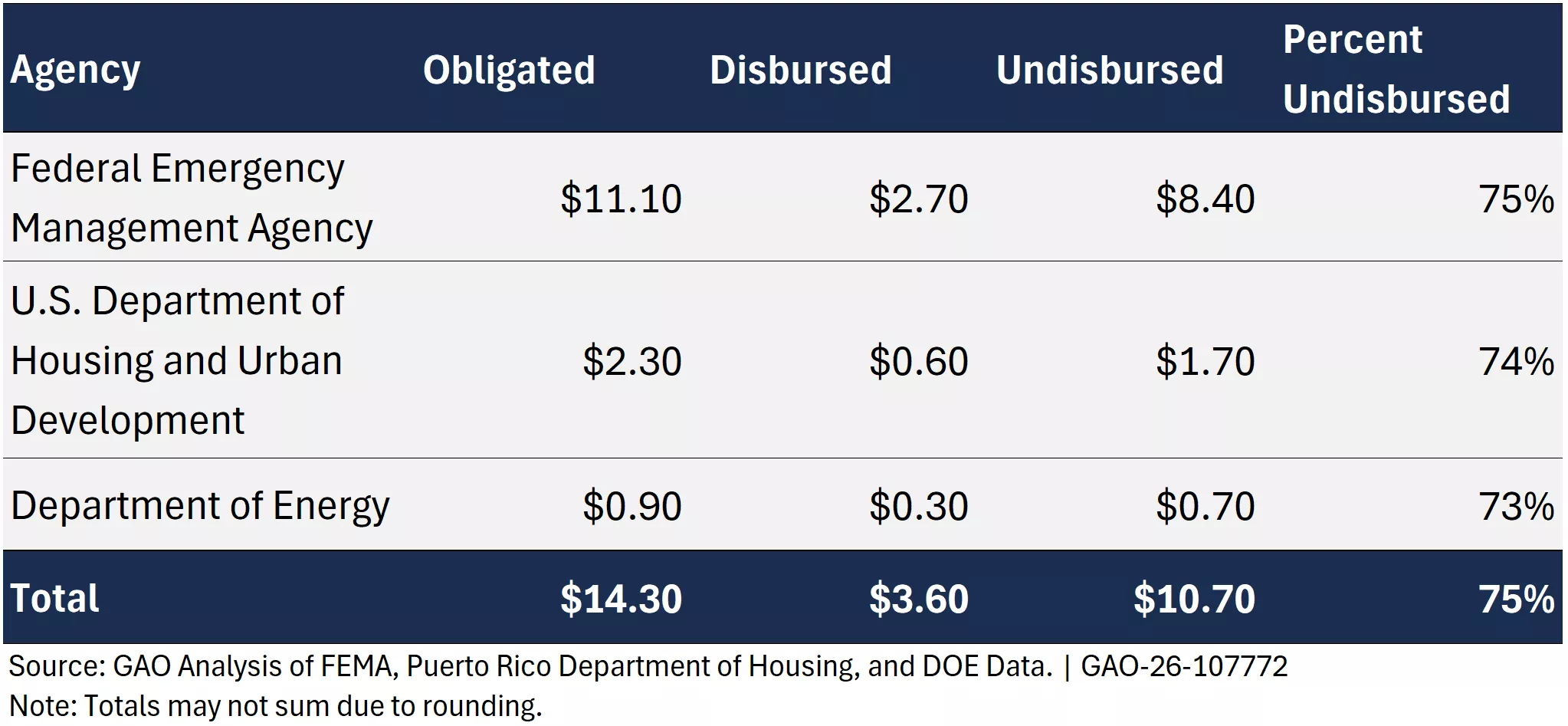
A lot of money has been dedicated to repairing the grid. But not much of it has actually been used. For example, of the roughly $14 billion that federal agencies obligated to support grid recovery in the last decade, only about 25% has actually been disbursed. This means that $10 billion in assistance remains unused.
Federal Funding for Puerto Rico Grid Recovery and Modernization (in billions)
Image
With the funding that has been disbursed, Puerto Rico has made limited progress in key areas of grid stabilization. For example, only 9 of 258 large, FEMA-funded projects were completed by the end of 2025. Generally, these projects fell under three categories:
Generation and storage projects include repairing existing power plants, using mobile generators as backups, and funding renewable energy hubs in vulnerable communities.
Transmission and distribution projects include clearing vegetation that may interfere with powerlines, repairing and hardening substations, and repairing key power transmission lines.
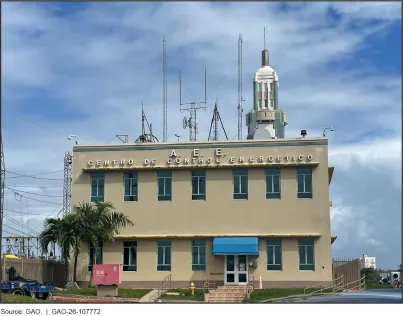
Operations and other infrastructure projects include upgrading the obsolete management system and control center used to monitor grid operations. These projects also include deploying automated technologies that can help isolate power outages and provide quick restoration of electricity services.
Monacillos Primary Control Center in San Juan, Puerto Rico, February 2025
Image
Why aren’t there more projects underway when funding is available and the grid still needs more work? We visited Puerto Rico to find out.
Roadblocks to recovery
We interviewed federal and local officials, as well as utility operators from LUMA Energy—the contractor that operates and maintains Puerto Rico’s transmission and distribution system on behalf of the Puerto Rico Electric Power Authority, also known as PREPA. These stakeholders identified five major roadblocks that have hindered grid recovery:
- Lengthy project reviews. This multi-step process involves numerous local and federal entities. These reviews often require environmental and historic preservation studies. Overall, the process can take months or even years to complete.
- Agency staff capacity and turnover. Increased turnover among staff at FEMA and other federal agencies may have limited the agencies’ ability to review and approve projects in a timely manner. Turnover in Puerto Rico’s government, including new managers and management teams, was also a challenge, according to FEMA officials.
- Complex project funding. Navigating multiple funding sources and their various requirements can be cumbersome for local entities.
- PREPA’s financial condition. Financial challenges have limited the utility company’s ability to borrow funds to invest in grid infrastructure. This has left it fully reliant on federal funding for recovery. But the grid’s repair needs extend beyond what federal disaster recovery assistance covers.
- Uncertainty around entities involved in recovery. LUMA Energy is operating under a contract extension that was recently challenged in court as invalid. This could affect projects proposed by LUMA for federal funding and further slow recovery efforts.
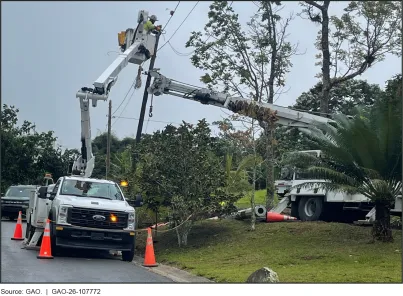
FEMA-funded Pole Replacement and Streetlight Repair Project in Coamo, Puerto Rico (February 2025)
Image
We think more can be done to help overcome these roadblocks. FEMA could help address some of these issues by better communicating project review steps to applicants and identifying new opportunities to streamline the review process. Then FEMA could highlight existing streamlining opportunities that applicants might not be aware of. For example, there are categorical exclusions that, when appropriate, eliminate the need for environmental reviews. Communicating these exclusions could help applicants navigate the project review process more swiftly.
Additionally, more could be done to ensure that adequate and consistent staff from FEMA are available to complete environmental and historic preservation reviews. This could reduce project approval timelines. We recommended that FEMA take action in these areas.
Federal agencies could also do more to clarify the roles and responsibilities of all the different players involved in Puerto Rico’s grid recovery. And agencies could do more to establish a mechanism to support coordination among themselves. We recommended they do so to help support communication and ensure accountability among stakeholders.
To learn more about federal efforts to support Puerto Rican grid recovery and modernization, check out our recent report.
- GAO’s fact-based, nonpartisan information helps Congress and federal agencies improve government. The WatchBlog lets us contextualize GAO’s work a little more for the public. Check out more of our posts at GAO.gov/blog.
- Got a comment, question? Email us at blog@gao.gov.
GAO Contacts
Image

Related Products
GAO's mission is to provide Congress with fact-based, nonpartisan information that can help improve federal government performance and ensure accountability for the benefit of the American people. GAO launched its WatchBlog in January, 2014, as part of its continuing effort to reach its audiences—Congress and the American people—where they are currently looking for information.
The blog format allows GAO to provide a little more context about its work than it can offer on its other social media platforms. Posts will tie GAO work to current events and the news; show how GAO’s work is affecting agencies or legislation; highlight reports, testimonies, and issue areas where GAO does work; and provide information about GAO itself, among other things.
Please send any feedback on GAO's WatchBlog to blog@gao.gov.