
Electric Aircraft: FAA Is Evaluating Designs for Certification and Considering Long-Term Regulatory Approaches
Fast Facts
Aircraft manufacturers are developing electric aircraft to transport cargo and carry passengers. This is part of a government and industry effort to change air transportation through new types of aircraft, technologies, and operating procedures. Electric aircraft could reduce noise and operating costs, and expand service at regional airports and other locations.
FAA hasn't yet certified an electric aircraft for commercial operations. But it's currently evaluating electric aircraft and engine designs for certification on a case-by-case basis. It's also considering regulatory changes that could standardize how it evaluates these products.
Example of An Electric Aircraft
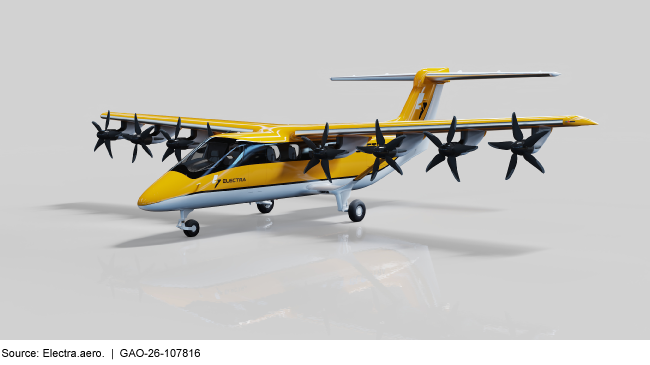
A small yellow and white electric airplane, with multiple propellers, on a gray background.
Highlights
What GAO Found
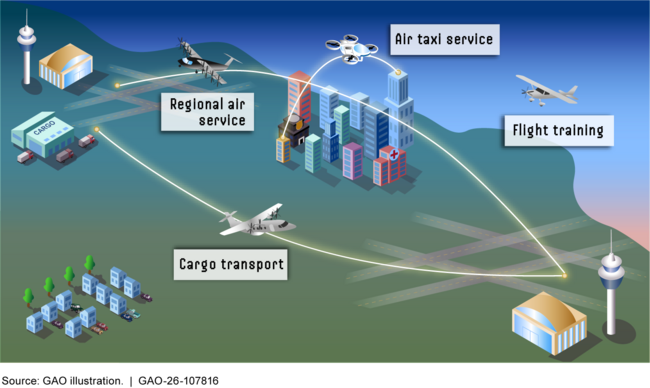
Manufacturers are developing fully electric and hybrid-electric aircraft, mostly for short-range and medium-range flying. These aircraft vary widely in design. Some require a runway for takeoff, while others take off vertically, for example, from the top of a building. They also have a wide variety of potential uses, including air taxi service and cargo transport. The Federal Aviation Administration (FAA) and other entities have also researched technologies that could potentially enable longer-range uses and broader deployment of electric aircraft in the future.
Examples of Potential Uses for Electric Aircraft
The infrastructure to support electric aircraft at U.S. airports is currently limited. According to FAA, as of December 2025, 47 airports have identified charging stations for electric aircraft in airport plans. The majority of these airports are part of the manufacturer BETA Technologies’ network of charging stations. According to FAA officials and selected stakeholders, airports face a variety of challenges related to installing infrastructure for electric aircraft, including cost, uncertainty about demand, and availability of reliable electricity.
As of March 2026, FAA is evaluating electric aircraft and engine designs for certification on a case-by-case basis, but is considering regulatory changes, such as developing dedicated airworthiness standards for electric vertical takeoff and landing aircraft, that could standardize its approach to evaluating these products in the long term. Stakeholders described challenges with FAA’s approach, including insufficient FAA staff with expertise in electric propulsion and limited standardization in the certification process. According to FAA officials, they have hired engineers in disciplines such as propulsion, and deployed experienced personnel as needed to emerging technology areas. However, ensuring that planned skill gap assessments are quantitative and include all mission-critical occupations, as GAO recommended in 2021, would help FAA better understand the skills its workforce needs to respond to technological changes.
Why GAO Did This Study
Electric propulsion aircraft have the potential to lower operating costs, increase access to air service for regional airports, and reduce environmental impacts and noise from aviation. However, FAA has not yet issued a type certification for a manned electric aircraft as of March 2026, and when such aircraft will be able to commercially operate is not clear.
Section 1012 of the FAA Reauthorization Act of 2024 includes a provision for GAO to assess the safe and scalable operation and integration of electric aircraft into the National Airspace System.
This report describes (1) the types and uses of electric aircraft in development; (2) the extent of infrastructure deployed at U.S. airports to support electric aircraft, and any challenges airports face in deploying infrastructure; and (3) FAA’s approach to certificating the airworthiness of electric aircraft designs, and related challenges identified by aviation industry stakeholders. GAO analyzed literature on electric aircraft published between 2019 and 2024 and used information from these studies to supplement testimonial evidence from interviews with aviation industry stakeholders and federal officials. GAO also analyzed public information on government and industry efforts to develop electric aircraft. GAO interviewed officials from FAA, the National Aeronautics and Space Administration, the National Laboratory of the Rockies, and a nongeneralizable selection of 30 aviation industry stakeholders, including aircraft and engine manufacturers, airports, fixed-base operators, state departments of transportation, and a flight training school. Eight interviews were conducted as part of site visits to Washington State and Ohio.
For more information, contact Derrick Collins at CollinsD@gao.gov.