
Medical Device Recalls: HHS and FDA Should Address Limitations in Oversight of Recall Process
Fast Facts
The Food and Drug Administration monitors the safety of about 200,000 medical devices—such as pacemakers and joint replacements.
From 2020 to 2024, nearly 4,000 of these devices needed to be recalled. Using recalled medical devices can lead to serious injury, death, or other adverse effects.
FDA's oversight of the recall process includes reviewing manufacturers' recall plans and verifying that recalls were carried out according to plan. FDA's challenges—such as insufficient staffing—can create inefficiencies in the process and potentially put lives at risk.
We recommended ways to improve FDA's oversight of the recall process.
3D rendering of a hip implant
Highlights
Why This Matters
The Food and Drug Administration (FDA) oversees recalls of medical devices that may present a risk to the health of users. The ramifications of using recalled devices—such as defective ventilators or pacemakers—include the potential for serious injury or death.
FDA’s oversight of medical products, including devices, has been on GAO’s high-risk list since 2009.
GAO Key Takeaways
From fiscal years 2020 to 2024, FDA oversaw the recall of 3,934 medical devices. All were voluntarily recalled by manufacturers. FDA can mandate a recall, although it rarely does so.
Insufficient staff limit FDA’s ability to conduct oversight activities, according to officials. For example, from fiscal years 2020 to 2024, FDA couldn’t meet its 3-month goal of terminating recalls (meaning FDA determines all reasonable efforts were made by the manufacturer to remove or correct the device) due to resource constraints. Some stakeholders said delays can affect patient care. The Department of Health and Human Services (HHS) oversees FDA and is currently undergoing reforms. Conducting workforce planning to determine the staffing and skills FDA needs for oversight would help HHS keep unsafe devices from continued use.
According to officials, FDA cannot require manufacturers to adopt its recommendations for how to carry out certain recalls. Some stakeholders said manufacturers and FDA communicating different information can be confusing. FDA officials said it can also result in inefficient use of resources. By working with FDA to assess if additional authorities are needed, and seeking them if beneficial, HHS may be better positioned to address current recall process inefficiencies.
Medical Device Recalls that Exceeded FDA’s 3-Month Termination Goal
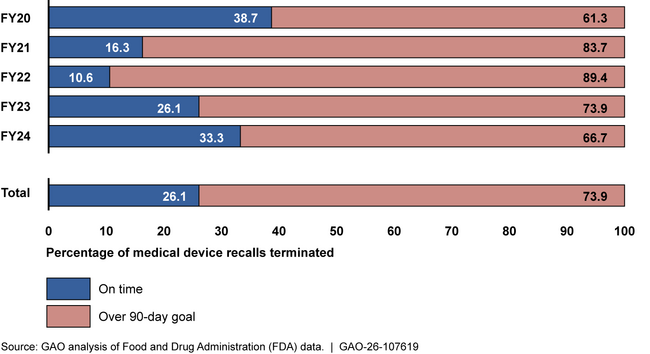
Note: Termination means FDA determines all reasonable efforts were made by the manufacturer to remove or correct the device.
How GAO Did This Study
We reviewed FDA policies and guidance on the recall process and analyzed data from FDA’s Recall Enterprise System. We also interviewed FDA officials and 10 stakeholder groups representing providers, patients, and the medical device industry to get their perspectives on challenges FDA faces in overseeing recalls.
Recommendations
We recommend HHS work with FDA: 1) to conduct workforce planning for device recalls, and 2) assess and seek, if needed, additional authority for manufacturer-initiated recall strategies. HHS concurred with the first recommendation and is taking the second under consideration.
Recommendations for Executive Action
| Agency Affected | Recommendation | Status |
|---|---|---|
| Department of Health and Human Services | As HHS undergoes its restructuring efforts, the Secretary should work with FDA to conduct strategic workforce planning to determine the staffing resources, skills, and capacity that FDA needs to effectively process and oversee medical device recalls—including being able to conduct recall audit checks and terminate recalls within agency goals—and develop strategies for addressing any identified workforce gaps. (Recommendation 1) |
When we confirm what actions the agency has taken in response to this recommendation, we will provide updated information.
|
| Department of Health and Human Services | As a part of its restructuring efforts, HHS should work with FDA to assess if the agency would benefit from having additional legislative authority that would allow it to require manufacturers to implement agency recommendations for manufacturer-initiated recall strategies. HHS should seek additional authority, if needed. (Recommendation 2) |
When we confirm what actions the agency has taken in response to this recommendation, we will provide updated information.
|