
Overseeing Food and Drug Safety is Getting Harder at FDA
The Food and Drug Administration is responsible for overseeing the safety of nearly $4 trillion in food, cosmetics, medications, medical devices, and tobacco products sold in the United States.
But over the last decade, we have reported that FDA has faced staffing shortages and increased oversight responsibilities, making it harder to effectively carry out its responsibilities.
Today’s WatchBlog post looks at our new Q&A-style report about these challenges.
Image
What does the FDA do?
FDA regulates a wide array of products—so many, in fact, that the products it oversees accounted for about 21 cents of every dollar spent by U.S. consumers in 2024.
For instance, FDA must ensure that drugs and medical devices (such as diagnostic tests, syringes, and pacemakers) are safe and effective. It does this by evaluating new products before they are marketed and monitoring products that are already on the market.
We recently sat down with GAO’s Mary Denigan-Macauley to discuss another new report specifically on the challenges FDA faces when overseeing medical device recalls. Listen below:
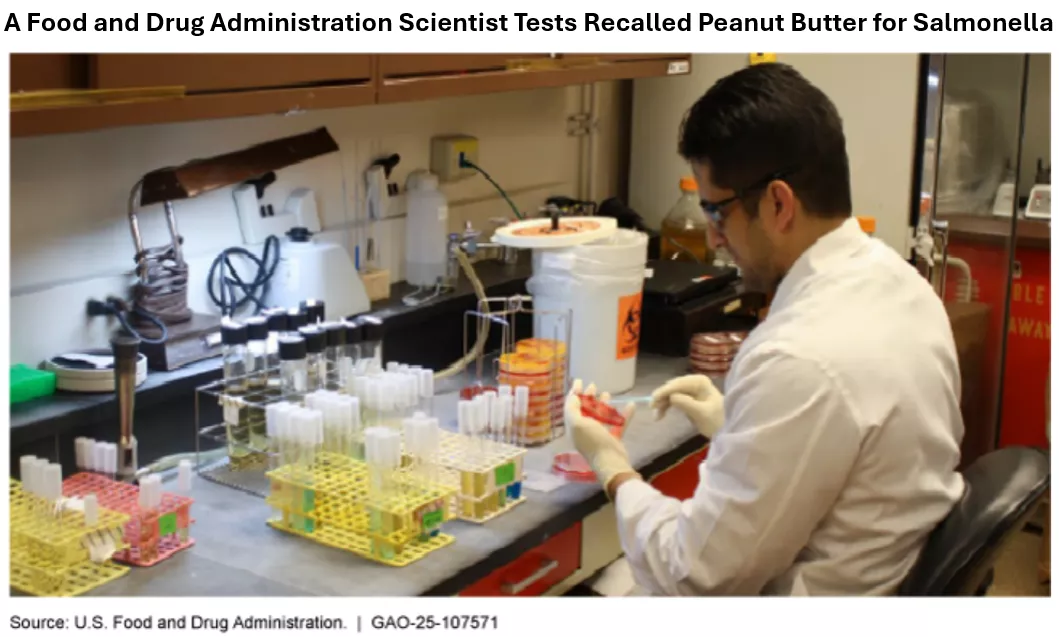
Additionally, FDA ensures the safety of nearly 80% of the nation’s food supply. This includes everything from fruits and vegetables to processed foods, dairy products, and most seafood. FDA’s role is to prevent foodborne illness and ensure chemicals in food are safe.
FDA is also tasked with regulating tobacco products for example, by authorizing the sale of new tobacco products, preventing youth use of tobacco products, and educating the public about their risks.
What challenges has FDA faced in overseeing products?
There have been several challenges over the past 16 years that raise concern about FDA's ability to achieve its mission to protect and promote public health across the numerous products it regulates.
First, FDA has become responsible for overseeing new types of products, including regulating all products containing nicotine (not just tobacco), as well as over-the-counter hearing aids. It is also required to conduct more foreign food safety inspections—going from 600 inspections in 2011 to an annual target of 19,200 for 2016 and beyond.
At the same time, FDA has struggled to recruit and retain staff—especially food and drug inspectors. The vacancy rate among drug inspectors jumped from 9% to 16% between November 2021 and June 2024. This was primarily due to concerns with work-related travel, pay, training, and workload. And when FDA loses staff, it can be difficult to replace them quickly. It may take 2 to 3 years to fully train new food and drug inspectors, which can delay inspections.
Consequently, FDA has been able to conduct fewer inspections in recent years, which has affected its ability to ensure the safety and effectiveness of many consumer products.
The Department of Health and Human Services also proposed reducing FDA’s workforce by about 3,500 staff members in March 2025 as part of a government-wide directive to downsize and reorganize. We don’t yet know the impact these cuts could have.
To learn more about the challenges FDA faces when overseeing food and drug safety, check out our new Q&A-style report.
- GAO’s fact-based, nonpartisan information helps Congress and federal agencies improve government. The WatchBlog lets us contextualize GAO’s work a little more for the public. Check out more of our posts at GAO.gov/blog.
- Got a comment, question? Email us at blog@gao.gov.
GAO Contacts
Image



Related Products

GAO's mission is to provide Congress with fact-based, nonpartisan information that can help improve federal government performance and ensure accountability for the benefit of the American people. GAO launched its WatchBlog in January, 2014, as part of its continuing effort to reach its audiences—Congress and the American people—where they are currently looking for information.
The blog format allows GAO to provide a little more context about its work than it can offer on its other social media platforms. Posts will tie GAO work to current events and the news; show how GAO’s work is affecting agencies or legislation; highlight reports, testimonies, and issue areas where GAO does work; and provide information about GAO itself, among other things.
Please send any feedback on GAO's WatchBlog to blog@gao.gov.