
When Grandparents and Other Relatives Step Up to Care for Children
Millions of children across the United States are raised by their grandparents, other relatives, or close family friends. When parents are absent, these “kinship” arrangements can offer a safe, stable environment.
Although such arrangements can be best for the child, many kinship families face challenges that may have grown since the pandemic. And they may be unaware of resources and programs available to support them.
Today’s WatchBlog post looks at our new report on kinship families, their challenges, and how supports may not be reaching them.
Image

Families differ, but many face similar challenges
Though no two families are exactly alike, we did find some trends in kinship families. Most children without parents present are being raised by their grandparents. More Black or African American children and American Indian and Alaska Native children live with family members than children in other racial populations.
Being raised by a loving grandparent can help children stay connected with their family and community, and education. But there were some challenges too. For example, most grandparents no longer work outside of the home. This can be because of age or disability. And kinship families are more likely to live in poverty.
We also found that grandparents, who may be facing their own health issues, were more likely to be caring for children with physical or mental health issues and/or special education needs. This can put additional strain on these families.
While many grandparents have stepped in to raise grandchildren on their own, others may have grandchildren placed with them by child welfare agencies. This matters because it can affect the resources and supports available to them. For example, caregivers who are foster parents may be eligible for Medicaid or other financial help.
Family members who raise children outside of the foster care system usually rely on their own resources to cover expenses. Without legal custody, they may have difficulty getting available benefits and supports.
Still, some families elect to not go through the foster care system to avoid state involvement in their lives. Others don’t want to be subject to child welfare agency policies and procedures.
Some responses from caregivers on why they kept children out of foster care
Image

The pandemic worsened some challenges for kinship families
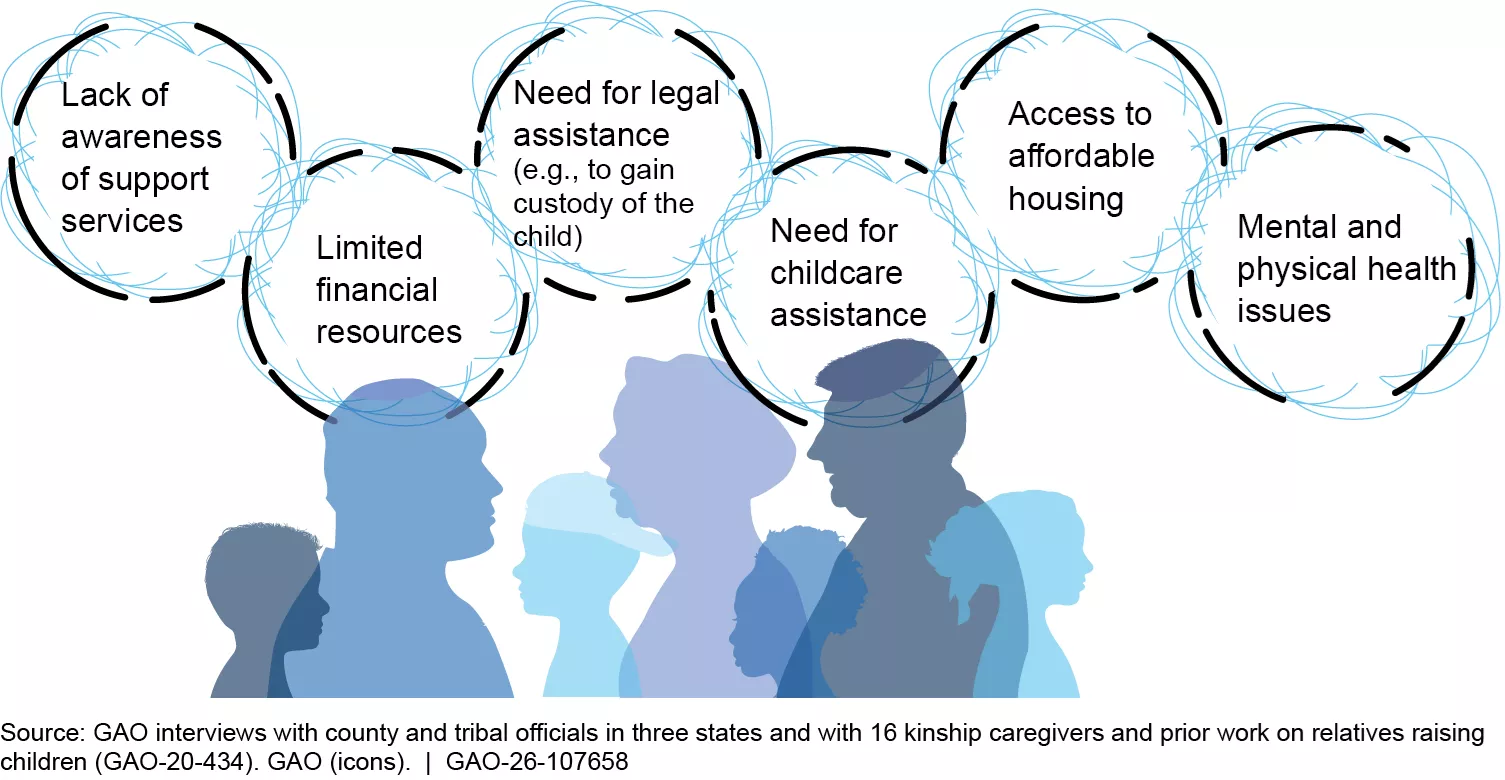
Several families we spoke with said some challenges have gotten worse since the pandemic, including:
Meeting basic needs due to higher costs. Inflation and the rising cost of living has strained many families’ abilities to afford basic needs like food, clothing, and utilities. This may be even more pronounced for grandparents on a fixed income or for families with children not receiving support through the foster care system.
In addition, many said that the loss of additional assistance provided temporarily during the pandemic—such as rent or food assistance—has further strained resources.
Increased mental health issues. For many, isolation, stress, trauma, and instability worsened during the pandemic. And the loss of learning and chronic absenteeism many children experienced during the pandemic have only added to mental health and school engagement issues.
Navigating technology to access services. Some families may not have access to necessary computer equipment or know how to use it. Or they may have limited access to the internet—particularly in remote areas—to access services online, such as benefits applications, school enrollment forms, or mental health appointments.
Challenges for Kinship Caregivers that Have Persisted
Image
What supports are available to help these families?
Resources to support kinship families vary across the country. For example, one metropolitan county we visited had a program that connects caregivers to resources for food, childcare, mental health, and other services. It also offers support groups and training on things like technology and school curriculum. That program is available statewide and provided primarily with state funds, according to officials we spoke to. But such programs are not available in all communities across the United States.
Officials in a smaller county said support from local churches and service providers helps some families obtain clothing and furniture. Housing and non-profit legal assistance programs may also be available but often have long waitlists. Caseworkers for children in the foster care system may provide help to some families with income and utility assistance programs, transportation, and more.
At the federal level, the Department of Health and Human Services (HHS) is working to help local service providers better collaborate, raise awareness about these families, and provide information and guidance on support for them. Recent restructuring at HHS means that responsibilities for some supports may be moved to other agencies within the department. We will continue to follow the impending changes.
For more information on kinship families, see our full report.
- GAO’s fact-based, nonpartisan information helps Congress and federal agencies improve government. The WatchBlog lets us contextualize GAO’s work a little more for the public. Check out more of our posts at GAO.gov/blog.
- Got a question or comment? Email us at blog@gao.gov.
GAO Contacts
Image


Related Products

GAO's mission is to provide Congress with fact-based, nonpartisan information that can help improve federal government performance and ensure accountability for the benefit of the American people. GAO launched its WatchBlog in January, 2014, as part of its continuing effort to reach its audiences—Congress and the American people—where they are currently looking for information.
The blog format allows GAO to provide a little more context about its work than it can offer on its other social media platforms. Posts will tie GAO work to current events and the news; show how GAO’s work is affecting agencies or legislation; highlight reports, testimonies, and issue areas where GAO does work; and provide information about GAO itself, among other things.
Please send any feedback on GAO's WatchBlog to blog@gao.gov.