
Systemic Issues Plague Life-Saving Organ Transplant Program
Organ transplants offer a second chance at life for people who have life-threatening diseases or injuries to their vital organs. As many as 100,000 people in the United States are on the waitlist to receive an organ. And about 13 people die each year waiting for a transplant.
Longstanding issues may contribute to delays in getting available organs to those who need them and raise concerns over patient safety and equity of access.
Today’s WatchBlog post looks at our new report on these issues.
Image
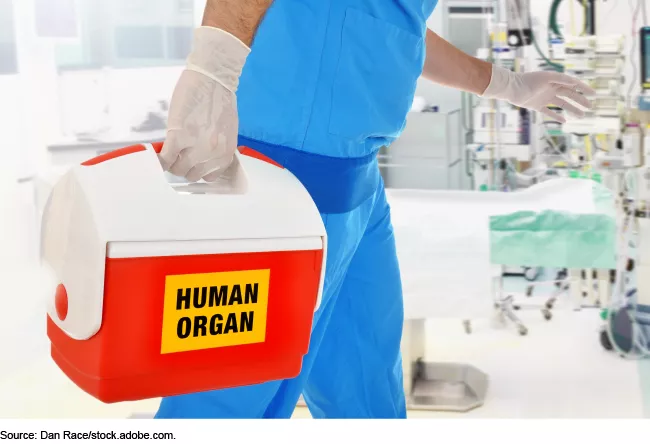
How the organ transplant system works
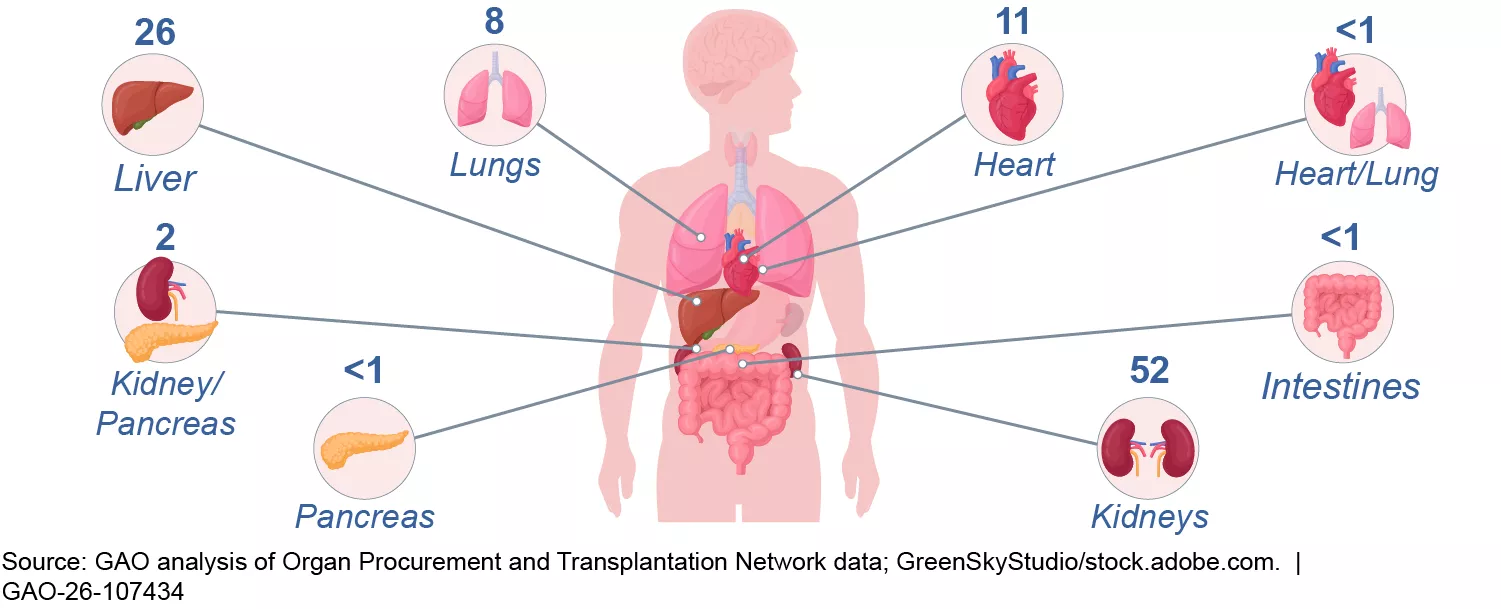
Organ donations can come from living or deceased donors. For our report, we looked at deceased donations, which make up more than 85% of all donations in the United States. Specifically, about 41,000 organ transplants from deceased donors took place in 2024. And more than half of these (52%) were kidney transplants.
Organ Transplants from Deceased Donors, Percent by Type, 2024
Image
But the need for organ donations far exceeds the available supply as hundreds of thousands of patients await a transplant.
The Department of Health and Human Services (HHS) has overseen organ allocation since 1984 via the Organ Procurement and Transplant Network (OPTN). The network maintains the national organ transplant waiting list, sets policies on how organs are allocated, and coordinates organ transportation. Until recently, OPTN’s operations were administered by a sole contractor hired by HHS in the 1980s. The contractor maintains the national waiting list and the IT system used to match organs to individuals on that list, among other things.
Concerns are mounting. What needs to change?
Concerns have been raised about inequitable allocation of organs, unused organs, patient safety, and more.
Organ allocation. Policies used to determine those who receives an organ have put some individuals at a disadvantage. Specifically, there are disparities in organ distribution based on race, sex, and geographic location. Also, some patients who were supposed to receive an organ offer (according to the OPTN matching IT system) are bypassed. In 2024, 19% of organ allocations were allocated out-of-sequence.
Transporting and tracking. In addition, there are logistical challenges with transporting and tracking organs. Transportation issues, including delayed or lost deliveries, have resulted in some organs being declined by hospital transplant programs. This poses a risk of viable organs being needlessly wasted.
Patient safety. The OPTN oversees transplant partners, such as hospitals. It also investigates patient safety complaints. However, there are concerns that this oversight is lacking—including insufficient investigations of serious patient safety events. For example, a recent investigation by HHS found a concerning pattern of risk to certain patients due to staff practices at an organ procurement organization serving Kentucky. When initially investigated, the OPTN closed this case without taking any corrective actions.
Image

What needs to happen to address these issues?
A few years ago, HHS announced a modernization initiative with the goal to address identified concerns and improve transparency of the organ procurement and transplantation system. As a positive first step, HHS awarded multiple contracts to assess identified concerns, including recommending improvements.
HHS recently received the results of most of those assessments. But HHS hasn’t developed specific plans for the next phase of its modernization initiative. Such plans would help ensure identified concerns are actually addressed. Ultimately, this should strengthen accountability and transparency of the system that is responsible for providing lifesaving organs to critically ill patients.
Our full report offers more information about the OPTN assessment contracts. And our recommendation in this report can help HHS ensure it addresses problems while modernizing the OPTN.
- GAO’s fact-based, nonpartisan information helps Congress and federal agencies improve government. The WatchBlog lets us contextualize GAO’s work a little more for the public. Check out more of our posts at GAO.gov/blog.
- Got a question or comment? Email us at blog@gao.gov.
GAO Contacts
Image

Related Products
GAO's mission is to provide Congress with fact-based, nonpartisan information that can help improve federal government performance and ensure accountability for the benefit of the American people. GAO launched its WatchBlog in January, 2014, as part of its continuing effort to reach its audiences—Congress and the American people—where they are currently looking for information.
The blog format allows GAO to provide a little more context about its work than it can offer on its other social media platforms. Posts will tie GAO work to current events and the news; show how GAO’s work is affecting agencies or legislation; highlight reports, testimonies, and issue areas where GAO does work; and provide information about GAO itself, among other things.
Please send any feedback on GAO's WatchBlog to blog@gao.gov.