
The Strategic Petroleum Reserve—Does the U.S. Have a Long-Term Plan Amid Massive Drawdowns & Maintenance Backlogs?
The Iran war is causing the greatest disruption in global oil supplies ever. As part of a coordinated international action, the United States is responding by drawing from the government’s emergency crude oil reserve—the Strategic Petroleum Reserve.
Today’s WatchBlog post looks at our new report on the status of the Strategic Petroleum Reserve—including its capabilities, challenges, and the need to plan for its future.
Image
Strategic Petroleum Reserve 101
What is the Strategic Petroleum Reserve? Congress directed the Department of Energy (DOE) to create the Strategic Petroleum Reserve after economically damaging international oil embargoes in the 1970s. The goal was to have an emergency reserve of crude oil that could be quickly distributed to major refining hubs through pipelines and ships or barges when needed. DOE stores the reserve’s oil in 60 massive underground salt caverns at four storage sites in Texas and Louisiana.
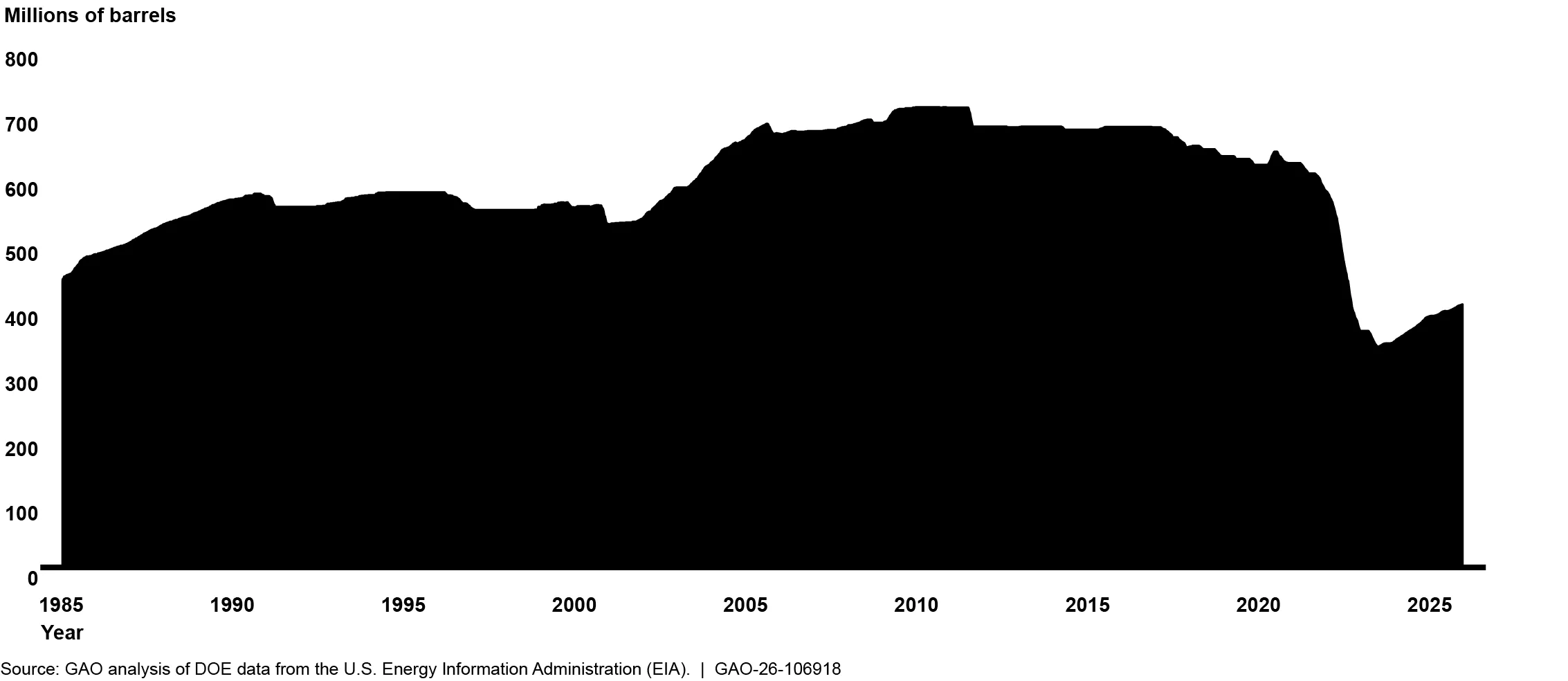
How has the Strategic Petroleum Reserve been used? Since the first release of oil in 1985, the reserve has served as a national insurance policy to protect from major supply disruptions. In total, DOE has released over 500 million barrels of crude oil from the reserve, the vast majority of which occurred relatively recently.
It’s been used during crises like Hurricane Katrina (2005), Russia’s invasion of Ukraine (2022), and, most recently, the Iran war (2026). The latter two events represent the largest drawdowns to date:
- 180 million barrels after the invasion of Ukraine
- And a planned 172 million barrels in response to the war in Iran
Congress has also directed DOE to sell hundreds of millions of barrels from the reserve’s stocks to generate revenue—totaling about 170 million barrels to date with about 90 million more barrels planned.
U.S. crude held in the Strategic Petroleum Reserve (1985-2025)
Image
What is the Strategic Petroleum Reserve’s current status?
The reserve can currently store up to about 680 million barrels of oil. As of early June, it held less than 350 million barrels following the first releases in response to the Iran war.
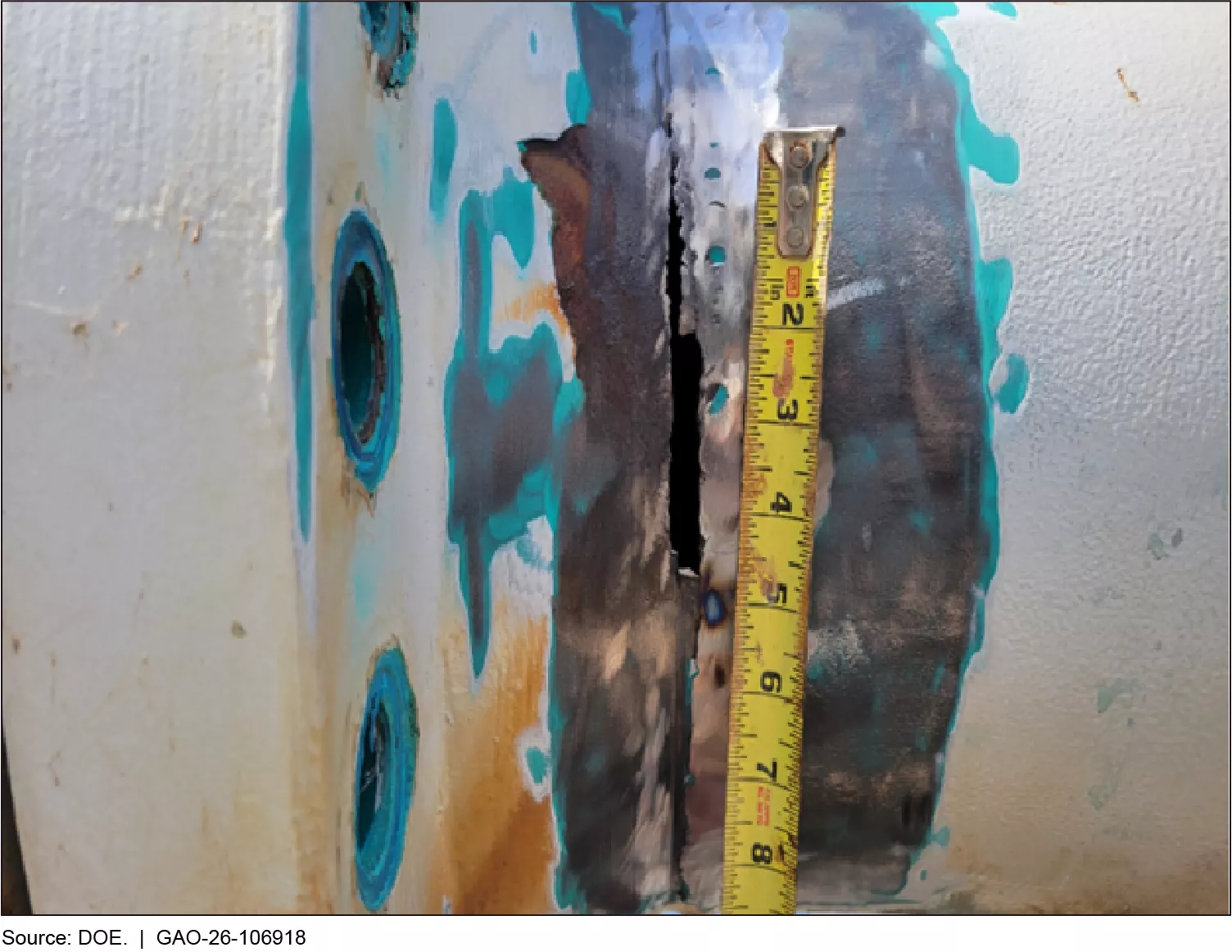
Though successful to date, recent largescale drawdowns posed significant challenges for the aging reserve. These challenges included the need to repeatedly triage emergency repairs as well as maneuver around logistical hurdles and delays to planned major construction, among others.
The combination of an underperforming, decade-long, $1.4 billion infrastructure project along with expected wear-and-tear have also left the reserve with a growing list of needed upgrades and repairs. Addressing these needs would cost hundreds of millions of dollars, but if left undone could undermine the reserve’s ability to safely and reliably release and receive oil.
A leaking water pipe that needed repair during the 2022 drawdown at the West Hackberry Strategic Petroleum Reserve site
Image
What should the Strategic Petroleum Reserve look like in the future?
Since the reserve’s creation 50 years ago, U.S. energy security needs and international obligations have evolved. And questions have been raised about what the optimal size and capabilities of the reserve should be to meet them.
The last time DOE completed a long-term strategic review of the reserve was at Congress’s request nearly 10 years ago. In the absence of such a plan to guide them, DOE and Congress are making operational and investment decisions amidst uncertainty about:
- What the reserve is capable of right now
- What the reserve should be capable of in the future to meet changing needs and obligations
- What investments and other actions may be needed to bridge any gaps
Having a long-term plan could help move beyond triaging emergency repairs to make more strategic investment decisions for the future. And if DOE and Congress align their priorities and actions, they could better ensure the reserve is managed and maintained efficiently, strategically, and cost-effectively.
Learn more about this issue and our recommendations by reading our full report.
- GAO’s fact-based, nonpartisan information helps Congress and federal agencies improve government. The WatchBlog lets us contextualize GAO’s work a little more for the public. Check out more of our posts at GAO.gov/blog.
- Got a comment, question? Email us at blog@gao.gov.
GAO Contacts
Image




Related Products

GAO's mission is to provide Congress with fact-based, nonpartisan information that can help improve federal government performance and ensure accountability for the benefit of the American people. GAO launched its WatchBlog in January, 2014, as part of its continuing effort to reach its audiences—Congress and the American people—where they are currently looking for information.
The blog format allows GAO to provide a little more context about its work than it can offer on its other social media platforms. Posts will tie GAO work to current events and the news; show how GAO’s work is affecting agencies or legislation; highlight reports, testimonies, and issue areas where GAO does work; and provide information about GAO itself, among other things.
Please send any feedback on GAO's WatchBlog to blog@gao.gov.