
The Federal Government’s Debt Is Growing Faster Than the Economy. What Does that Mean for You?
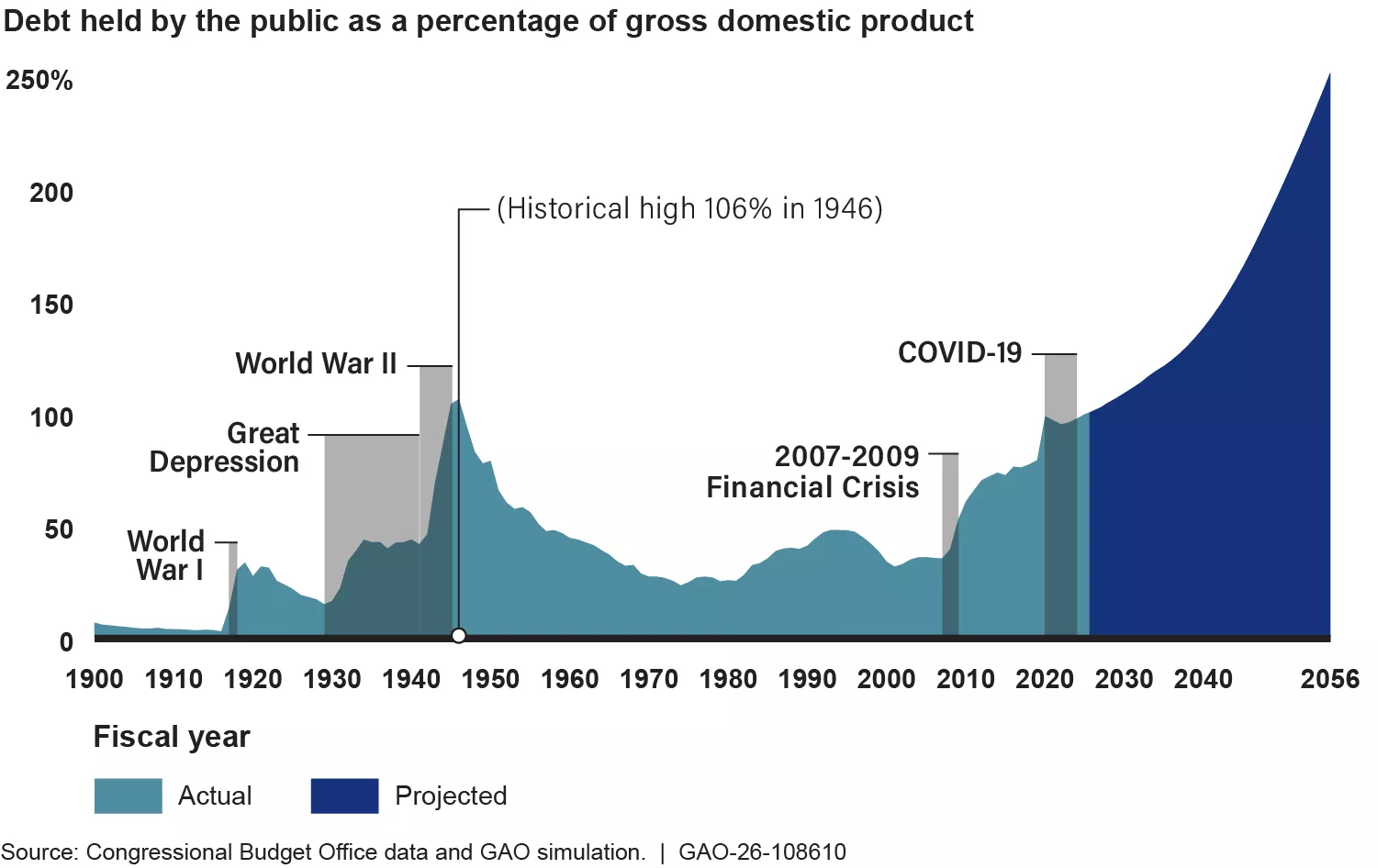
In April, the federal government’s debt held by the public reached $31.3 trillion, roughly equal to the size of the U.S. economy. While this has marked an unwelcome new milestone, growing federal debt is a longstanding, escalating issue that will have lasting consequences if not addressed.
Rising debt could lead to serious economic and national security challenges. Americans may also find that it hurts their personal finances.
Today’s WatchBlog post looks at our new report on the status of this unsustainable federal debt outlook—how we got here, how it impacts you, and what can be done to fix it.
Federal Debt Held by the Public as a Share of Gross Domestic Product
Image
What is federal debt and how did we get here?
When the federal government spends more than it collects in revenue, it borrows money to make up that deficit. Federal debt is the accumulation of that borrowing and the interest paid on it.
In the past, debt would usually spike during recessions or crises. But it would fall again after the events subsided. However, that trend has not been true during the past two decades. Instead, the government’s debt has grown even as the economy has performed well. And this year—for the first time since World War II—the federal government’s debt grew to the size of the entire U.S. economy.
Without action by Congress to address deficits, debt will continue to grow faster than the economy—even during times of economic growth.
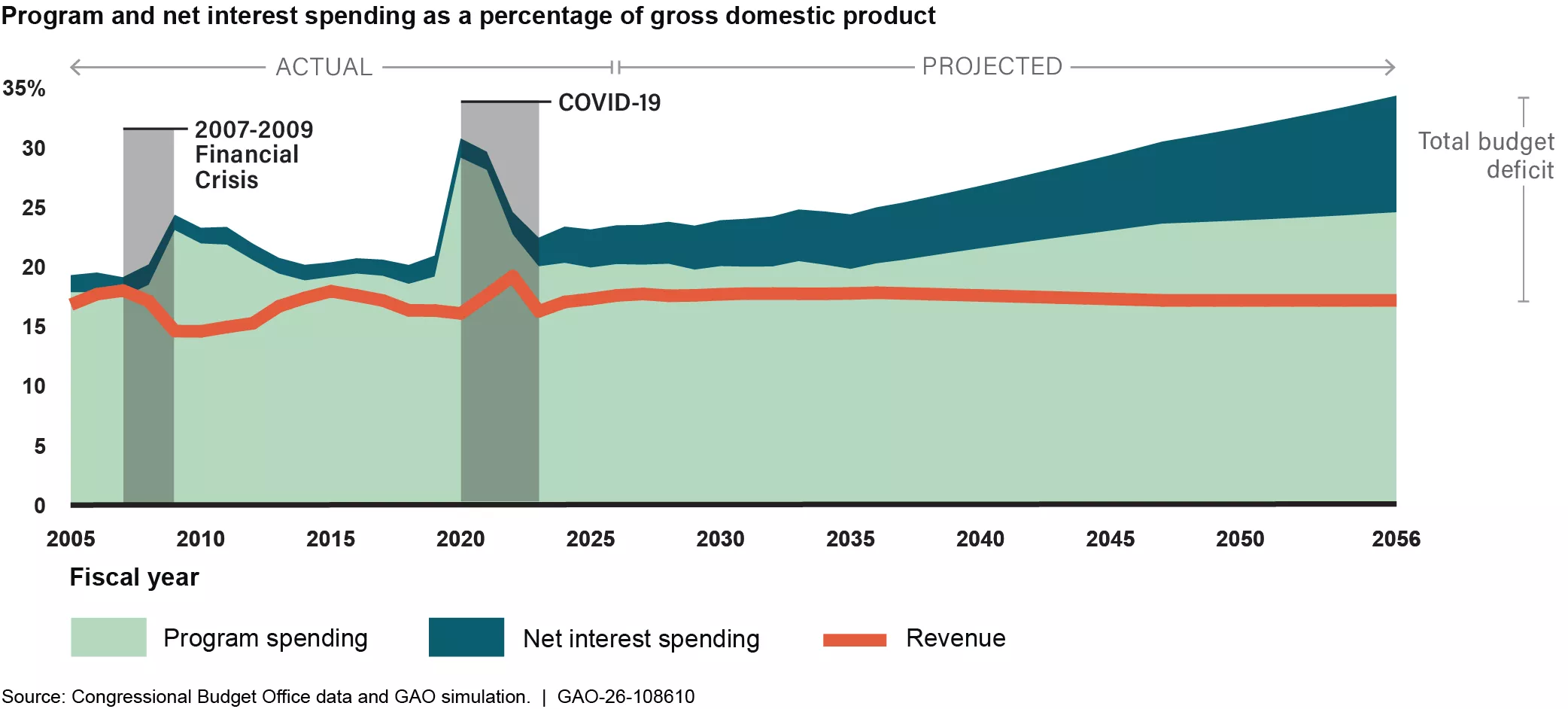
What’s driving this debt? Persistent and growing budget deficits. What’s driving deficits every year? Specifically,
- Tax revenues have not kept pace with spending and are not projected to catch up over the long term, under current policy.
- Spending on Social Security and Medicare are increasing as the U.S. population ages and health care costs rapidly grow.
- The government is spending more on interest payments for accumulated debt. Last year alone, the government spent nearly $1 trillion on interest. The larger the debt gets—and if interest rates rise—the more the government will pay toward interest.
Government Spending, Interest Spending and Revenues
Image
How does federal debt impact Americans?
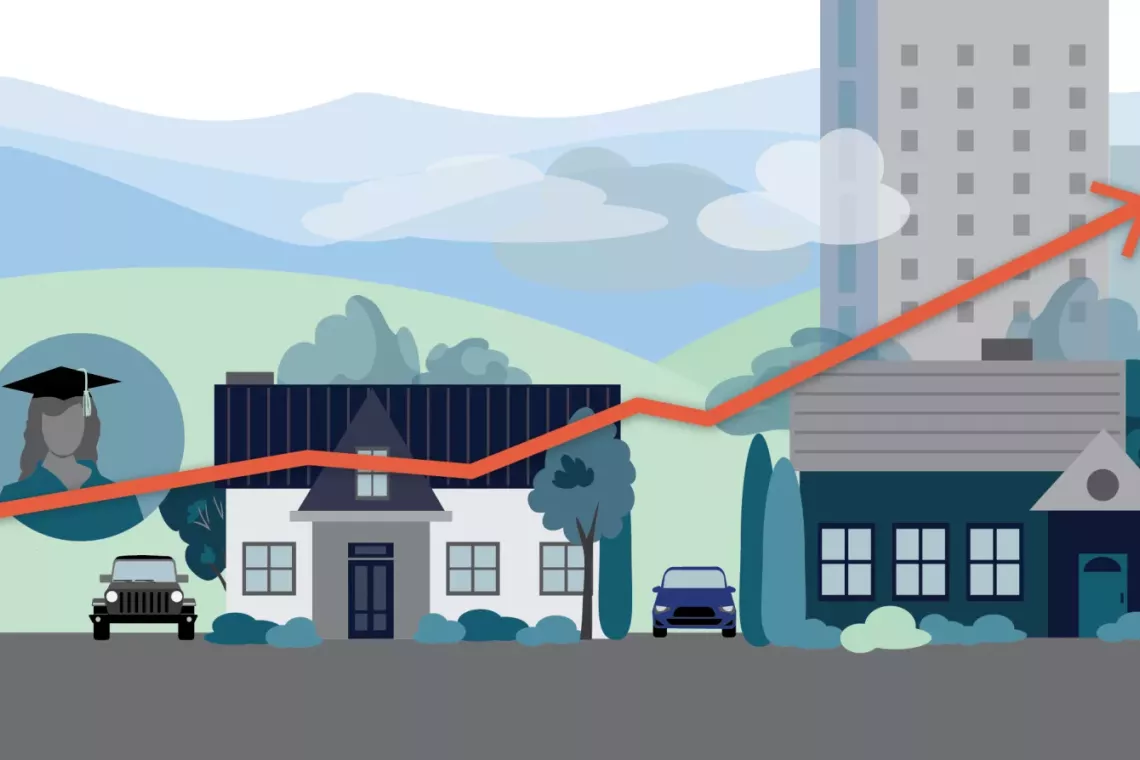
When the debt-to-GDP ratio increases (meaning when debt grows faster than the economy), that may make borrowing more expensive for Americans and businesses. What could this look like for you?
- Higher borrowing costs. Someone taking out a loan, for a house or a car for example, will likely have less money to spend on other priorities.
- Stagnant wages. Businesses could also face higher borrowing costs or find they have less money available to invest, leading to slower wage growth.
- More expensive goods and services. Because businesses may invest less in technologies that make it easier and cheaper to produce goods and services, prices are likely to increase.
If nothing is done to reduce deficits each year, we project that debt will grow about twice as fast as the economy over the next 10 years. In 30 years, that debt will likely be 2.5 times the size of the economy. What that means for you, and future generations, is that today’s deficits—if not addressed—could have lasting financial consequences. The federal government’s debt could ultimately lower the standard of living for all Americans.
So, how do we solve our debt crisis?
A long-term strategy is needed to put the nation on a fiscally stable course. The longer we wait to do this, the more dramatic actions will need to be, and the more painful the consequences for Americans.
We think this strategy should include:
- Changing tax and spending policy—including mandatory spending and tax expenditures—to reduce annual deficits
- Adopting a debt target and rules that would guide policymakers’ budget decisions
- Addressing financial gaps in the Social Security and Medicare trust funds, which are set to be depleted in 2032 and 2033 respectively
Shifting America’s fiscal trajectory will require tough choices. But they are necessary to get the country on a sustainable long-term path. You can learn more about our proposed strategy for addressing federal debt by reading our new report. And find out more about the consequences of federal debt by visiting our webpage “How Could Federal Debt Affect You?”
- GAO’s fact-based, nonpartisan information helps Congress and federal agencies improve government. The WatchBlog lets us contextualize GAO’s work a little more for the public. Check out more of our posts at GAO.gov/blog.
- Got a comment, question? Email us at blog@gao.gov.
GAO Contacts
Image

Related Products

GAO's mission is to provide Congress with fact-based, nonpartisan information that can help improve federal government performance and ensure accountability for the benefit of the American people. GAO launched its WatchBlog in January, 2014, as part of its continuing effort to reach its audiences—Congress and the American people—where they are currently looking for information.
The blog format allows GAO to provide a little more context about its work than it can offer on its other social media platforms. Posts will tie GAO work to current events and the news; show how GAO’s work is affecting agencies or legislation; highlight reports, testimonies, and issue areas where GAO does work; and provide information about GAO itself, among other things.
Please send any feedback on GAO's WatchBlog to blog@gao.gov.