
Textile Circular Economy: Policy Options for the U.S.
Fast Facts
People use and throw away textiles, like clothes, more than ever before. Increases in textile waste raise concerns globally about consumption and environmental effects.
Some U.S. states and other countries are implementing policies to develop a textile circular economy where reuse, repair, and recycling keep textiles in use longer. This could create new jobs but currently doesn't have much funding or infrastructure.
Our report looks at policy options to support this, such as:
Requiring industry to be responsible for managing textile waste
Removing sales tax on secondhand apparel
Using tax credits to incentivize industry involvement
Textile Repair Company for Outdoor Gear in the U.S.
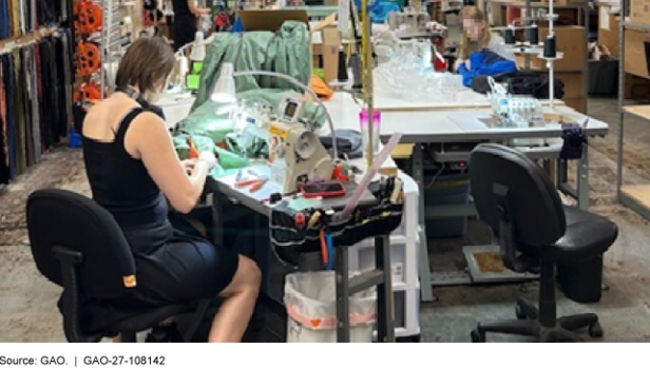
People repairing outdoor textile apparel at tables with sewing machines, fabric, work lights, and various hand tools.
Highlights
What GAO Found
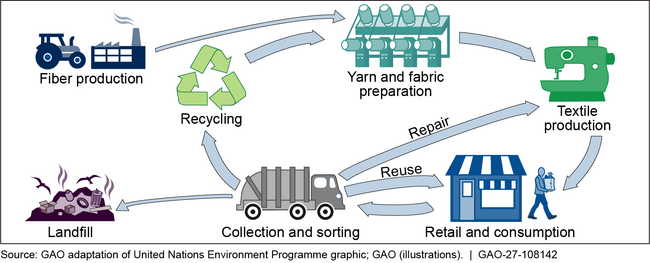
Developing a textile circular economy includes repairing, reusing, and recycling textiles and making them last longer.
Example of a Circular Economy for Textiles
In the U.S., a textile circular economy may create potential benefits and involve challenges, according to reports by federal agencies and organizations and stakeholder interviews. Potential benefits could include creating new jobs and markets related to textile repair and recycling, reducing environmental harm, and changing consumer practices. Challenges could include limited funding and domestic infrastructure for nationwide textile collection and recycling efforts.
GAO identified a number of policy options—based on relevant literature, site visits, and interviews with 49 stakeholders in the public and private sectors—that federal and state policymakers can consider if the U.S. chooses to develop a textile circular economy. Two of the options are:
- Developing a textile extended producer responsibility program: makes companies responsible for what happens to their products after use, along with other requirements.
- Creating tax credits related to a textile circular economy: reduces or offsets the amount of taxes paid by businesses when they contribute to textile circularity efforts, such as reusing textiles or reducing textile waste.
Some U.S. states and other countries are proposing, enacting, or implementing most of the identified policy options that can help develop a textile circular economy. For example, U.S. states, the European Union, and others have proposed or enacted legislation to develop textile extended producer responsibility programs. When discussing policy options, stakeholders shared key observations. For example, several stakeholders, including industry groups, told GAO they prefer a federal approach to develop a textile circular economy. A federal approach may provide for coordination, compliance, and consistent implementation across U.S. states or other countries’ legal requirements, among other reasons, according to these stakeholders. However, this would require additional federal coordination and resources and depend on the government’s legal authority to implement a federal approach.
Why GAO Did This Study
The textile industry is part of a massive, global economic sector—including fiber sourcing, yarn production, and textile manufacturing. Textiles include apparel and other products, such as carpets, footwear, and towels. In response to global increases in the amount of textile consumption and waste, certain U.S. states and other countries have begun to consider and implement policies that can help develop a textile circular economy.
GAO was asked to review aspects of developing a textile circular economy. This report continues GAO’s previous work from December 2024 on federal efforts to address textile waste. This report describes (1) the potential benefits and challenges with developing a textile circular economy in the U.S.; (2) the options that policymakers could consider to develop a textile circular economy; and (3) identified proposed, enacted, or implemented policies, both domestically and internationally, and stakeholders’ key observations.
GAO reviewed legislation, regulations, federal agency documents, and academic reports. GAO also interviewed a range of stakeholder groups, including government entities (international, federal, and state), industry, academia, and other nonfederal stakeholders, such as representatives from nonprofit organizations. These stakeholders were selected because they have, or will have, a role in ongoing or planned efforts related to a textile circular economy or were recommended by knowledgeable officials. GAO also conducted site visits to the states of Washington and Oregon, as well as France and the Netherlands to meet with private sector organizations involved with various aspects of developing a textile circular economy.
For more information, contact J. Alfredo Gómez at gomezj@gao.gov.