
Biotechnology: Applications, Challenges, and Policy Options for Engineered Microbes for Waste Cleanup
Fast Facts
Pesticides, plastics, and other chemicals can contaminate land and water, causing health problems. Cleanup is often difficult and expensive.
This technology assessment looks at one potential cleanup tool: genetically engineered microbes. These bacteria, fungi, and other microscopic organisms may be able to break down contaminants that current methods cannot. But their benefits and risks are not fully understood.
We found that there are significant obstacles to their use, including regulations that make testing difficult. Policymakers have options to address these obstacles—such as updating legal requirements for small-scale research.
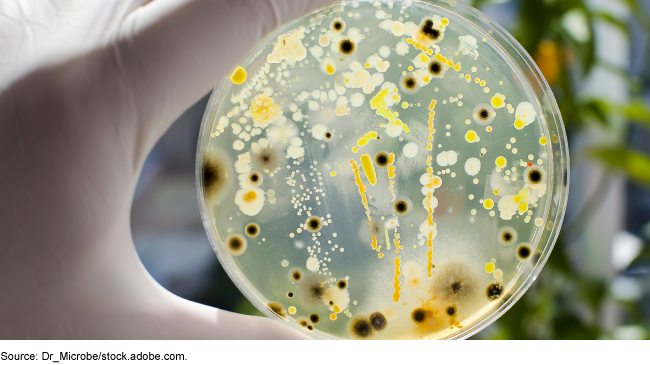
A gloved hand holding a petri dish with bacteria and mold.
Highlights
What GAO Found
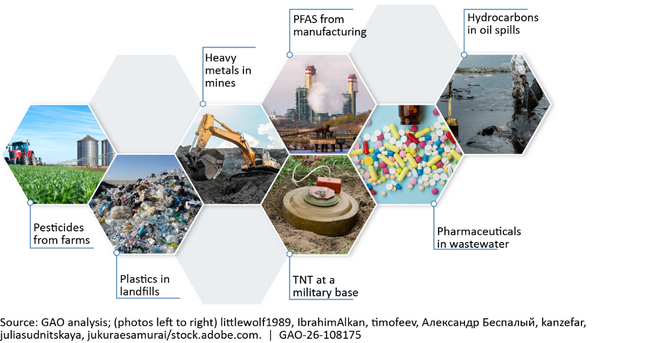
Certain types of waste are particularly pervasive or difficult to clean up with existing technologies. Microbes (e.g., bacteria, fungi) can be engineered to break down pollutants more effectively. For example, researchers have inserted genes into bacteria that allow the bacteria to break down contaminants, such as phenol or hydrocarbons, in water and soil. At present, there are no examples of commercially available engineered microbes for waste cleanup.
Example areas where engineered microbes could be deployed for waste cleanup
Through expert interviews and document reviews, GAO identified two policy goals related to this biotechnology—demonstrating safety and effectiveness and developing a market. GAO identified challenges hindering these goals, including:
Insufficient testing infrastructure and standards. The current testing infrastructure and standards are insufficient to scale experimentation beyond the lab or to assess the safety and effectiveness of engineered microbes.
Regulatory catch-22. According to experts, when authorizing experimental release, the Environmental Protection Agency (EPA) requests information that is difficult to obtain without experimental release. EPA officials told GAO that information from published studies or lab data can suffice for permitting experimental release.
Unclear regulatory roles and responsibilities. According to GAO’s research, developers lack clarity about the regulatory process for engineered microbes. For example, it is often not clear to developers which agency is responsible for regulating a given engineered microbe and why. EPA officials told GAO, however, that they get very few questions regarding jurisdiction.
Public concerns. Developers may hesitate to invest in research and development of the technology if there is not sufficient public support. Public concerns include the potential for persistence in the environment, possible health effects, and discomfort with manipulating and patenting genetic material. See tables 1–5 in this report for additional policy options and details.
Based on review of scientific reports, agency documents, and expert interviews, GAO developed 10 options that policymakers could consider if they wish to advance the two goals identified above (demonstrating safety and effectiveness of or developing a market for engineered microbes for waste cleanup). GAO also considered the policy goal of pursuing alternatives to this biotechnology and developed three options policymakers could consider to achieve that goal (not shown on this page; see chapter 5). The following table shows selected policy goals and policy options. See tables 2–8 in the full report for additional policy options and details.
Selected policy goals and policy options related to engineered microbes for waste cleanup
|
Policy Goal: Demonstrating safety and effectiveness |
||
|---|---|---|
|
Policy option Establish databases to share noncompetitive field trial data among developers (report page 21) |
Opportunities
|
Considerations
|
|
Policy option Update legal requirements and associated guidance documents (report page 23). |
Opportunities
|
Considerations
|
|
Policy Goal: Developing a market |
||
|
Policy option Establish a national office for biotechnology coordination (report page 26). |
Opportunities
|
Considerations
|
|
Policy option Provide community education (report page 29). |
Opportunities
|
Considerations
|
Why GAO Did This Study
Contamination of land and water with waste chemicals poses significant threats to human health, the economy, and the environment. Research has shown that microbes can be engineered to break down these chemicals, potentially offering promise for cleanup in multiple sectors, including defense, mining, agriculture, and manufacturing.
GAO conducted an assessment of current and emerging engineered microbe technologies for waste cleanup. This report examines (1) the status, benefits, and risks of engineered microbes for waste cleanup, (2) the challenges of developing or using engineered microbes for waste cleanup, and (3) options policymakers could consider to achieve various goals related to this biotechnology.
To conduct this work, GAO reviewed scientific reports and federal agency documents. GAO also interviewed federal agency officials and 25 other experts from academia, industry, and nonprofit organizations. GAO is identifying policy options in this report.
For more information, contact Sarah Harvey at HarveyS@gao.gov.