
Animal Drugs: Strengthening Federal Incentives Could Help Address Unmet Animal Health Needs
Fast Facts
Animal drugs help keep pets and farm animals healthy. They also stop diseases from spreading from animals to humans.
The Food and Drug Administration reviews and approves animal drugs to ensure they work and are safe. But there aren't enough approved drugs for species like sheep or fish, or for serious illnesses in pets and farm animals. This means fewer treatment options for pet owners and U.S. farmers.
FDA provides incentives for companies to develop drugs, but the incentives weren't enough to overcome the drugs' low profits. Our recommendations aim to address these issues.
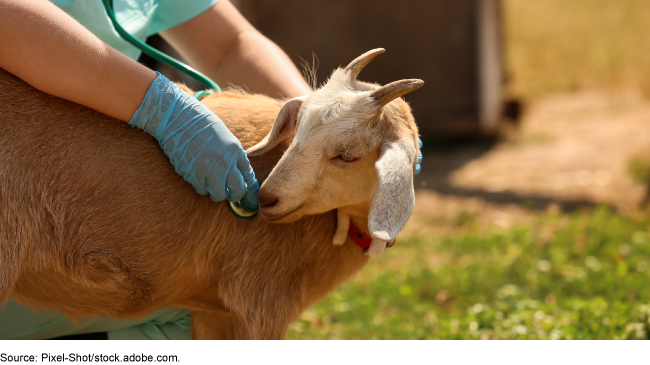
A person in rubber gloves presses a stethoscope to a goat while holding it still in a field.
Highlights
What GAO Found
High development costs and limited markets have led to a lack of U.S. Food and Drug Administration (FDA)-approved animal drugs for minor animal species. These are all animals other than the most common pets, livestock, and poultry (major species). There are also few approved drugs for rare conditions in major species (called “minor uses”) or for serious or life-threatening conditions where showing a drug’s effectiveness requires complex or difficult studies.
From fiscal years 2018 through 2025, FDA conditionally approved 11 new animal drugs, all of which were for major species. Nine were for pets, and two were for cattle. As of January 31, 2026, FDA conditionally approved two additional drugs.
To get full or conditional FDA approval, sponsors must conduct studies showing evidence of the drug’s effectiveness. These studies, particularly those needed for full approval, can be expensive and difficult for some conditions and species. FDA developed guidance for alternative approaches that sponsors can use, such as foreign-generated data or adjustable sample sizes. However, FDA has not developed a benefit-risk assessment that would help it evaluate sponsors’ use of alternative approaches to demonstrating a drug’s effectiveness. Doing so, and developing related guidance for industry, could encourage sponsors to address unmet animal health needs and address the lack of FDA-approved drugs.
Examples of Unmet Animal Health Needs
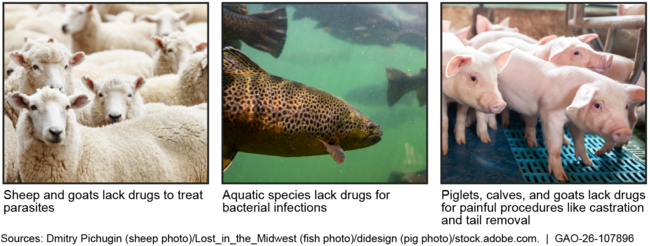
The conditional approval pathway and other incentives have had a limited effect on new animal drug development. Many of the unmet animal health needs that existed when the conditional approval pathway was created in 2004 remain unmet. These include the need for FDA-approved drugs to treat parasites in sheep and goats and bacterial infections in fish. Sponsors and others said that conditional approval’s flexibilities were not enough to overcome the drugs’ limited return on investment. For example, they said that conditional approval’s statutory 5-year limit for sponsors to gather enough effectiveness data to obtain full approval of their drugs is too short. FDA officials are considering policy changes to further incentivize drug development, but changing the 5-year limit on conditional approval would require congressional action. Considering an expansion to this time frame could help Congress determine whether the current limit balances multiple objectives, including increasing animal drug availability, protecting animal and human health, and maintaining incentives for sponsors to develop drugs for markets with limited profitability.
Why GAO Did This Study
Animal drugs play a vital role in preventing and treating diseases in animals. FDA regulates the safety and effectiveness of new animal drugs.
Noting the scarcity of approved drugs for minor species and minor uses, in 2004, Congress established economic incentives to encourage drug sponsors (e.g., companies) to fill this gap. These incentives included a conditional approval pathway for new animal drugs for minor species and uses. Conditional approval allows sponsors to legally sell a drug for up to 5 years while completing studies to demonstrate substantial evidence of the drug’s effectiveness. In 2018, Congress expanded this pathway to include serious conditions or unmet needs.
The Animal Drug and Animal Generic Drug User Fee Amendments of 2018 included a provision for GAO to review, by 2026, FDA’s conditional approval pathway and how it could be improved. This report (1) describes the animal drugs FDA conditionally approved in fiscal years 2018 through 2025; (2) evaluates the extent to which FDA has accepted alternative study designs for new drugs; and (3) evaluates the extent to which conditional approval has incentivized new drug development.
GAO reviewed relevant statutes, regulations, and FDA data and documents. GAO also interviewed FDA officials, animal drug sponsors, researchers, and other stakeholders, and made two site visits.
Recommendations
Congress should consider expanding conditional approval’s 5-year limit. GAO is also making two recommendations to FDA, including that it incorporates a benefit-risk assessment into its animal drug evaluations. FDA agreed with the recommendations.
Matter for Congressional Consideration
| Matter | Status | Comments |
|---|---|---|
| Congress should consider whether the statutory 5-year limit on conditional approval for animal drugs should be expanded to appropriately balance the goals of increasing drug availability to address unmet animal health needs, protecting animal and human health, and maintaining incentives for sponsors to develop drugs for markets with limited profitability, and should amend the statute as appropriate. | When we confirm what actions Congress has taken in response to this recommendation, we will provide updated information. |
Recommendations for Executive Action
| Agency Affected | Recommendation | Status |
|---|---|---|
| Food and Drug Administration | The Commissioner of FDA should incorporate a benefit-risk assessment into its process for evaluating whether animal drugs that use alternative study designs have demonstrated substantial evidence of effectiveness. (Recommendation 1) |
When we confirm what actions the agency has taken in response to this recommendation, we will provide updated information.
|
| Food and Drug Administration | The Commissioner of FDA should develop guidance for industry on its use of benefit-risk assessments in its regulatory decisions for animal drugs that demonstrate substantial evidence of effectiveness using alternative study designs. (Recommendation 2) |
When we confirm what actions the agency has taken in response to this recommendation, we will provide updated information.
|