
Chemical Accident Prevention: EPA Should Ensure Regulated Facilities Consider Risks from Climate Change
Fast Facts
The EPA regulates certain facilities that make, use, or store hazardous chemicals. These facilities are required to have risk management programs to prevent and prepare for accidental releases of these chemicals.
Federal data indicates about 31% of these facilities are located in areas with certain natural hazards—like wildfires and storm surges—that may be worsened by climate change. We found that EPA doesn't consistently assess how these facilities are managing risks from natural hazards and climate change.
We recommended, among other things, that EPA provide more direction for facilities on including these risks in their programs.
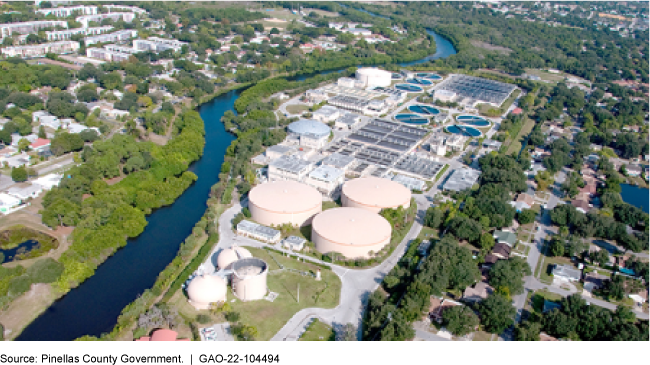
The South Cross Bayou Advanced Water Reclamation Facility in Pinellas County, FL, works with the Local Emergency Response Committee to manage risks from potential flooding.
Highlights
What GAO Found
The Environmental Protection Agency’s Risk Management Plan (RMP) Rule requires certain facilities that make, use, handle, or store hazardous substances (chemicals) to develop and implement a risk management program to detect and prevent or minimize the consequences of an accidental release. These facilities, known as RMP facilities, include chemical manufacturers and water treatment plants. Federal data on flooding, storm surge, wildfire, and sea level rise—natural hazards that may be exacerbated by climate change—indicate that over 3,200 of the 10,420 facilities we analyzed, or about 31 percent, are located in areas with these natural hazards (see figure). View the full results of GAO’s analysis here.
RMP Facilities Located in Areas That May Be Impacted by Flooding, Storm Surge, Wildfire, or Sea Level Rise
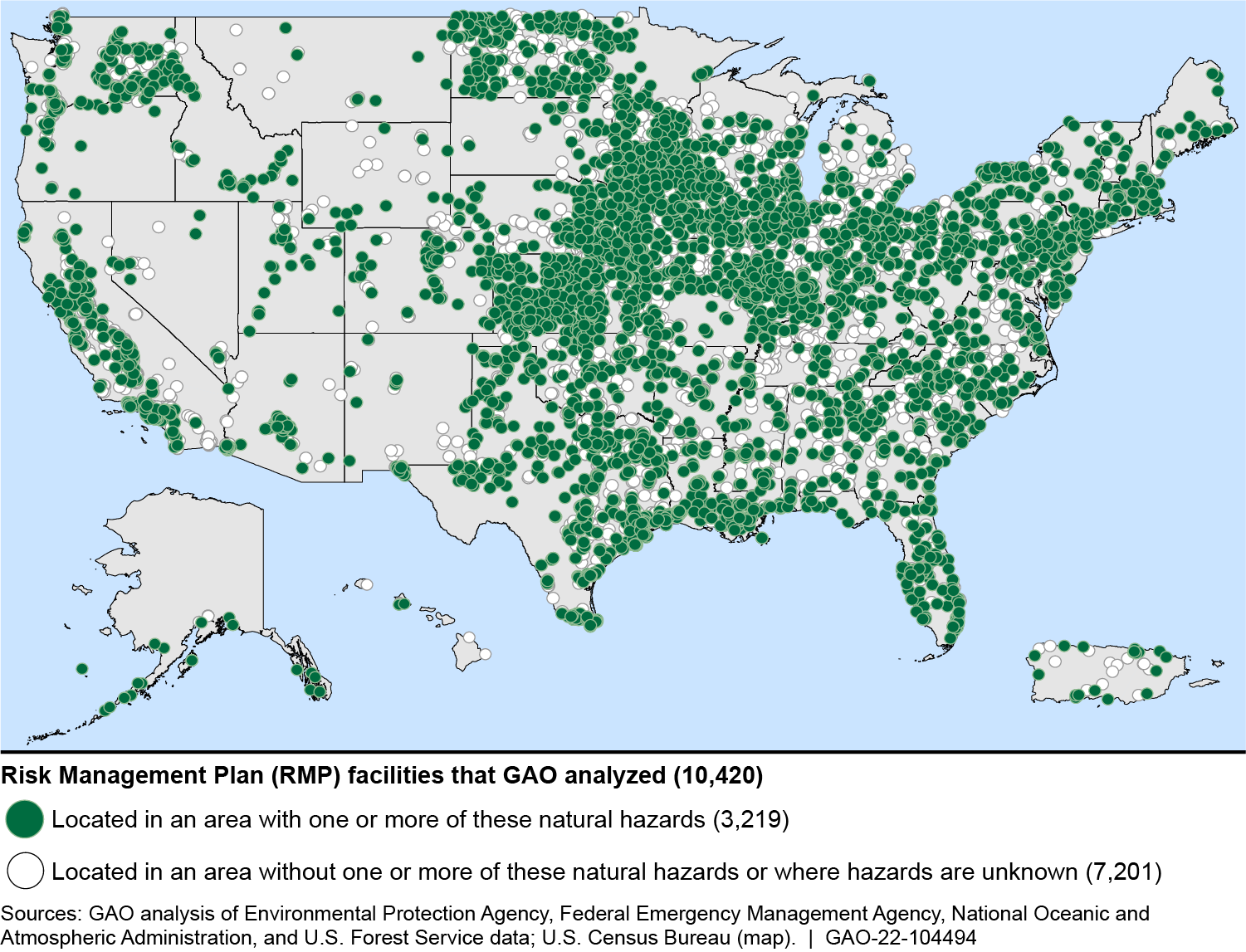
Notes: This map does not include one RMP facility in each of Guam and the U.S. Virgin Islands, Storm surge data are not available for the West Coast and Pacific islands other than Hawaii, and sea level rise data are not available for Alaska.
RMP facilities face several challenges, including insufficient information and direction, in managing risks from natural hazards and climate change, according to some EPA officials and stakeholders. By issuing regulations, guidance, or both to clarify requirements and provide direction on how to incorporate these risks into risk management programs, EPA can better ensure that facilities are managing risks from all relevant hazards. When developing any such regulation, EPA should, pursuant to relevant executive orders, conduct a cost-benefit analysis.
Why GAO Did This Study
Over 11,000 RMP facilities across the nation have extremely hazardous chemicals in amounts that could harm people, property, or the environment if accidentally released. Risks to these facilities include those posed by natural hazards, which may damage the facilities and potentially release the chemicals into surrounding communities. Climate change may make some natural hazards more frequent or intense, according to the Fourth National Climate Assessment.
GAO was asked to review climate change risks at RMP facilities. This report examines, among other things, (1) what available federal data indicate about RMP facilities in areas with natural hazards that may be exacerbated by climate change; and (2) challenges RMP facilities face in managing risks from natural hazards and climate change, and opportunities for EPA to address these challenges. GAO analyzed federal data on RMP facilities and four natural hazards that may be exacerbated by climate change, reviewed agency documents, and interviewed agency officials and stakeholders, such as industry representatives.
Recommendations
GAO is making six recommendations, including that EPA issue regulations, guidance, or both to clarify requirements and provide direction to facilities on incorporating natural hazards and climate change into risk management programs. EPA agreed with our recommendations.
Recommendations for Executive Action
| Agency Affected | Recommendation | Status |
|---|---|---|
| Environmental Protection Agency | The Assistant Administrator of the Office of Enforcement and Compliance Assurance and Director of the Office of Emergency Management, together with EPA officials at regional offices, should provide additional compliance assistance to RMP facilities related to risks from natural hazards and climate change. (Recommendation 1) |
EPA agreed with this recommendation. In February 2026, EPA published proposed revisions to the 2024 risk management program rule. In the rule making, EPA stated that it was considering exploring and developing compliance assistance tools that could provide data on natural hazards that could adversely impact facility processes. In August 2026, EPA officials estimated that the tools would be finalized along with the new rule in 2027. We will continue to track EPA's progress in implementing this recommendation.
|
| Environmental Protection Agency | The Assistant Administrator of the Office of Enforcement and Compliance Assurance should design an information system to track common deficiencies found during inspections, including any related to natural hazards and climate change, and use this information to target compliance assistance. (Recommendation 2) |
EPA agreed with the goal of this recommendation. However, EPA stated that identifying common deficiencies and targeting compliance assistance is best done on an industry-sector basis as part of the Chemical Accident Risk Reduction National Enforcement and Compliance Initiative (NECI). As part of the NECI cycle, EPA identifies industry sectors for increased attention, based on the number of regulated facilities in each sector and accident rates, and develops compliance assistance tools for these industries. According to EPA, officials remain attentive to common deficiencies informally and include that information in the NECI process and in training for relevant officials. As of August 2026, EPA plans to continue to follow this approach. We continue to believe the recommendation is merited.
|
| Environmental Protection Agency | The Director of the Office of Emergency Management should issue regulations, guidance, or both, as appropriate, to clarify requirements and provide direction for RMP facilities on how to incorporate risks from natural hazards and climate change into their risk management programs. (Recommendation 3) |
EPA agreed with this recommendation. In March 2024, EPA issued a final rule amending the existing risk management program rule. The final rule revises the regulatory definition of "natural hazard" to account for impacts due to climate change. The final rule also requires hazard reviews and process hazard analyses to consider natural hazards that could cause or exacerbate an accidental release and facilities' operating procedures to document when monitoring equipment for prevention and detection of accidental releases is removed due to safety concerns from imminent natural hazards.
|
| Environmental Protection Agency | The Assistant Administrator of the Office of Enforcement and Compliance Assurance and Director of the Office of Emergency Management should develop a method for inspectors to assess the sufficiency of RMP facilities' incorporation of risks from natural hazards and climate change into risk management programs and provide related guidance and training to inspectors. (Recommendation 4) |
EPA agreed with this recommendation. EPA has incorporated information on natural hazards into its process hazard analysis course, held annually for facility inspectors. In February 2026, EPA published proposed revisions to the 2024 Risk Management Program rule. According to EPA, the agency intends to seek comments on potential natural hazards risk assessment tools, such as inspector checklists, as part of its ongoing rulemaking process. EPA expects the final rule to be issued in 2027. We will continue to track EPA's progress in implementing this recommendation.
|
| Environmental Protection Agency | The Assistant Administrator of the Office of Enforcement and Compliance Assurance, working with officials at regional offices, should incorporate vulnerability of RMP facilities to natural hazards and climate change as criteria when selecting facilities for inspection. (Recommendation 5 |
EPA agreed with this recommendation. According to EPA, officials follow EPA policy that requires regional offices to prioritize inspections at "high-risk" facilities: facilities with large residential population within the facility's worst-case scenario vulnerable zone, facilities with a history of significant accidental releases, and facilities with very large quantities of hazardous chemicals held on site (or with multiple hazardous chemicals held above a threshold quantity). We will continue to track EPA's progress in implementing this recommendation.
|
| Environmental Protection Agency | The Assistant Administrator of the Office of Enforcement and Compliance Assurance, working with EPA officials at regional offices, should incorporate the relative social vulnerability of communities that could be impacted by an accidental release when selecting RMP facilities for inspection. (Recommendation 6) |
EPA agreed with this recommendation. EPA noted that it has begun incorporating environmental justice indicators into inspection targeting in 2022 and will further refine this process in future years. In addition, the Office of Enforcement and Compliance Assurance's National Program Guidance, Fiscal Years 2023-2024 states that EPA has added environmental justice data to the list of high-risk facilities, which are subject to RMP requirements. In a memorandum issued on April 30, 2022, EPA committed to increase the number of facility inspections in overburdened communities and plans to set new inspection goals once it has collected additional information about such inspections.
|