
Electronic Health Records: Ongoing Stakeholder Involvement Needed in the Department of Veterans Affairs' Modernization Effort
Fast Facts
The Department of Veterans Affairs is replacing its outdated electronic health record system with a commercial system to better support patient care. VA held several workshops to allow stakeholders—clinicians, staff, and other experts—to weigh in on the configuration of the new software that will help it deliver care and administer medication.
While VA made its configuration decisions on time, it is assessing the impact of the COVID-19 pandemic on its planned implementation schedule. Our recommendation will help VA effectively communicate with key stakeholders to ensure they are involved in final decision-making for the modernized system.
[Photo replaced to ensure privacy.]
An emergency room nurse reviews the patient status board.
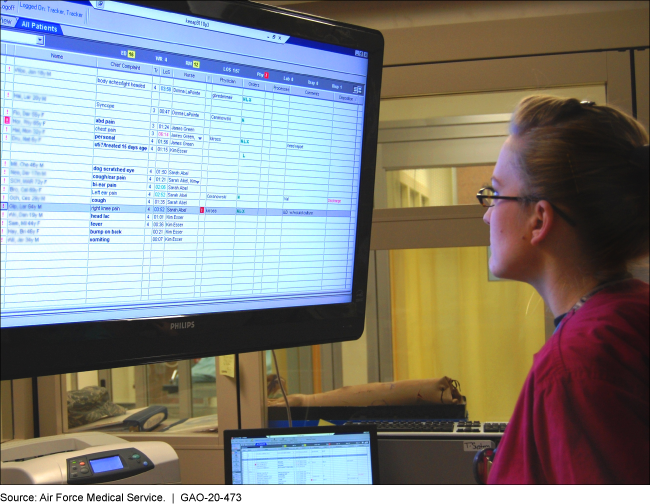
Woman reviewing records on screen
Highlights
What GAO Found
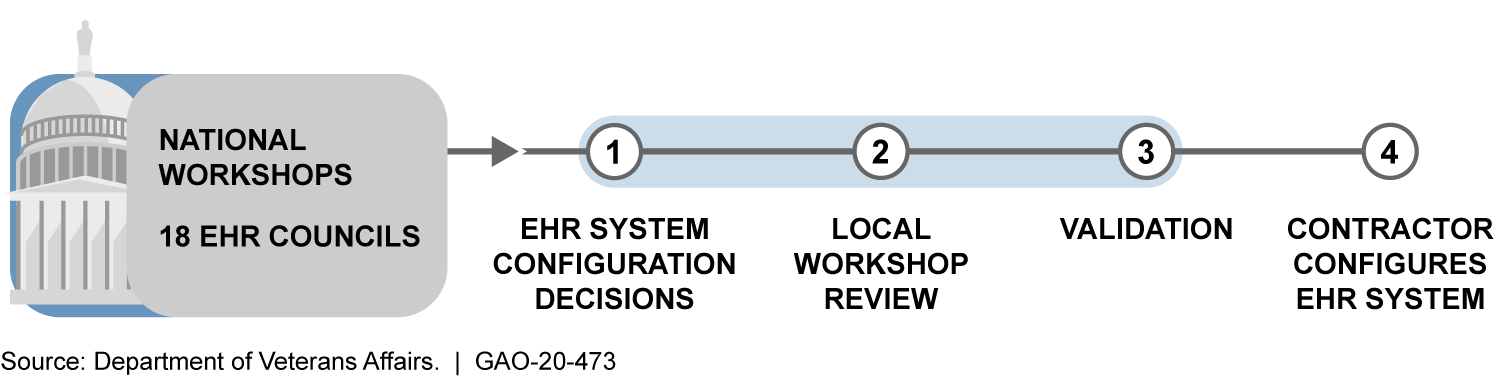
The Department of Veterans Affairs (VA) used a multi-step process to help ensure that its future commercial electronic health record (EHR) system is configured appropriately for, and is compatible with, its clinical work processes. To configure the EHR system, which VA planned to implement initially at the Mann-Grandstaff VA Medical Center, in Spokane, Washington, in July 2020, and at the Puget Sound Health Care System in the fall of 2020, VA established 18 EHR councils comprising VA clinicians, staff, and other experts in various clinical areas and held eight national workshops between November 2018 and October 2019. At these workshops, the councils decided how to design the functionality of the EHR software to help clinicians and other staff deliver care and complete tasks such as administering medication. VA also held eight local workshops at both medical centers to help ensure that the EHR configuration supported local practices. As of March 2020, the EHR councils were continuing to meet to complete configuration decisions. Furthermore, VA plans to hold local workshops in advance of the EHR system implementation at future VA medical facilities. In April 2020, the VA Secretary announced that the department had shifted priorities to focus on caring for veterans in response to the pandemic created by COVID-19. According to program officials, at that time, they paused the implementation of the EHR system and were assessing the impact of the COVID-19 pandemic on VA's planned implementation schedule.
Electronic Health Record (EHR) System Configuration Decision Process
GAO found that VA's decision-making procedures were generally effective as demonstrated by adherence to applicable federal internal control standards for establishing structure, responsibility, and authority, and communicating internally and externally, but that VA did not always ensure key stakeholder involvement. Specifically, the councils included a wide range of stakeholders from various geographic regions. However, according to clinicians from the two initial medical facilities for implementation, VA did not always effectively communicate information to stakeholders, including medical facility clinicians and staff to ensure relevant representation at local workshop meetings. As a result, local workshops did not always include all relevant stakeholders. VA has not indicated how it plans to describe these future sessions and define key terms to ensure key stakeholder participation in local workshops. By ensuring that all relevant stakeholders are included, VA will increase the likelihood that it is obtaining input from a wide range of clinicians and staff who will use the EHR system and will increase the likelihood that when it is implemented, the EHR system will effectively support the delivery of care at VA medical centers.
Why GAO Did This Study
VA's existing EHR system is antiquated, costly to maintain, and does not fully support VA's need to exchange health records with other organizations, such as the Department of Defense. As a result, VA has undertaken a modernization effort to replace it. As VA prepares to transition from its existing EHR system to a commercial system, it has the opportunity to design standardized work processes to support the delivery of care and ensure information on veterans' care is consistently captured, regardless of site of care.
GAO was asked to review VA's EHR system configuration process. This report examines, among other objectives: (1) how VA made EHR system configuration decisions and assessed the compatibility of the commercial EHR system with its work processes; and (2) the effectiveness of VA's decision-making procedures, including ensuring key stakeholder involvement.
GAO observed national and local workshop meetings; visited planned initial implementation sites; reviewed documentation on the processes and schedule; and interviewed VA, DOD, and contractor officials.
Recommendations
GAO is recommending that VA ensure the involvement of all relevant medical facility stakeholders in the EHR system configuration decision process. VA concurred with GAO's recommendation.
Recommendations for Executive Action
| Agency Affected | Recommendation | Status |
|---|---|---|
| Department of Veterans Affairs | For implementation of the EHR system at future VA medical facilities, we recommend that the Secretary of VA direct the EHRM Executive Director to clarify terminology and include adequate detail in descriptions of local workshop sessions to facilitate the participation of all relevant stakeholders including medical facility clinicians and staff. (Recommendation 1) |
VA concurred with our recommendation and planned to refine local workshop agendas and descriptions to facilitate VA subject matter expert identification and participation. In September 2020, VA stated that it was in the process of incorporating summary descriptions of sessions in agendas and identifying appropriate subject matter experts and stakeholders to participate in each session for workshops at future implementation sites. After challenges with the initial deployments, the department paused further implementation during a program "reset" to allow time for improvements to the system, to address technical and performance issues, and to prioritize making improvements at the deployed sites. In early fiscal year 2025, VA announced that it would restart planning and resume deployments in 2026. As of August 2025, VA had not provided sufficient evidence that it had fully addressed this recommendation. We will continue to monitor VA's progress towards implementing this recommendation in the upcoming deployments.
|