
Why Fewer Insurers in Dental and Vision Markets Could Matter to You
Tens of millions of adults and children in the United States receive dental or vision care coverage through stand-alone insurance plans. This coverage may come under an employer’s group policy or through individually purchased plans.
Congress asked us to look at the market concentration for dental and vision insurance—meaning the extent that a small number of companies control a large part of this market.
Today’s WatchBlog post looks at our new report on this topic and what it could mean for you.
Image

What does the dental and vision insurance market look like?
To figure out what dental and vision insurance market concentration looks like, we went state-by-state through insurance enrollment data. And we looked at market concentration for both group plans (employer sponsored) and individual plans.
What we found was a wide range of variation—not just by state, but also between dental and vision.
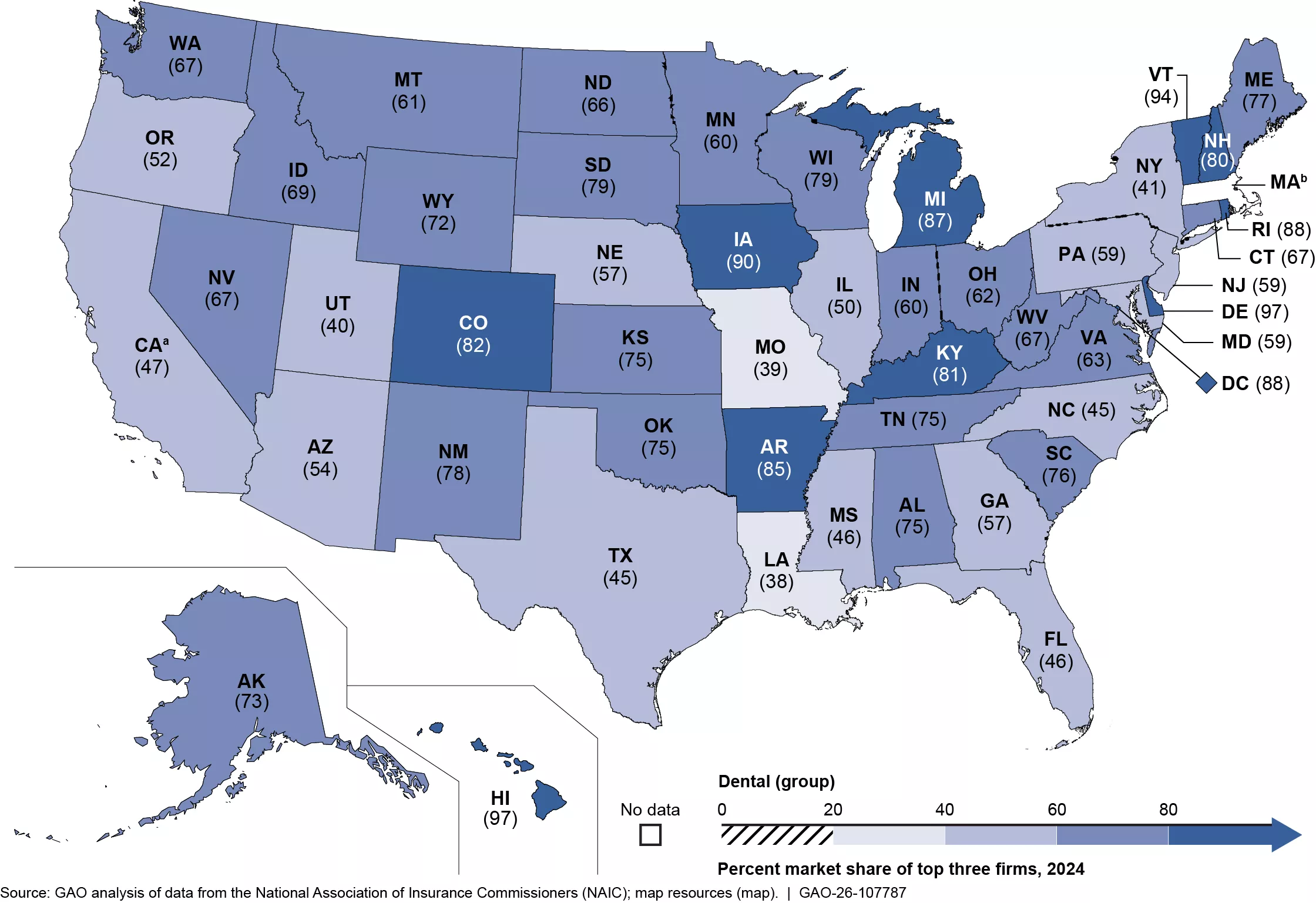
Dental. The combined market share controlled by the three largest dental insurance providers (for group plans) ranged from 38% to 97%.
- For 11 states, those three companies controlled 80% or more of the market
- The highest combined market share was in Hawaii at 97%
- The lowest was in Louisiana at 38%
Map showing combined share, by state, for the three largest stand-alone dental insurers in the group-plan market (2024)
Image
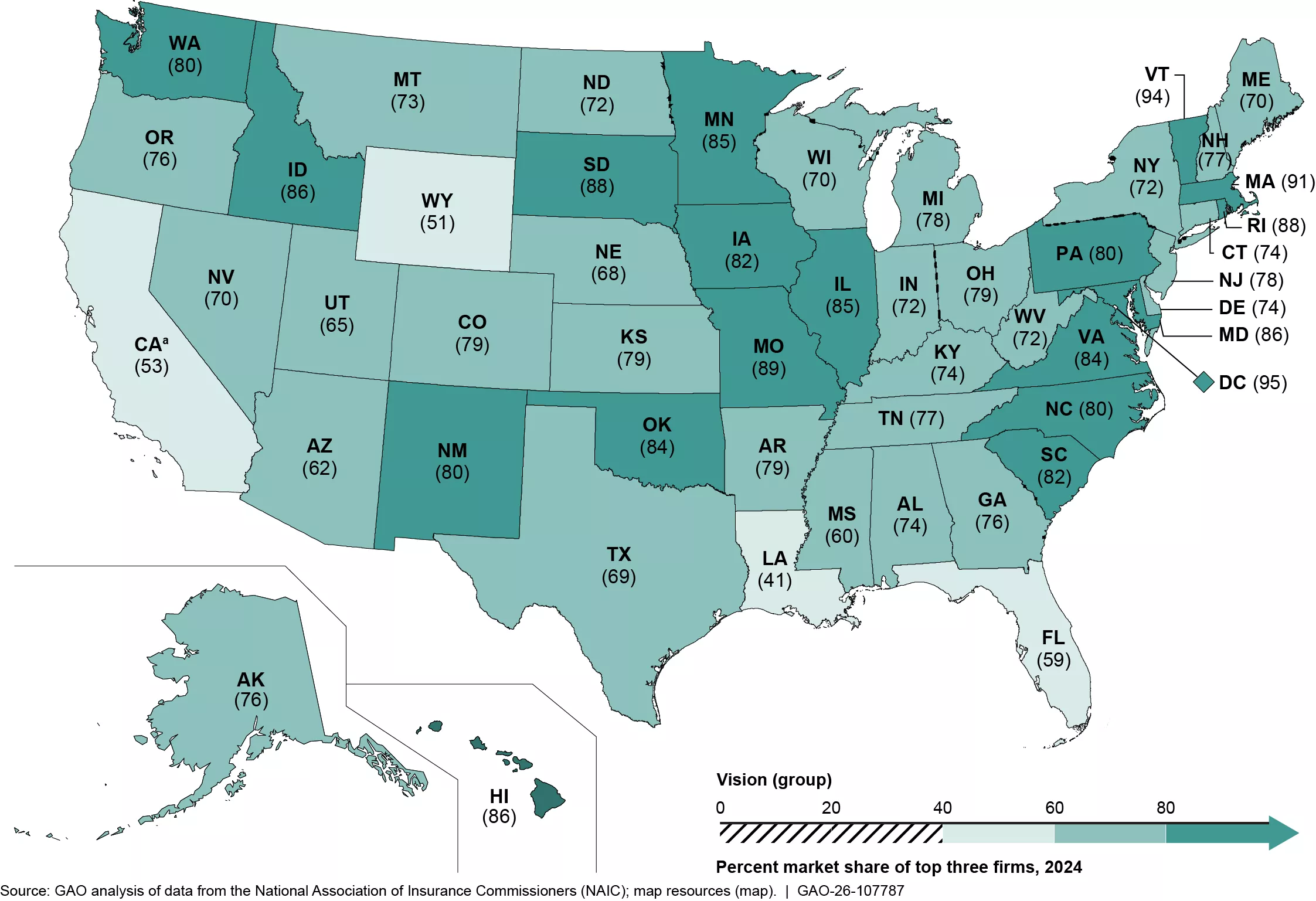
Vision. Similarly, the combined market share controlled by the three largest vision insurance providers (for group plans) ranged from 41% to 95%.
- For 19 states, these three companies controlled 80% or more of the market
- Washington, D.C. had the highest concentration at 95%
- And Louisiana had the lowest at 41%
Map showing combined share, by state, for the three largest stand-alone vision insurers in the group-plan market (2024)
Image
What does all this mean and how could it impact consumers?
Historically, the market for private health care insurance in the United States has been highly concentrated. We found that’s also true in some states for private dental and vision insurance, which is often sold separately from health care plans.
We don’t really know what effects a highly concentrated market for dental or vision could have on Americans. For example, we don’t know if this has increased out-of-pocket costs or insurance premiums. And we don’t know what impact this has had on access to care or quality of care. This is because more research is needed to examine these issues in specific markets.
But studies have suggested that highly concentrated health insurance markets may lead to less competition—and that could affect consumers’ choice, as well as the premiums they pay.
For dental insurance, we found only two peer-reviewed studies that discussed the effects of a concentrated market.
- One of these studies found that, between 2015-2017, as concentration increased at the county level, the payments insurers made to providers for services rendered generally declined. The study also said that when there were more dental providers (less concentration among providers), dentists may have been more limited in their ability to negotiate for higher reimbursements.
- The second study, which looked at data from 2013-2015, found that higher concentration of insurance providers could lead to larger dental practices and lower rates of dentists owning a private practice.
To learn more about dental and vision insurance market concentration—including what’s going on in your state, check out our full report.
- GAO’s fact-based, nonpartisan information helps Congress and federal agencies improve government. The WatchBlog lets us contextualize GAO’s work a little more for the public. Check out more of our posts at GAO.gov/blog.
- Got a comment, question? Email us at blog@gao.gov.
GAO Contacts
Image



Related Products
GAO's mission is to provide Congress with fact-based, nonpartisan information that can help improve federal government performance and ensure accountability for the benefit of the American people. GAO launched its WatchBlog in January, 2014, as part of its continuing effort to reach its audiences—Congress and the American people—where they are currently looking for information.
The blog format allows GAO to provide a little more context about its work than it can offer on its other social media platforms. Posts will tie GAO work to current events and the news; show how GAO’s work is affecting agencies or legislation; highlight reports, testimonies, and issue areas where GAO does work; and provide information about GAO itself, among other things.
Please send any feedback on GAO's WatchBlog to blog@gao.gov.