
The U.S. Government is Selling its Unused Properties—Here’s What You Should Know
The federal government is one of the largest property owners in the United States. It owns hundreds of thousands of properties—from residential homes to industrial sites. Combined, this real estate costs billions of dollars each year to maintain. But some properties have large vacancies or are empty, and others have outlived their original purpose.
The General Services Administration (GSA) has been trying to sell these properties. Today’s WatchBlog post looks at our new report on GSA’s efforts and future plans.
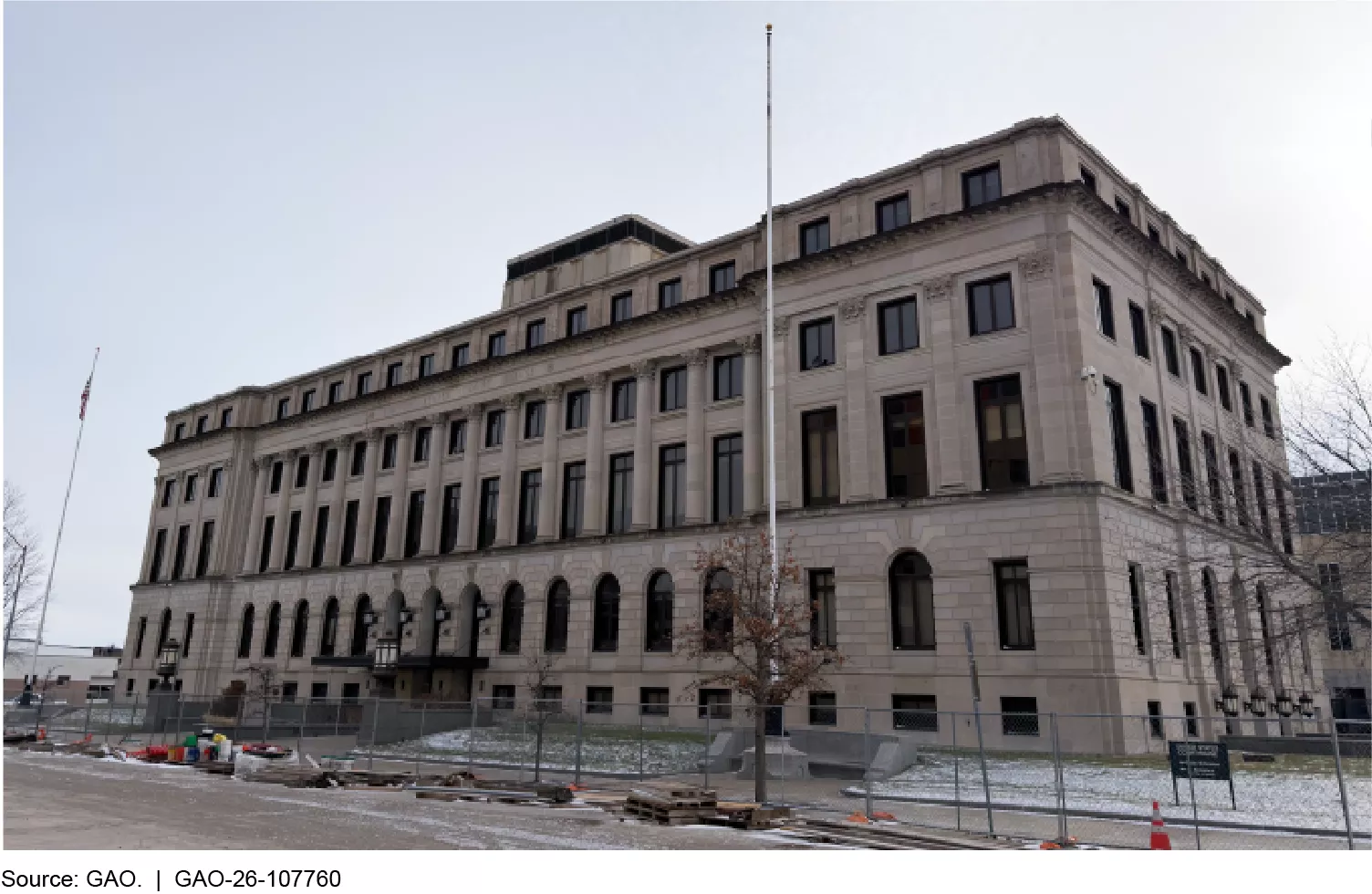
A U.S. Courthouse in Iowa, which sold for $2.6 million
Image
By the numbers: How much has GSA sold and made from real estate?
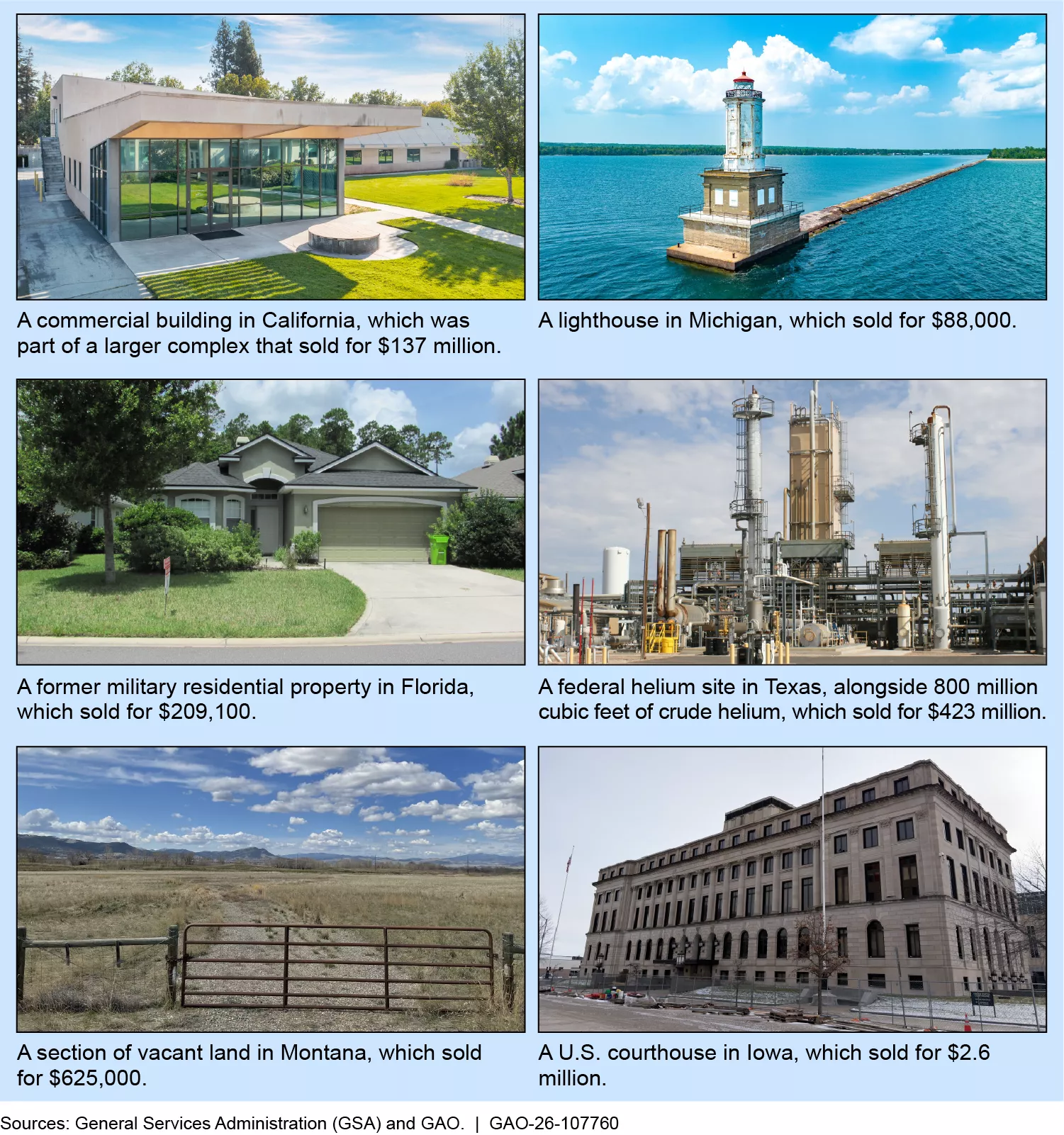
What do a Texas helium factory, a Michigan lighthouse, and an Iowa courthouse have in common? They are all properties that have been sold recently by GSA.
Since 2013, these real estate sales have generated $1.4 billion in revenue for the federal government. And they include all kinds of properties. For example:
- 2% of sales were industrial properties like the helium factory
- 13% were commercial buildings like offices or a courthouse
- 55% were residential homes such as those that formerly served as military housing
- 16% were undeveloped land lots
- 13% were “other” properties, such as lighthouses
Though industrial and commercial properties make up only a fraction of the total number of sales, they account for almost 75% of sale revenue.
Image
While these sales have generated revenue and helped GSA reduce unnecessary costs, they may take years to complete. Half of GSA-owned buildings are prepped and sell within about a year. But some have taken upwards of 10 years to prepare for sale and be sold. These preparations included:
- Securing relocation funds for tenants. Even when a building is mostly vacant, it cannot be sold right away if an agency is still using the space. For example, if an office building was mostly vacant, but had one or two federal agencies as tenants, GSA must wait for the tenant agency to secure funding and move before the sale proceeds.
- Environmental remediation and historical preservation. Some federal buildings may be “on hold” until environmental remediation issues are resolved (for example, removing asbestos or lead paint). Other federal buildings are protected by historic preservation requirements. If a buyer intends to repurpose a building that has this protection, that can extend the sale timeline.
- Federal, state, and local interest in the building. The longest delays typically occur when federal, state, and local entities want to use a property for public benefit purposes. This includes turning buildings into educational or homeless assistance facilities. When multiple parties express interest, delays can be significant. GSA can sell buildings at up to a 100% discount if they will be used for public benefit.
Delays in selling properties can lead to increased costs for the government. So, GSA is looking into new ways to speed up this building preparation and sales process.
GSA’s plans for future sales
About a year ago GSA announced a new accelerated process to sell federally owned office buildings. It has identified 47 buildings to sell under this approach, which includes several key elements:
- A new website to generate market interest in sale properties and encourage tenants to identify relocation strategies.
- Centralized leadership to improve oversight of sales decisions. Specifically, headquarters-level officials will coordinate more closely with the regional project teams that manage sales decisions.
- Using private brokers to alleviate pressure from recent staffing cuts at GSA. Private brokers would also manage a planned increase in the number of commercial properties the agency plans to sell.
As this new approach continues to evolve, it’s essential to track whether these efforts are successful. For example, if GSA looked at characteristics of buildings that sold quickly, it could more easily identify other properties that are suitable for accelerated sale. It’s also important to compare the costs and benefits of GSA-led versus private broker-led sales. This could help GSA determine what methods it should pursue in the future.
However, we found that there’s no plan to track how much time or money is saved using the new accelerated approach. Without this information, GSA could miss critical opportunities to improve its process and make sales more efficient. We recommended in our report that it do so.
Learn more about federal real estate sales in our new report.
- GAO’s fact-based, nonpartisan information helps Congress and federal agencies improve government. The WatchBlog lets us contextualize GAO’s work a little more for the public. Check out more of our posts at GAO.gov/blog.
- Got a question or comment? Email us at blog@gao.gov.
GAO Contacts
Image


Related Products

GAO's mission is to provide Congress with fact-based, nonpartisan information that can help improve federal government performance and ensure accountability for the benefit of the American people. GAO launched its WatchBlog in January, 2014, as part of its continuing effort to reach its audiences—Congress and the American people—where they are currently looking for information.
The blog format allows GAO to provide a little more context about its work than it can offer on its other social media platforms. Posts will tie GAO work to current events and the news; show how GAO’s work is affecting agencies or legislation; highlight reports, testimonies, and issue areas where GAO does work; and provide information about GAO itself, among other things.
Please send any feedback on GAO's WatchBlog to blog@gao.gov.