
Many U.S. Museum Buildings Are in Disrepair, Threatening Collections and Visitors’ Safety
Museums are meant to help preserve history. But that can be difficult when their buildings fall into disrepair. Across the United States, thousands of museums need repairs to address issues that could damage fragile collections. This same issue may also pose health and safety concerns to visitors.
Today’s WatchBlog post looks at our new report on why so many museums are in need of repairs and what impacts that can have.
Image

What is going on with museum buildings?
The United States has almost 20,000 museums. That’s more than all the Starbucks locations nationwide. These museums include everything from historic sites to children's museums and science centers. We took a national survey of museums to ask staff about their building’s condition and the risks it poses to collections and guests. Many reported back that their buildings are in need of urgent repairs to protect their collections and remove safety or health hazards.
Valuable collections may be at risk. Many collections are housed in museum buildings that are 100 years old or older. Older buildings can have compounding maintenance issues that both get worse and more damaging over time. About 77% of museums (12,300) report having at least one building system that puts their collections at risk of damage or loss. This includes systems like heating, cooling, and ventilation. Often, environmental controls are important to protecting a collection since fragile items may be vulnerable to humidity, for example.
The age and condition of some older buildings can also leave collections more vulnerable to weather events and natural disasters. About 41% of museums (6,900) were located in areas hit by extreme weather events like flooding or heatwaves and natural disasters between 2020-2024. For example, in January 2025, we visited a museum that was still partially closed for repairs after structural damage from a 2020 earthquake, and some art collections were damaged.
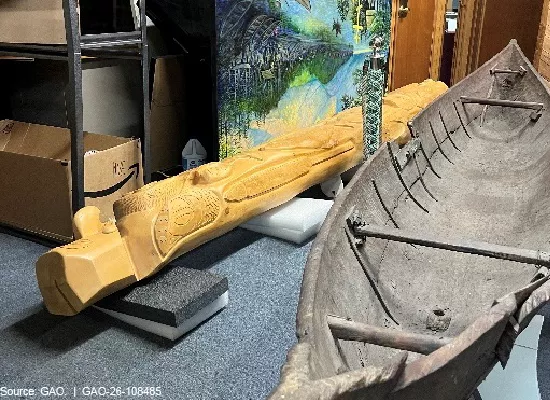
Museum artifacts are stored on a makeshift mount to prevent any damage from potential basement flooding. This basement had flooded in the past.
Image
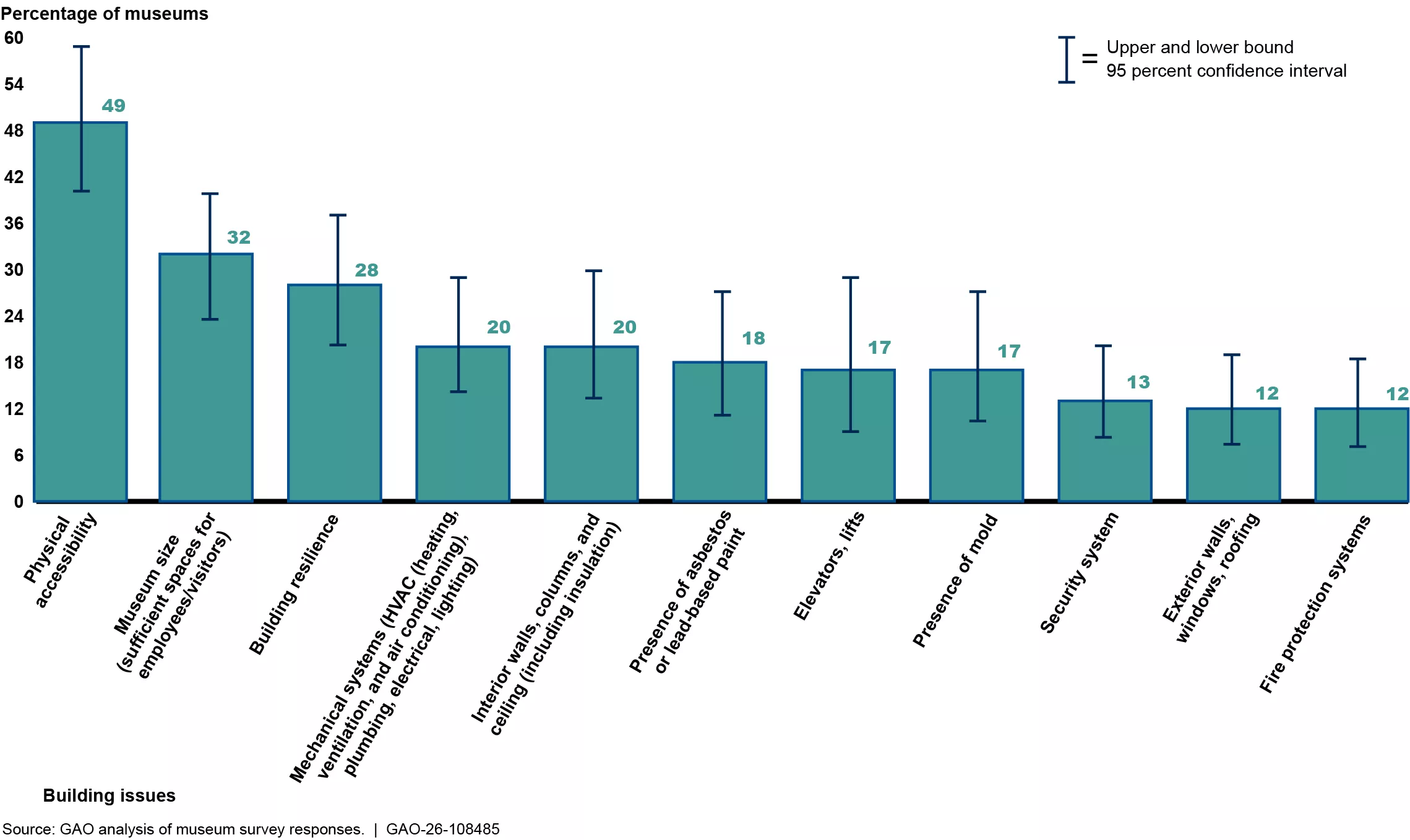
Accessibility, safety, and health issues. A lot of museums were built before construction requirements established modern accessibility rules. Nearly half of the museums we surveyed had some kind of physical accessibility barrier. These barriers could pose safety concerns. For example, visitors can trip over uneven flooring. Or individuals in wheelchairs or parents with strollers may be unable to safely navigate stairs to enter a museum or move through its rooms. Museum staff told us that physical accessibility barriers are more common in older and smaller museums than in newer, larger museums. Removing these barriers could be tricky, they said. Installing a ramp or an elevator can be costly and there might not be enough space in or around the smaller buildings.
Museum staff were also concerned about finding mold in buildings. Many museums have experienced water damage from leaks that, when left unrepaired, can lead to mold. For example, at one museum, staff said rain seeps in from the backdoor and their leaky roof. They hoped to replace their 20-year-old carpet. And they were concerned whether mold has grown underneath the carpet.
Estimated Percentage of Museums Reporting Potential Safety or Health Concerns Related to Building Issues
Image
Why are so many museum buildings in disrepair?
Many museums simply don’t have the capacity to maintain or repair everything that’s needed. When we surveyed museums, we found that about 85% of museums (13,700) have deferred maintenance. This backlog often leads to a long “to do” list of maintenance and repairs over time. It’s caused in part by limited funding and high construction costs. About half of museums reported needing at least $100,000 to fix overdue building issues.
Museums primarily rely on donations and fundraising to pay for maintenance and repairs. However, museum staff told us that donors are not always interested in funding them. And public funds, including federal dollars, are primarily available for programming and services only.
For small museums in rural areas, limited expertise and the capacity for fundraising pose additional challenges. Fundraising is a skill and can be time intensive. For example, a small museum we visited had an annual operating budget of $212,000. But it needed more than $289,000 for building repairs last year. Such repairs were only possible through a fundraising campaign and grants for building preservation. And museum staff there estimated needing more than $1.4 million in additional funds to replace the roof and to update wiring from the 1930s.
Many museums also told us they expect their delayed maintenance and repair issues to only grow in the next 3 years. Building systems require ongoing maintenance to ensure they function properly. Deferring such maintenance and repairs may worsen problems and shorten the life of the building system and result in higher repair costs.
For more information on museum building conditions and problems, be sure to check out our full report.
- GAO’s fact-based, nonpartisan information helps Congress and federal agencies improve government. The WatchBlog lets us contextualize GAO’s work a little more for the public. Check out more of our posts at GAO.gov/blog.
- Got a question or comment? Email us at blog@gao.gov.
GAO Contacts
Image


Related Products

GAO's mission is to provide Congress with fact-based, nonpartisan information that can help improve federal government performance and ensure accountability for the benefit of the American people. GAO launched its WatchBlog in January, 2014, as part of its continuing effort to reach its audiences—Congress and the American people—where they are currently looking for information.
The blog format allows GAO to provide a little more context about its work than it can offer on its other social media platforms. Posts will tie GAO work to current events and the news; show how GAO’s work is affecting agencies or legislation; highlight reports, testimonies, and issue areas where GAO does work; and provide information about GAO itself, among other things.
Please send any feedback on GAO's WatchBlog to blog@gao.gov.