
Many Public Libraries Are in Need of Significant Repairs, But Lack the Funding
Public libraries are an essential part of communities. They provide free access to books, newspapers, the internet, and community programs. They also serve as community hubs—often as emergency shelters and voting sites.
Unfortunately, many library buildings have fallen into disrepair, which may affect their ability to meet the needs of the communities they serve.
Today’s WatchBlog post looks at our report on the physical and financial challenges many public libraries face.
Image

As libraries fall into disrepair, people and resources may be at risk
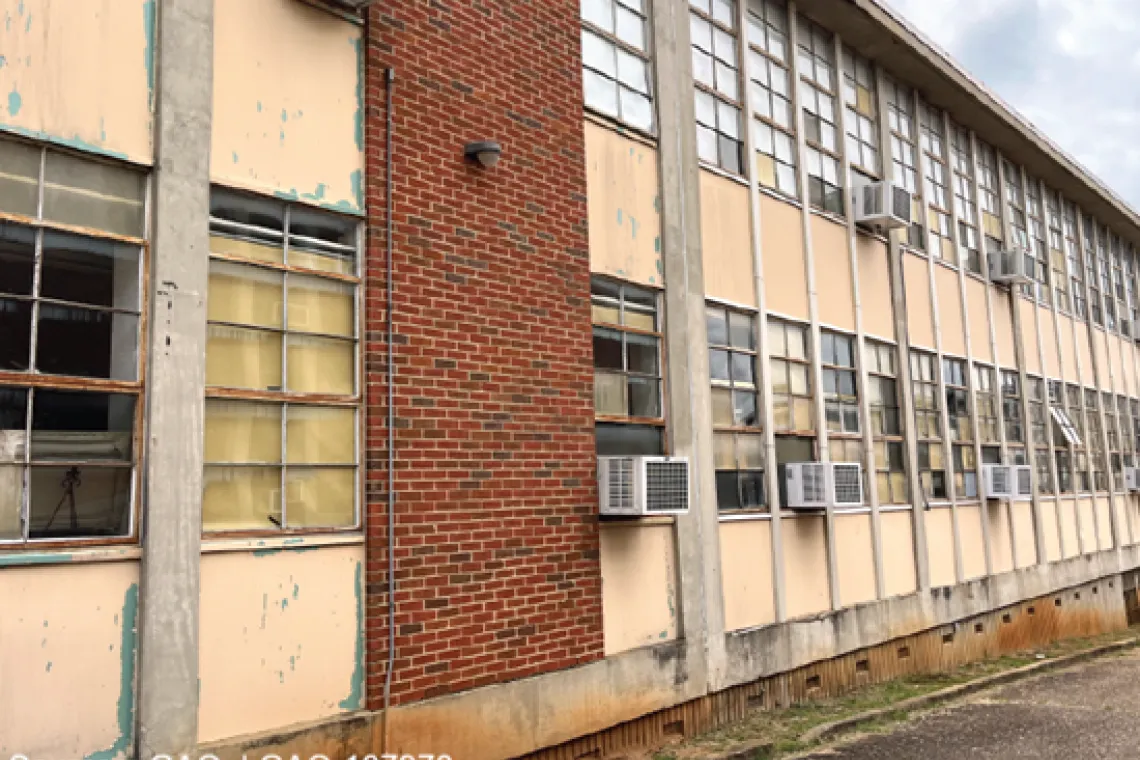
Poor building conditions plague many of the nation’s public libraries. When we surveyed libraries nationally, staff told us that key issues are aging systems (many buildings are more than 40 years old) and accessibility issues.
For example, about 38% of libraries told us that at least one building system is in poor condition. That’s about 6,000 libraries with problems like leaky roofs or heating, cooling, and ventilation issues. Water damage and temperature fluctuations inside these buildings could damage books and other collections. They can also cause health and safety problems for people working or visiting those libraries. Some buildings have even been forced to close due to extreme heat that resulted in triple-digit temperatures inside.
About 61% (or 9,800) of libraries had at least one issue that poses potential health concerns. For example, several libraries reported mold or the potential for mold as a serious problem. Indeed, when we visited libraries to hear directly from staff, eight of the 23 we visited told us they experienced mold.
Shower Curtains Used Inside Library to Protect Books from Roof Leaks (left), and One of Several Damaged Air Conditioning Units (right)
Image
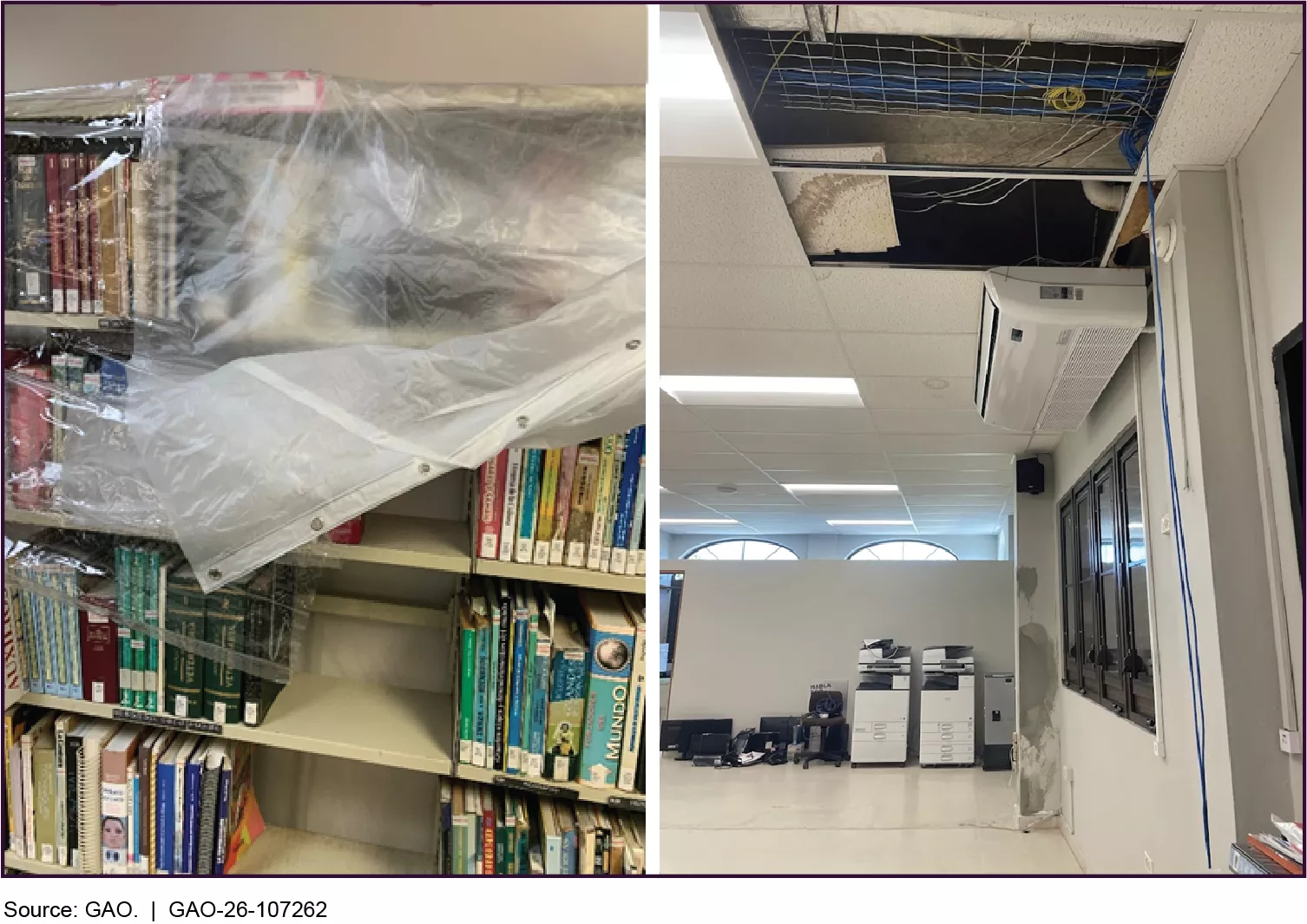
We also found that libraries can have inaccessible areas, obstructed walkways, and overcrowded spaces. Officials at 11 libraries we visited cited accessibility concerns with entrances, ramps, and the configuration of public spaces, such as limited wheelchair access.
Library staff discussed damaged flooring that poses safety hazards, too. For example, frayed carpets and warped floorboards are trip hazards and can be dangerous to walk on, especially for children, the elderly, or people with mobility issues.
All of these issues can limit the public’s access to information and community services. While libraries recognize the need to fix these problems, most simply don’t have the funding to fix them. That often results in deferring maintenance until funds can be raised.
In fact, our survey found an estimated 70% (about 11,200) of libraries have a backlog of deferred maintenance and repairs. It may take years to address these backlogs. Nearly 70% of libraries we surveyed also expect deferred maintenance to remain the same or increase in the next 3 years.
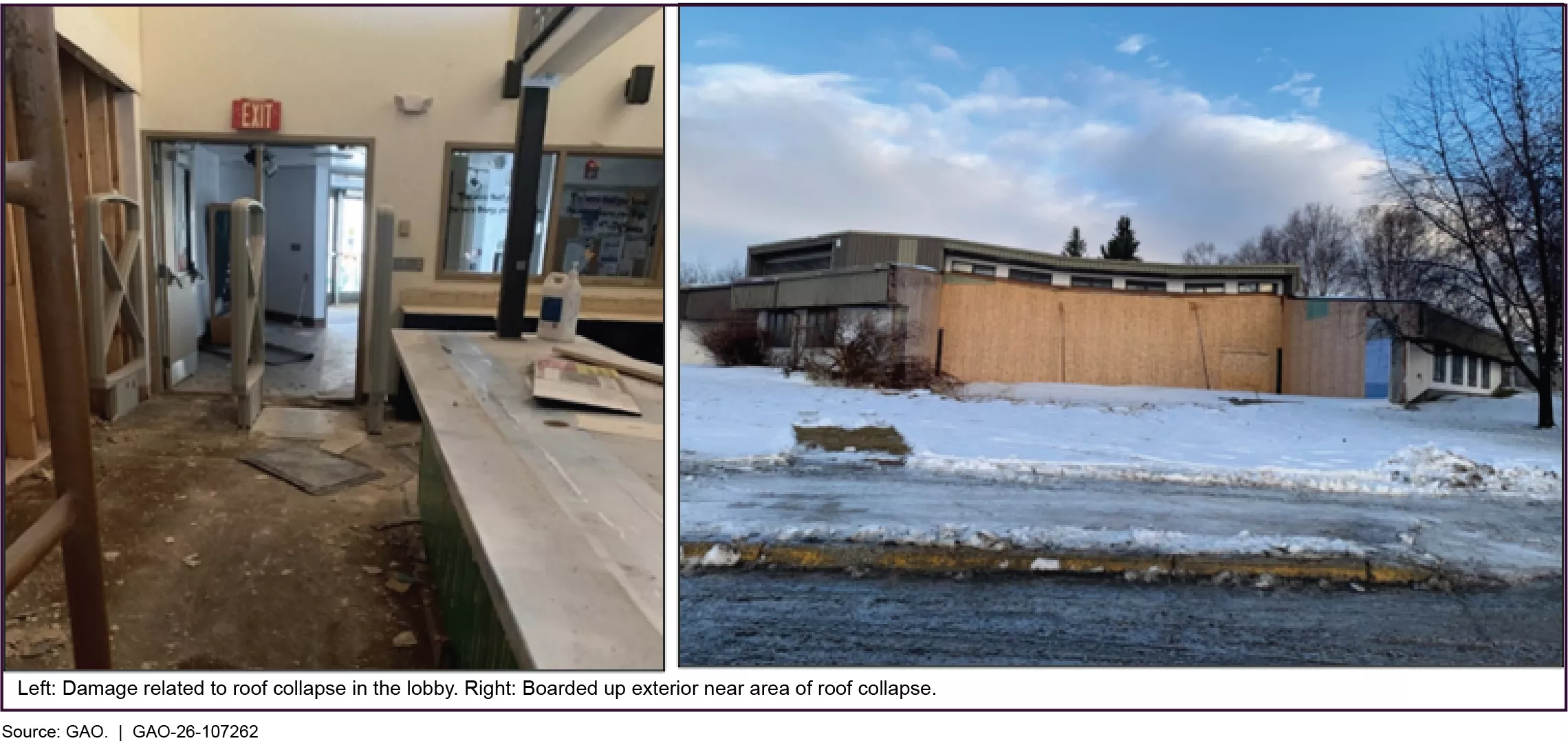
Costs for repairs can be hefty for local governments. About 39% (or 6,200) of libraries had a deferred maintenance backlog of more than $100,000 each, according to our survey. One librarian estimated needing about $60,000 for a new HVAC. Another estimated more than $225,000 in construction costs for building repair needs, including for asbestos removal.
Damage to Library After Roof Collapses, in part Because of Deferred Maintenance
Image
Funding repairs and construction needs is a struggle
The total cost of needed repairs in libraries across the country has not been calculated. But with over 6,000 libraries reporting maintenance backlogs of over $100,000 each, the estimated repair costs could soar well into the hundreds of millions.
About 71% of public libraries said construction costs, such as labor and materials, and limited funding were the main challenges to repairing facilities.
While federal dollars fund—at least in part—thousands of public libraries across the nation, most of that money cannot be used to cover the costs of construction or repairs. That money must be used on programming—such as financial literacy or workforce training, or for accessibility and modernization efforts like technology.
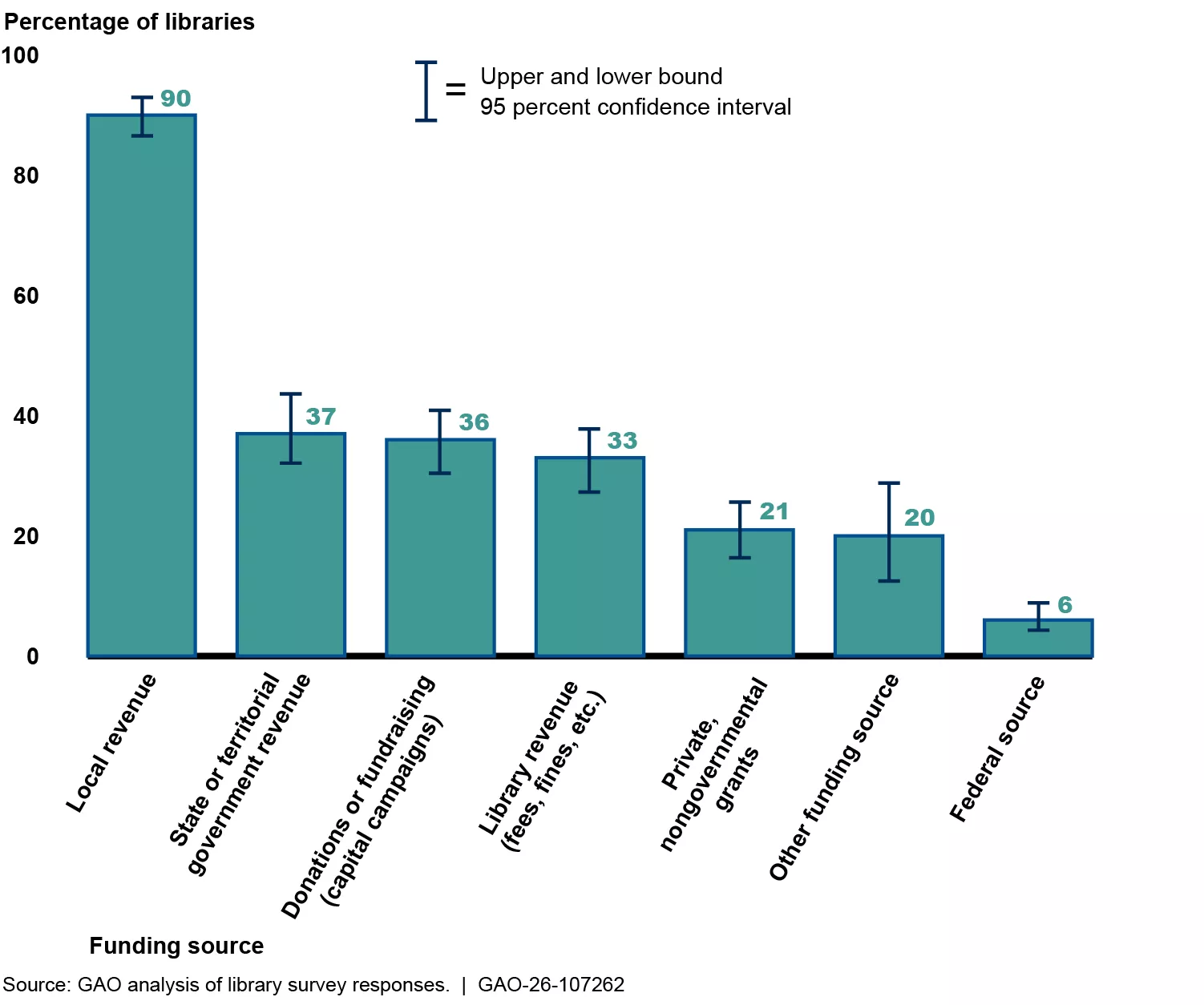
Instead, almost all libraries (90%, according to our survey) use local funding to address maintenance issues. But relying on local funds is not without its challenges. This is particularly true for rural libraries and those in high-poverty areas. Most of these areas have less people and a more limited funding base. And they have fewer resources to apply for grants, provide matching funds that can be required to receive a grant, or fundraise.
Estimated Percentage of Funding Sources Libraries Used for Maintenance and Repairs (2020-2024)
Image
Some communities are proposing an increase in state, county, and city taxes. However, libraries must compete for tax dollars, which are also used to fund other public services such as schools and law enforcement.
To learn more about the condition of public libraries nationwide and their funding challenges, be sure to read our full report.
- GAO’s fact-based, nonpartisan information helps Congress and federal agencies improve government. The WatchBlog lets us contextualize GAO’s work a little more for the public. Check out more of our posts at GAO.gov/blog.
- Got a comment, question? Email us at blog@gao.gov.
GAO Contacts
Image

Related Products

GAO's mission is to provide Congress with fact-based, nonpartisan information that can help improve federal government performance and ensure accountability for the benefit of the American people. GAO launched its WatchBlog in January, 2014, as part of its continuing effort to reach its audiences—Congress and the American people—where they are currently looking for information.
The blog format allows GAO to provide a little more context about its work than it can offer on its other social media platforms. Posts will tie GAO work to current events and the news; show how GAO’s work is affecting agencies or legislation; highlight reports, testimonies, and issue areas where GAO does work; and provide information about GAO itself, among other things.
Please send any feedback on GAO's WatchBlog to blog@gao.gov.